

Jon Haws, BS, BSN, RN, Alumnus CCRN
Jon Haws, RN is a nurse, educator, and founder of NURSING.com, dedicated to making nursing education easier and more effective. After facing burnout himself, he built NURSING.com to help students pass the NCLEX® with confidence and thrive in their careers.
⚡️ Quick Summary
Terrified your clinical preceptor might fail you? Scared you’ll freeze with a real patient? ClinicalPrepCases™ trains your brain to think fast, prioritize care, and avoid the panic.
As a nursing student, few things are more devastating than being paired with a preceptor who seems determined to make your clinical rotation miserable. I've been there myself as a new nurse in a Neuro ICU, and I've seen thousands of nursing students face this challenge at NURSING.com. Today, I want to give you the survival guide I wish someone had handed me.

"I leave clinicals feeling like I learned nothing and just annoyed someone all day."
Sound familiar? You're not alone. That gut-wrenching feeling when your preceptor sighs at your questions, leaves you standing awkwardly while they chart, or worse - criticizes you in front of patients - it's not just in your head.
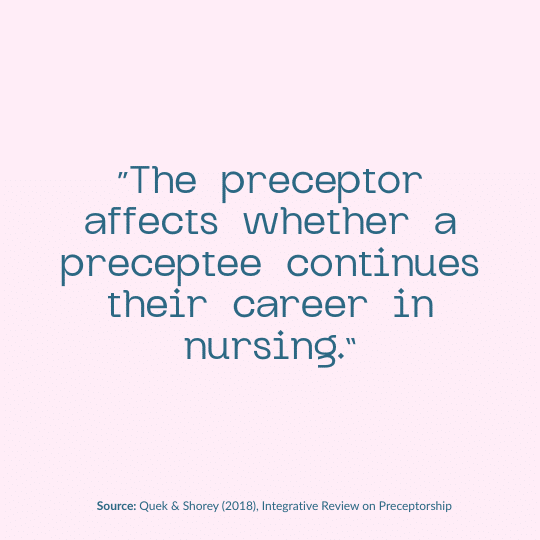
Research confirms what you're experiencing: "The preceptor affects whether a preceptee continues their career in nursing" according to Quek & Shorey's research. Your preceptor situation isn't just uncomfortable - it can actually impact your entire nursing journey.
The problem isn't you. The system often fails both of you. Most preceptors "function without formal training or support, while still maintaining full patient loads." They're thrown into teaching with little preparation, and many are already burned out from their regular nursing duties.
I remember my first code as a new nurse in the Neuro ICU. As I shared in my blog post about surviving your first code, "I was about to pee my pants the first time I heard 'Code Blue Neuro ICU' sounding over the intercom." My preceptor nudged me into the room and forcefully advised the other staff that I was going to jump in on compressions. I was terrified – with no preparation, no warning, just suddenly thrust into a life-or-death situation.
That moment taught me how NOT to teach another nurse.
But knowing why bad preceptorship happens doesn't make it easier when you're in the middle of it. So let's tackle what you can actually do.

Terrified your clinical preceptor might fail you? Scared you’ll freeze with a real patient? ClinicalPrepCases™ trains your brain to think fast, prioritize care, and avoid the panic.
Before we dive into solutions, let's identify what we're dealing with. Here are the red flags that tell you this isn't just a challenging learning environment - it's a problematic one:
1. Ignores You or Avoids Questions
This looks like a preceptor who consistently walks away when you approach, leaves you standing alone with patients while they chat with colleagues, or responds to your questions with "you should know this already" without actually teaching you.
Why it's a problem: Learning requires engagement. If you're invisible to your preceptor, you're missing critical teaching moments. Nursing education research shows that the most effective learning happens through guided practice and feedback—neither of which you can get if your preceptor pretends you don't exist.
Our NURSING.com lesson on "Precepting a Student" emphasizes that effective preceptors are "welcoming and kind" and "open to questions." When your preceptor fails to embody these qualities, it creates a significant barrier to your learning.

Terrified your clinical preceptor might fail you? Scared you’ll freeze with a real patient? ClinicalPrepCases™ is a free app by NURSING.com that trains your brain to think fast, prioritize care, and avoid the panic.
2. Embarrasses You in Front of Others
This might be public criticism, eye-rolling when you ask questions, making jokes at your expense, or questioning your intelligence or commitment in front of patients or the healthcare team.
Why it's a problem: Shame activates your brain's threat response, literally shutting down the neural pathways needed for learning. When you're embarrassed, your body's stress response makes it nearly impossible to absorb information or perform skills effectively.
In our "Precepting a Student" lesson, we specifically note that preceptors should "not provide negative feedback in front of others." This is a fundamental principle of effective teaching that protects both your dignity and your ability to learn.
3. Micromanages Everything
Your preceptor hovers over every single task, never lets you complete procedures independently even after demonstration, takes over without explanation, or criticizes your technique without showing you the correct way.
Why it's a problem: Clinical judgment develops through practice and occasional (safe) failure. If you're never allowed to work through a process yourself, you can't develop the critical thinking skills necessary for independent nursing practice.
As our NURSING.com lesson states, "Don't only let your preceptee watch you" because this "does not encourage critical thinking." A preceptor who only allows observation without participation is failing in one of their core responsibilities.
4. Gives No Feedback (or Only Criticism)
You never hear what you're doing right, only what you're doing wrong. Alternatively, you might receive no feedback at all, leaving you completely in the dark about your performance.
Why it's a problem: Effective learning requires understanding both your strengths and areas for improvement. Without balanced feedback, you can't calibrate your practice or build confidence in the skills you're mastering.
Our NURSING.com lesson emphasizes that preceptors should "be complimentary" because this "creates confidence" in the student. It also advises preceptors to "provide feedback in real time" so students can immediately connect actions with outcomes.
5. Doesn't Follow Policy or Safe Practice
Your preceptor takes shortcuts with medication administration, documentation, or safety protocols. They might discourage you from asking questions about proper procedures or tell you, "That's how we do it in the real world, forget what they taught you in school."
Why it's a problem: This not only puts patients at risk but also places you in an impossible ethical position. Following their example could jeopardize your license before you even get it, but challenging them could make your clinical experience even more difficult.
Our NURSING.com lesson on being a preceptor emphasizes that preceptors should "take an inventory of your own practice" to ensure they're following evidence-based guidelines and facility policies. A preceptor who cuts corners isn't just a poor teacher—they're potentially dangerous.
One nursing student told me: "They just said 'figure it out'—then yelled at me for doing it wrong." That's not teaching. That's setting you up to fail.
If you're experiencing even one of these consistently, it's not just a bad day for your preceptor. It's a pattern that threatens your education and confidence.
Terrified your clinical preceptor might fail you? Scared you’ll freeze with a real patient? ClinicalPrepCases™ is a free app by NURSING.com that trains your brain to think fast, prioritize care, and avoid the panic.
The hardest part of a bad preceptorship is feeling trapped. You need to pass this rotation, but you're not getting the guidance you need. Here are concrete steps you can take right now:
1. Track It (CYA + Growth)
Create a simple clinical journal. After each shift, document:
This serves two purposes: it protects you if issues escalate AND helps you see your own progress despite the circumstances. Keep it factual, not emotional.
A simple format might look like this:
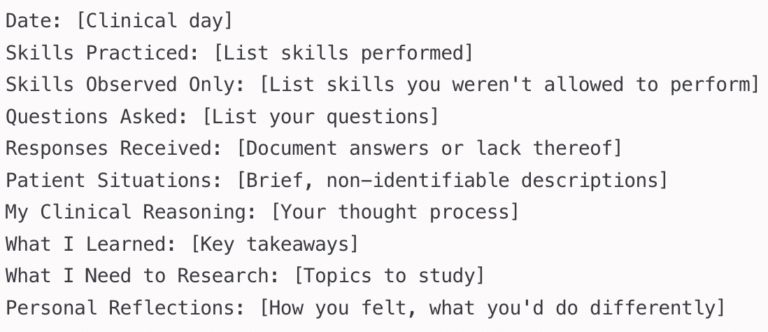
This documentation becomes powerful evidence if you need to discuss the situation with your clinical instructor. It also serves as a personal growth tracker, showing you're learning even when your preceptor isn't teaching.
I had a student who kept such detailed notes during a difficult preceptorship that she was able to demonstrate to her instructor exactly how much clinical reasoning she'd developed independently, despite minimal guidance. Her instructor was impressed by her initiative and ultimately gave her a strong evaluation.
2. Ask Smart, Structured Questions
General questions like "What should I do?" are easy for a poor preceptor to dismiss. Instead, use the 5-Minute Preceptor (5MP) method:
This approach forces engagement and shows you're thinking clinically, not just passively waiting to be taught.
The 5MP method was originally developed for medical education but has been adapted for nursing preceptorship. According to Bott, Mohide, and Lawlor in their article "A Clinical Teaching Technique for Nurse Preceptors: The Five Minute Preceptor," this structured approach increases the likelihood of meaningful teaching moments, even with reluctant preceptors. It positions you as an active learner rather than a passive follower.
Let me give you a real example from my own experience:
Instead of: "What should I do for this patient?"
I said: "I've assessed Mr. Johnson and noticed his oxygen saturation has dropped from 95% to 89% in the last hour. His respiratory rate has increased, and he's using accessory muscles. Based on his history of COPD, I think he may be experiencing an exacerbation. I'm planning to elevate his head, apply oxygen per protocol, and reassess in 15 minutes. Does my assessment and plan seem appropriate?"
This approach is much harder for a preceptor to dismiss because you're demonstrating clinical thinking and asking for specific validation rather than general guidance.
3. Don't Just Survive — Reflect and Practice
When your preceptor fails to teach, become your own teacher. After each clinical day:
One of our students said it best: "When my preceptor ghosted me, Clinical Prep Cases became my real preceptor. I could practice the decisions I should have been learning on the floor."
The reality is that some days in clinical will feel wasted. You might stand at the nurses' station for hours while your preceptor ignores you. You might be told to "just observe" procedure after procedure without any explanation or opportunity to participate.
But you can reclaim that time afterward. For every hour of frustrating clinical experience, give yourself 15-30 minutes of deliberate practice using Clinical Prep Cases or other resources. This deliberate practice—focused, intentional learning with immediate feedback—can actually accelerate your development more than passive observation.
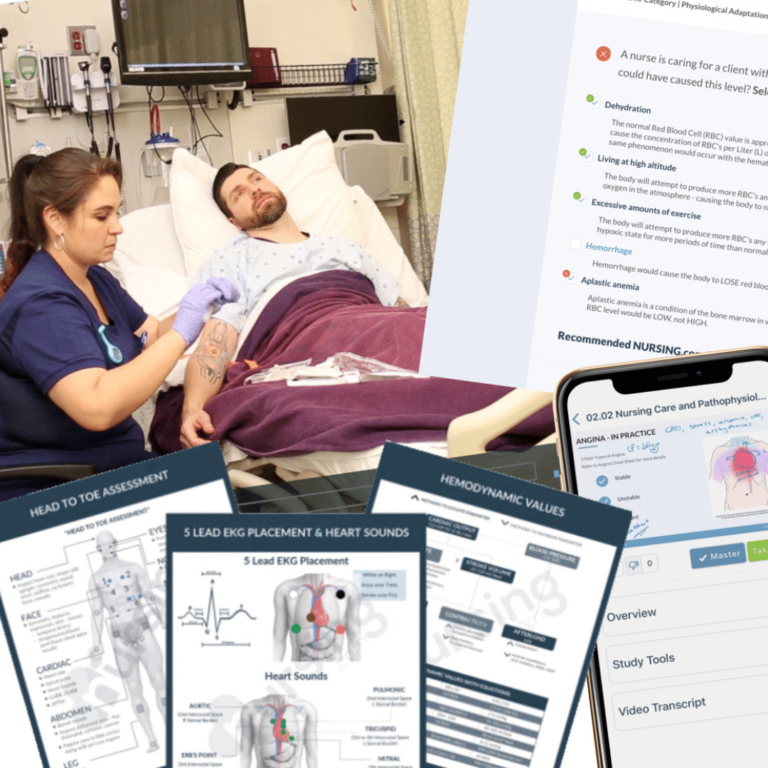
Pass Your Tests,
Improve Your Grades
Enter a nursing topic and view videos and cheatsheet instantly
When you're facing a preceptor who won't teach, our Clinical Prep Cases app becomes an invaluable tool for your nursing education. Here's why it works so well as a supplement (or sometimes replacement) for inadequate preceptorship:

Terrified your clinical preceptor might fail you? Scared you’ll freeze with a real patient? ClinicalPrepCases™ is a free app by NURSING.com that trains your brain to think fast, prioritize care, and avoid the panic.
Remember, your education is too important to leave entirely in the hands of someone who isn't invested in your success. Clinical Prep Cases gives you back some control over your learning journey.
4. Find One Ally on the Unit
Sometimes survival means looking beyond your assigned preceptor. Identify at least one person on the unit who seems approachable and supportive:
Introduce yourself with confidence: "Hi, I'm [Name], a nursing student with [School]. I'm here on [days] with [Preceptor]. I'm really interested in learning about [specific aspect of care]. Would you mind if I observed or helped when you have a moment to teach?"
This approach accomplishes several things:
It expands your learning opportunities beyond your preceptor
It builds your professional network
It demonstrates your initiative and engagement
It provides alternative sources of feedback and guidance
I remember a student who was paired with a particularly difficult preceptor in the ICU. She noticed that the respiratory therapist always took time to explain procedures to the staff. She introduced herself and expressed interest in learning more about ventilator management. By the end of her rotation, that RT had taught her more about respiratory assessment than her assigned preceptor ever did.
Terrified your clinical preceptor might fail you?
ClinicalPrepCases™ is your safety net. It puts you into real-life scenarios before you ever step into the hospital.

About NURSING.com
The leading platform for nursing education and NCLEX® prep. Recognized as a top innovator in nursing education, where over 1,000,000+ nursing students gain confidence, improve their grades, and pass the NCLEX®.
Creators of SIMCLEX®, the world's most advanced NCLEX® simulation exam.
Our mission? To end the nursing education struggle and help students become confident, competent nurses.
Pass Your Tests,
Improve Your Grades
Enter a nursing topic and view videos and cheatsheet instantly
What topic are you struggling with?
Take a practice quiz
If the situation becomes untenable, here's how to advocate for yourself professionally:
Use this exact script:
"I want to succeed in this rotation, but I'm struggling to meet my learning objectives because I'm not receiving the guidance or feedback I need. I've tried to engage by [specific examples], but I'm concerned that my learning experience is being impacted in a way that could affect my development as a nurse. I'd appreciate your advice on how to improve this situation."
This approach:
Who to talk to first:
Follow the chain of command. Skipping steps can create additional problems and may be perceived as unprofessional.
Our NURSING.com lesson on "Being Successful in Orientation" emphasizes the importance of understanding the chain of command - knowing "who do you report to first." This principle applies equally to addressing preceptorship concerns. Starting with your clinical instructor respects the established educational hierarchy and gives those most directly responsible for your learning the first opportunity to address the situation.
What NOT to Do:
Remember that nursing is a small world. How you handle this challenge will be remembered long after the rotation ends. Maintaining professionalism even in difficult circumstances demonstrates the maturity needed for nursing practice.

Terrified your clinical preceptor might fail you? Scared you’ll freeze with a real patient? ClinicalPrepCases™ is a free app by NURSING.com that trains your brain to think fast, prioritize care, and avoid the panic.
If your assigned preceptor won't teach you, it's time to find alternatives. This is where tools like our Clinical Prep Cases app become invaluable. When you're not getting feedback or practice opportunities in clinical, you need a safe space to:
Unlike your preceptor, Clinical Prep Cases is available whenever you need it and provides the consistent guidance essential for developing sound clinical judgment.
Many students tell us they use it after difficult clinical days to practice what they "should have learned" or to prepare for the next day when they know their preceptor won't explain things adequately.
Here's how to maximize your learning with Clinical Prep Cases when your preceptor isn't teaching:
When you combine this deliberate practice with your clinical experiences, you're creating a comprehensive learning environment for yourself—one that doesn't depend on the quality of your preceptor.
Student Success Story with Clinical Prep Cases:
"My preceptor would constantly tell me that I needed to work on my critical thinking, but never explained how to improve. I started using Clinical Prep Cases every night after clinical. The scenarios walked me through exactly what critical thinking in nursing looks like—assessing data, connecting it to potential causes, prioritizing interventions, and evaluating outcomes. Two weeks later, when I made the right call on a declining patient, my preceptor actually seemed surprised.
Clinical Prep Cases taught me what my preceptor wouldn't."
I need you to hear this clearly: A bad preceptor does not mean you'll be a bad nurse.
In fact, this experience is teaching you something invaluable - exactly what kind of nurse (and future preceptor) you don't want to be. You're learning what support feels like by its absence.
I still remember my first code as a new nurse. My preceptor pushed me right into compressions with no warning. I was terrified. My hands were shaking. But what I learned that day wasn't just how to do CPR correctly - I learned how I would one day teach others.
With patience. With explanation. With empathy.
Years later, when I became a preceptor myself, those difficult experiences informed how I treated my students. I vowed never to create the same fear and uncertainty in them.
Every nurse has a story about a challenging preceptor or a difficult clinical rotation. What separates successful nurses from those who give up is not the absence of these challenges but how they respond to them.
I've seen students transform the most negative preceptor experiences into powerful motivation:
"I'll never make a student feel the way I felt today."
"I'm going to be the kind of preceptor who explains the why, not just the how."
"I'm learning exactly what not to do when I'm teaching others."
This perspective shift—from victim of poor teaching to future champion of better education—is incredibly powerful. It turns frustration into purpose.
As I wrote in my blog post about code blue experiences, "After responding to countless codes in almost every department of the hospital I want to share with you a few tips that will allow you to learn and provide the best possible outcome for your patients." That's what great nurses do—they take difficult experiences and transform them into teaching opportunities for others.
So yes, this rotation is hard. It might even be the hardest part of nursing school.
But it is temporary, and it will not define your nursing career unless you let it.
How Clinical Prep Cases Bridges the Gap
When you're paired with a preceptor who isn't fulfilling their teaching role, Clinical Prep Cases becomes more than just a helpful tool—it becomes an essential part of your nursing education.
Here's what makes Clinical Prep Cases uniquely suited to address the challenges of a poor preceptorship:
When your real-world preceptor falls short in these areas, Clinical Prep Cases helps fill the gaps, ensuring that your clinical education doesn't suffer due to one person's limitations.
While we've focused on survival strategies, I want to end on a note of empowerment. This difficult experience is also building something in you - resilience, self-advocacy, and resourcefulness. These are qualities that will serve you throughout your nursing career.
Every time you find a way to learn despite obstacles, you're developing the kind of grit that makes exceptional nurses. Every time you maintain professionalism in the face of discouragement, you're demonstrating the character that patients will one day rely on.
And every day you show up, despite knowing what you'll face, you're proving to yourself that you have what it takes to persevere in this challenging, rewarding profession.
Remember: You can still pass this rotation. You can still become an amazing nurse. And someday, you'll be the preceptor who breaks this cycle and shows a student what supportive clinical education really looks like.
The nursing profession needs you - not despite these challenges, but because you've overcome them. Your experience with a difficult preceptor is giving you insight into the importance of good teaching, effective communication, and professional support—all values you'll carry forward into your own practice.
As someone who has been through this struggle and watched thousands of students navigate similar challenges, I can tell you with absolute certainty: This moment does not define your potential as a nurse. How you respond to it might.
So respond with determination. With creativity. With professionalism. And know that the NURSING.com team is here to support you every step of the way.
Ready to take back control of your clinical education? Start your first Clinical Prep Case for free - real scenarios, real learning, no judgment.
Launch Clinical Prep Cases NowRetryClaude can make mistakes. Please double-check responses.
Terrified of being thrown into clinicals and not knowing what to do?
ClinicalPrepCases™ is your safety net. It puts you into real-life scenarios before you ever step into the hospital. You’ll practice prioritizing patients, recognizing red flags, and making fast, safe decisions — just like you’ll have to in clinical.