
Understanding Meningitis
Understanding meningitis is important for nursing students preparing for the NCLEX exam due to several reasons:
Medical Emergency: Meningitis is a serious medical emergency that can progress rapidly and lead to severe complications or death. Nurses need to be able to quickly recognize its signs and symptoms and initiate timely interventions.
Variability of Presentation: Meningitis can present differently in different age groups and populations. Nurses should be familiar with the various manifestations, from classic symptoms like fever and severe headache to subtle signs in infants and elderly patients.
Different Types of Meningitis: Meningitis can be bacterial, viral, or fungal in origin. Nurses should understand the differences in their causes, pathophysiology, and treatment approaches.
Neurological Assessment: Nurses need to be skilled in assessing neurological status, including changes in consciousness, meningeal signs (e.g., Kernig’s and Brudzinski’s signs), and other neurological deficits.
Diagnostic Procedures: Nurses should understand the procedures used to diagnose meningitis, such as lumbar puncture, and be aware of the importance of obtaining cerebrospinal fluid (CSF) samples.
Infection Control: Nurses should be knowledgeable about infection prevention and control measures to prevent the spread of infectious agents, especially in healthcare settings.
Antibiotic Therapy: Nurses should understand the importance of prompt antibiotic administration in bacterial meningitis to prevent complications and the potential for hearing loss.
Fluid and Electrolyte Management: Patients with meningitis can experience imbalances due to fever, increased metabolic rate, and fluid shifts. Nurses should monitor fluid balance and electrolyte levels.
Seizure Management: Meningitis can trigger seizures. Nurses should be prepared to manage seizures and administer antiepileptic medications as needed.
Neurological Monitoring: Close monitoring of neurological status is crucial to detect any deterioration promptly and initiate appropriate interventions.
Patient Isolation: Nurses should know how to implement isolation precautions to prevent the spread of infectious agents, particularly in the case of bacterial meningitis.
Documentation: Accurate documentation of assessments, interventions, and patient responses is important for communication among the healthcare team.
NCLEX Preparation: The NCLEX exam may include questions related to meningitis, its types, assessment, interventions, and patient education. A strong understanding of this topic is essential for answering these questions accurately.
Overall, understanding meningitis equips nursing students to provide safe, patient-centered care to individuals affected by this potentially life-threatening condition. It ensures that nursing students are prepared to address the unique challenges and needs of meningitis patients and contribute to positive patient outcomes.
Overview of Meningitis
Inflammation of the membranes around the brain and spinal cord caused by a virus, bacteria, fungus, or protozoa
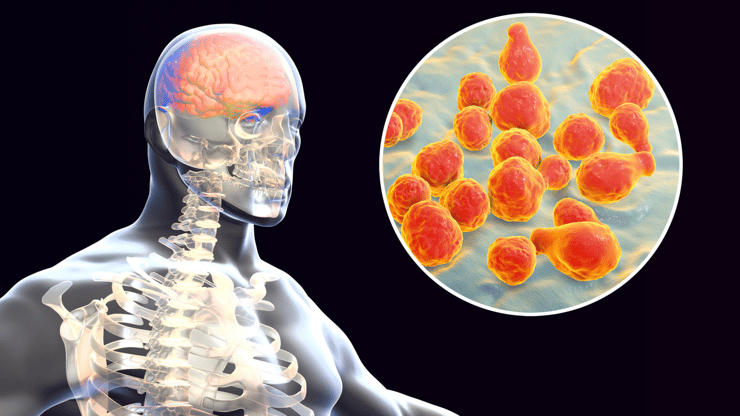
General Information for Meningitis
1. CSF is analyzed to determine the diagnosis
a. Cloudy
b. ↑ WBC
c. ↓ Glucose
Assessment for Meningitis
1. Fever
2. Altered level of consciousness
3. Nuchal rigidity
a. Kernig’s sign→ Severe stiffness of the hamstrings causes an inability to straighten the leg when the hip is flexed to a 90-degree angle
b. Brudzinski’s sign → Severe neck stiffness causes a client’s hips and knees to flex when the neck is flexed.
4. Lethargy
5. Increased Intracranial Pressure
6. Photophobia
7. Seizures
Therapeutic Management for Meningitis
1. Place in droplet isolation
2. Analgesics
3. Antibiotics
a. Consider Blood-Brain-Barrier
Nursing Case Study for Meningitis
Patient Profile:
Emily Parker, a 6-year-old girl, is brought to the emergency department with a sudden onset of high fever, severe headache, neck stiffness, and irritability. Her parents report that Emily had been experiencing flu-like symptoms for the past two days, which rapidly worsened.
Assessment:
Upon assessment, Emily appears lethargic and is irritable when touched. She resists neck flexion due to neck stiffness. Her temperature is elevated, and her heart rate is increased. Emily’s fontanelle is tense, and she has photophobia (sensitivity to light).
Interventions:
1. Rapid Assessment:
Perform a thorough neurological assessment, including assessing Emily’s level of consciousness, meningeal signs, and vital signs.
2. Airway and Breathing Management:
Ensure Emily’s airway is clear and provide supplemental oxygen if necessary.
3. Intravenous Access:
Establish intravenous access to administer fluids and antibiotics promptly.
4. Lumbar Puncture:
Collaborate with the healthcare provider to perform a lumbar puncture to obtain cerebrospinal fluid (CSF) for diagnosis and treatment planning.
5. Antibiotic Therapy:
Administer broad-spectrum antibiotics promptly to cover potential bacterial pathogens causing meningitis.
6. Isolation Precautions:
Implement isolation precautions to prevent the spread of infection to other patients and healthcare providers.
7. Neurological Monitoring:
Continuously monitor Emily’s neurological status, including changes in consciousness, pupillary reactions, and motor responses.
8. Fluid and Electrolyte Management:
Monitor Emily’s fluid balance and electrolyte levels, ensuring proper hydration and maintaining electrolyte equilibrium.
9. Comfort Measures:
Provide comfort measures, such as dimming the lights and minimizing noise, to alleviate Emily’s discomfort.
10. Seizure Precautions:
Implement seizure precautions due to the risk of seizures in children with bacterial meningitis.
Outcome:
Despite prompt intervention, Emily’s condition deteriorates due to increased intracranial pressure and the severity of the infection. She requires intubation and mechanical ventilation to manage respiratory distress. Her care is transferred to the pediatric intensive care unit for closer monitoring and management.
Struggling to keep up in class?
The Nursing School Survival Package gives you a daily plan, visual cheatsheets, and everything you need to stop falling behind.
👉 Get the system that actually works →
You CAN Do This
Happy Nursing!