
Understanding Pressure Ulcers
Common Complication: Pressure ulcers are a common and preventable complication that can develop in patients with limited mobility, especially those who are bedridden or use wheelchairs. Nurses should be knowledgeable about their causes, risk factors, assessment, and management.
Patient Safety: Preventing pressure ulcers is crucial for patient safety and well-being. Nurses need to understand the principles of skin integrity and the importance of regular skin assessment to identify early signs of pressure ulcers.
Assessment Skills: Nurses should be skilled in assessing patients’ skin integrity and recognizing the stages of pressure ulcers (Stage I to IV). Early identification allows for timely interventions to prevent further damage.
.png?width=1200&height=630&name=nclex%20review%20for%20angina%20(2).png)
Risk Factors: Nurses need to identify patients at risk of developing pressure ulcers, such as those with limited mobility, poor nutrition, and medical conditions that affect blood circulation.
Preventive Measures: Understanding preventive measures, such as frequent repositioning, proper use of pressure-reducing devices, and maintaining skin hygiene, helps nurses contribute to the prevention of pressure ulcers.
Wound Care: Nurses play a vital role in wound care for pressure ulcers, including cleaning, dressing changes, and applying appropriate wound care products.
Pain Management: Pressure ulcers can cause pain and discomfort. Nurses should be skilled in assessing and managing pain associated with pressure ulcers.
Infection Control: Pressure ulcers can become infected. Nurses need to implement infection control practices to prevent complications.
Documentation: Accurate documentation of pressure ulcers, their characteristics, stages, and progress, is important for tracking the patient’s condition and providing continuity of care.
Legal and Ethical Considerations: Nurses should understand their legal and ethical responsibilities in preventing pressure ulcers, as neglecting to do so can lead to adverse outcomes and legal consequences.
NCLEX Preparation: The NCLEX exam may include questions related to pressure ulcers, their causes, assessment, interventions, and prevention strategies. A solid understanding of this topic is essential for answering these questions accurately.
Overall, understanding pressure ulcers equips nursing students to provide safe, patient-centered care to individuals at risk and those who already have pressure ulcers. It ensures that nursing students are prepared to address the unique challenges and needs of patients affected by pressure ulcers.
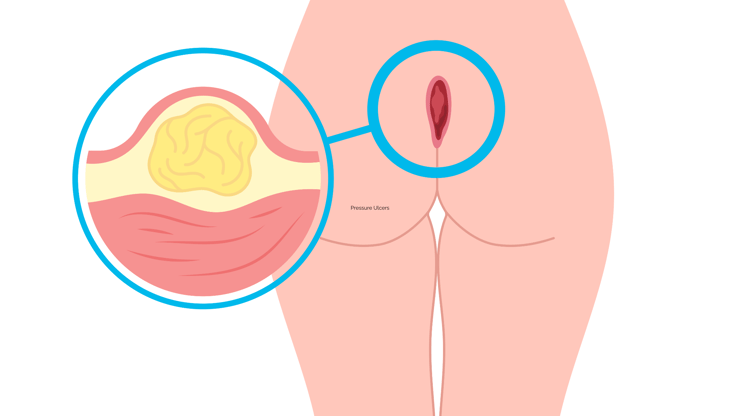
Overview of Pressure Ulcers
1. Ulcerations in the skin varying in size and depth
2. Due to the compression of tissue for an extended period of time
General for Pressure Ulcers
1. Stage I→ Skin intact, non-blanchable redness
2. Stage II→ Partial thickness loss of skin
3. Stage III→ Full-thickness skin loss extends to the dermis and SubQ tissue
4. Stage IV→ Full-thickness skin loss, muscle and bone undermining and tunneling, and eschar or slough may be present
5. Deep Tissue Injury→ Injury to SubQ tissue under intact skin, Dark purple or brown
6. Unstageable→ Wound completely covered by eschar or slough – unable visualize or determine depth/thickness
Nursing Assessment for Pressure Ulcers
1. Check bony prominences with every turn. If redness present, press with finger to ensure blanching (turning white)
2. Albumin level to assess nutrition
Therapeutic Management for Pressure Ulcers
1. Consult Wound Care, a specialty nurse
2. Do NOT massage the reddened area
3. Intervene as needed for malnutrition and immobility
4. Turn q2h or more often
5. Keep skin clean and dry
6. Minimize sheets under the client
7. Utilize specialty beds or surfaces
8. Offload bony prominences with a pillow or wedge
9. Keep the client’s skin dry
Nursing Case Study for Pressure Ulcers
Patient Profile:
John Anderson, an 82-year-old male, is admitted to a long-term care facility for rehabilitation after a hip fracture. He has a history of diabetes and limited mobility due to his recent surgery. His family reports concerns about his overall health and the potential development of pressure ulcers.
Assessment:
Upon assessment, John’s skin is pale and cool to touch in areas where pressure is applied, such as his sacrum and heels. He has intact skin but shows areas of non-blanchable erythema on his sacral region and both heels. He is unable to reposition himself independently due to pain from his surgery.
Interventions:
1. Risk Assessment:
- Conduct a comprehensive assessment of John’s risk factors for pressure ulcer development, including limited mobility, diabetes, and surgery.
- Collaborate with the healthcare team to determine his Braden Scale score to quantify his risk level.
2. Repositioning:
- Develop a repositioning schedule for John to prevent prolonged pressure on specific areas prone to pressure ulcers, such as his sacrum and heels.
- Involve nursing assistants and educate them on proper repositioning techniques and frequency.
3. Pressure-Reducing Devices:
- Collaborate with the healthcare team to provide pressure-reducing devices, such as specialized mattresses and heel protectors, to distribute pressure and reduce the risk of pressure ulcers.
4. Skin Assessment:
- Perform regular skin assessments, focusing on high-risk areas, and document any changes in skin condition or the development of erythema.
- Educate John and his family about the importance of skin checks and how to recognize early signs of pressure ulcers.
5. Nutritional Support:
- Collaborate with a registered dietitian to assess John’s nutritional status and provide a balanced diet rich in protein, vitamins, and minerals to support wound healing.
6. Hydration:
- Ensure John is adequately hydrated to maintain skin elasticity and promote tissue healing.
7. Patient Education:
- Educate John about the importance of mobility within his physical limitations and encourage him to actively participate in repositioning whenever possible.
- Teach him about the significance of proper nutrition, hydration, and skin care in preventing pressure ulcers.
8. Wound Care:
- If pressure ulcers begin to develop, collaborate with the wound care team to provide appropriate wound care interventions, such as cleaning, dressing changes, and infection prevention.
9. Family Involvement:
- Involve John’s family in his care plan, providing them with information about pressure ulcer prevention and signs to watch for.
10. Documentation:
- Accurately document John’s risk assessment, interventions, skin assessments, and any changes in his condition.
Outcome:
With comprehensive care and preventive measures in place, John’s skin condition improves. The areas of non-blanchable erythema fade, and he does not develop full-blown pressure ulcers during his rehabilitation stay. He actively participates in his care plan and continues to prioritize mobility and proper nutrition to support his overall well-being.
Free Download for Pressure Ulcers
Are you looking for more must-know NCLEX review topics? Download our free eBook “NCLEX Flash Notes” as a valuable resource for nursing students. Encourage readers to download their free copy of the “NCLEX Flash Notes.”
You CAN Do This
Happy Nursing!