
QOD 80: Compensated vs Decompensated Shock (Neuro/Health Promotion and Maintenance)
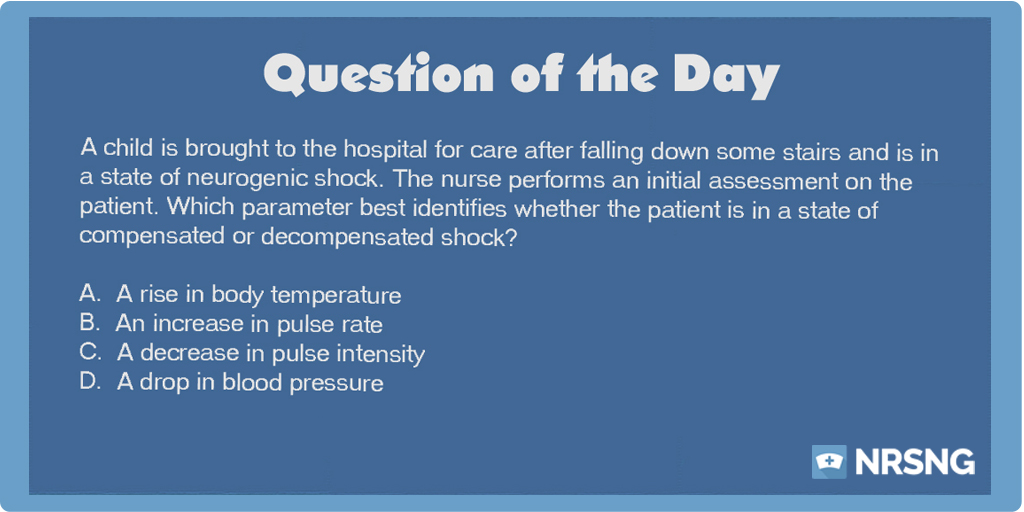
Question: A child is brought to the hospital for care after falling down some stairs and is in a state of neurogenic shock. The nurse performs an initial assessment on the patient. Which parameter best identifies whether the patient is in a state of compensated or decompensated shock? Answer: D. A drop in blood pressure […]
QOD 72: Cataplexy and Sleeping Disorders (Neuro/Basic Care and Comfort)
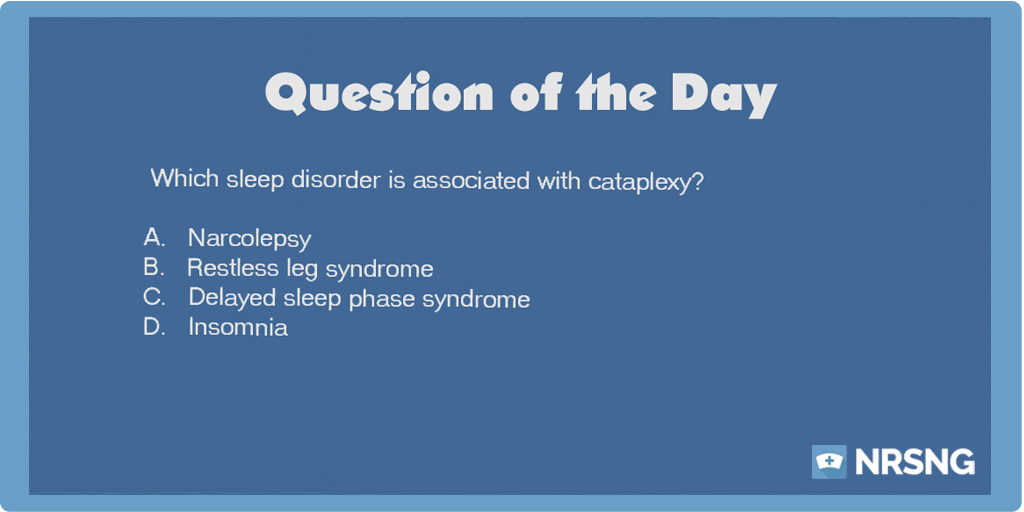
Question: Which sleep disorder is associated with cataplexy? Answer: A. Narcolepsy Rationale: Cataplexy describes an involuntary loss of muscle function that is temporary. Cataplexy is most commonly associated with narcolepsy, which involves increased sleepiness during the daytime. A patient with narcolepsy may take medications that act as stimulants to help keep him awake; some of […]
QOD 55: Nutrition and Alzheimer’s Disease (Neuro/Basic Care and Comfort)
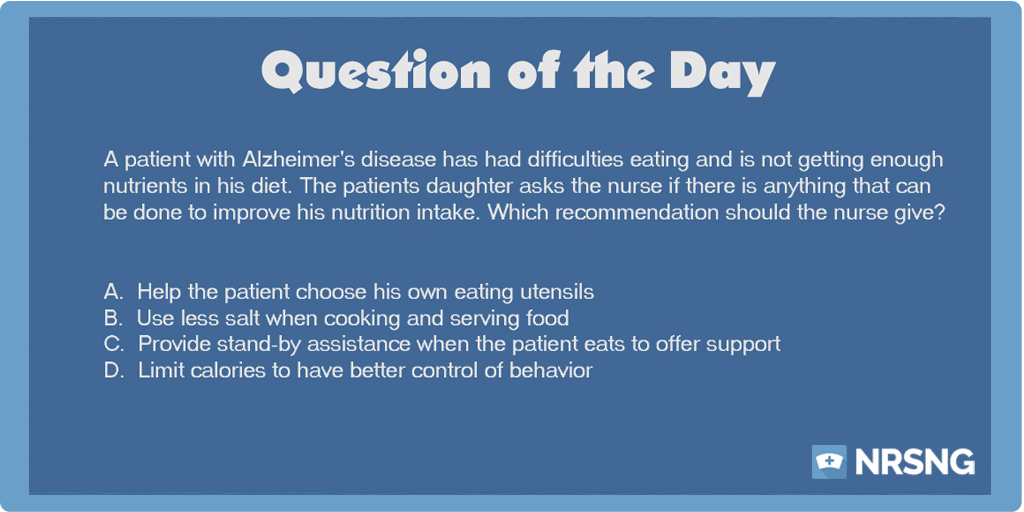
Question: A patient with Alzheimer’s disease has had difficulties eating and is not getting enough nutrients in his diet. The patients daughter asks the nurse if there is anything that can be done to improve his nutrition intake. Which recommendation should the nurse give? Answer: B. Use less salt when cooking and serving food Rationale: […]
QOD 40: Dysphagia in a Stroke Patient (Neuro/Basic Care and Comfort)
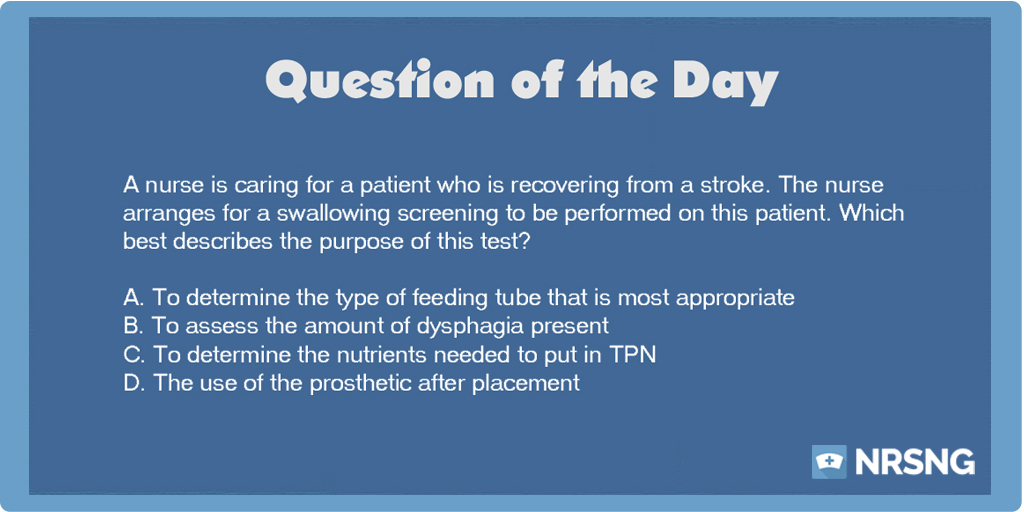
Question: A nurse is caring for a patient who is recovering from a stroke. The nurse arranges for a swallowing screening to be performed on this patient. Which best describes the purpose of this test? Answer: B. To assess the amount of dysphagia present Rationale: A swallowing test would help the provider to determine the […]
QOD-23 Self-care Deficit in a Stroke Patient (Neuro/Health Promotion and Maintenance)
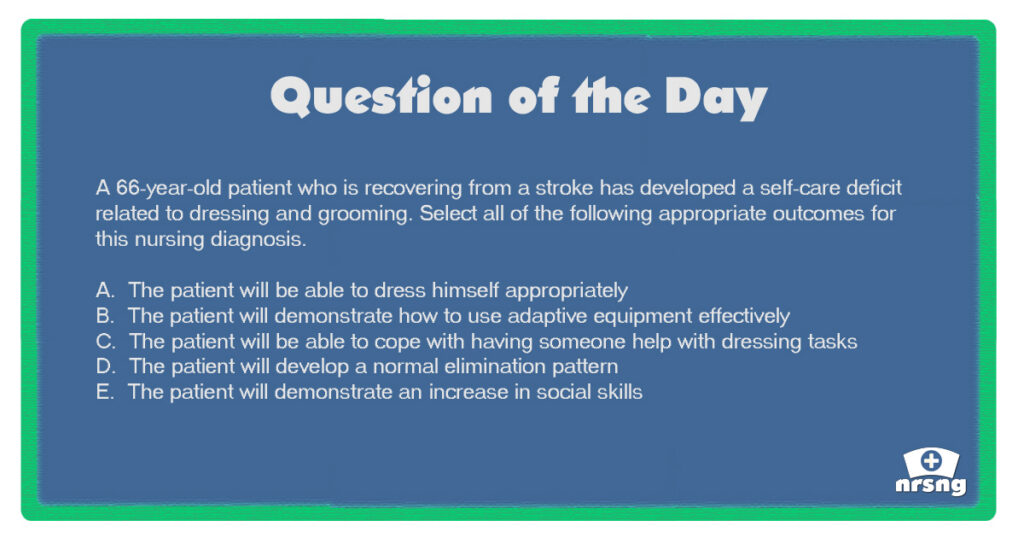
Answer: A. The patient will be able to dress himself appropriately B. The patient will demonstrate how to use adaptive equipment effectively C. The patient will be able to cope with having someone help with dressing tasks Rationale: A patient who struggles with self-care deficit may have difficulties performing activities of daily living and other […]
QOD10: Narcolepsy in a Traumatic Brain Injury Patient (Neurology/Basic Care and Comfort)
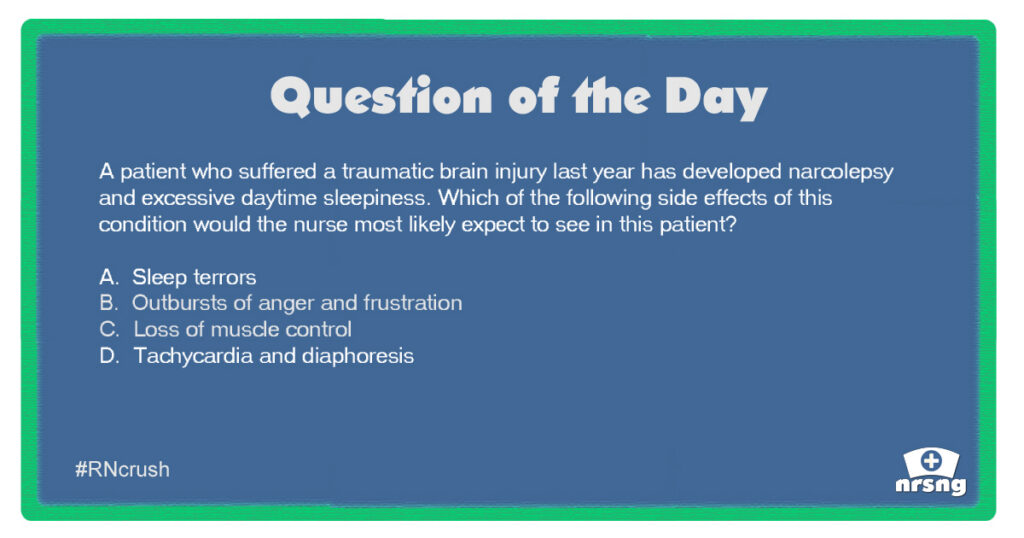
Answer: C. Loss of muscle control Rationale: A patient who has suffered a traumatic brain injury is at high risk of developing sleep problems. Narcolepsy is a condition in which a person experiences excessive daytime sleepiness. He may also develop a condition known as cataplexy, in which he experiences occasional loss of muscle control while […]
QOD9: Activities of Daily Living in a Patient with Myasthenia Gravis (Neurology/Basic Care and Comfort)
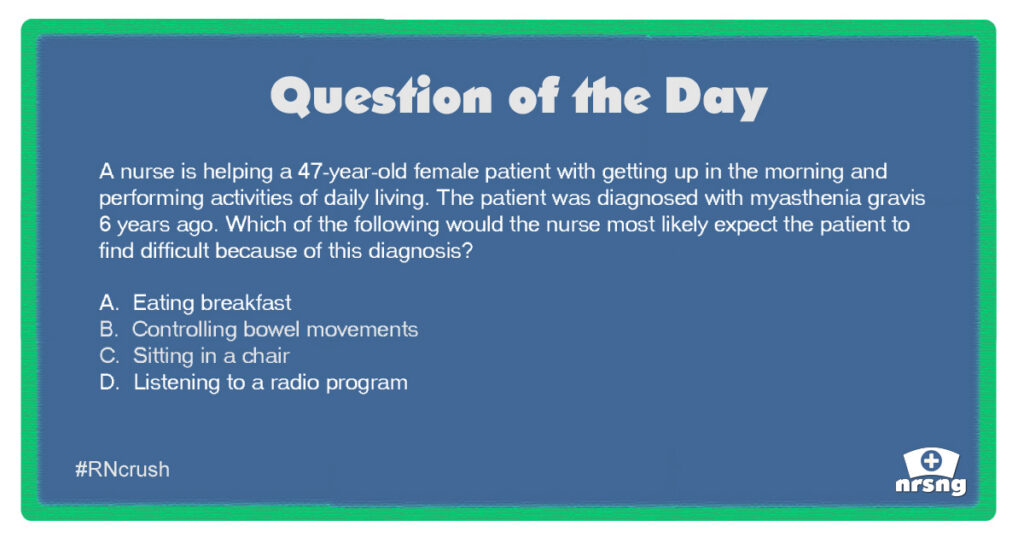
Answer: A. Eating breakfast Rationale: Myasthenia gravis is an autoimmune disorder characterized by weakness of skeletal muscles and fatigue with exertion. The patient would most likely have difficulties with performing activities of daily living that require exertion or use of muscles; this would include eating or grooming. It would be less difficult for a patient […]
QOD 8: Contractures in a Patient with Huntington’s Disease (Neurology/Basic Care and Comfort)
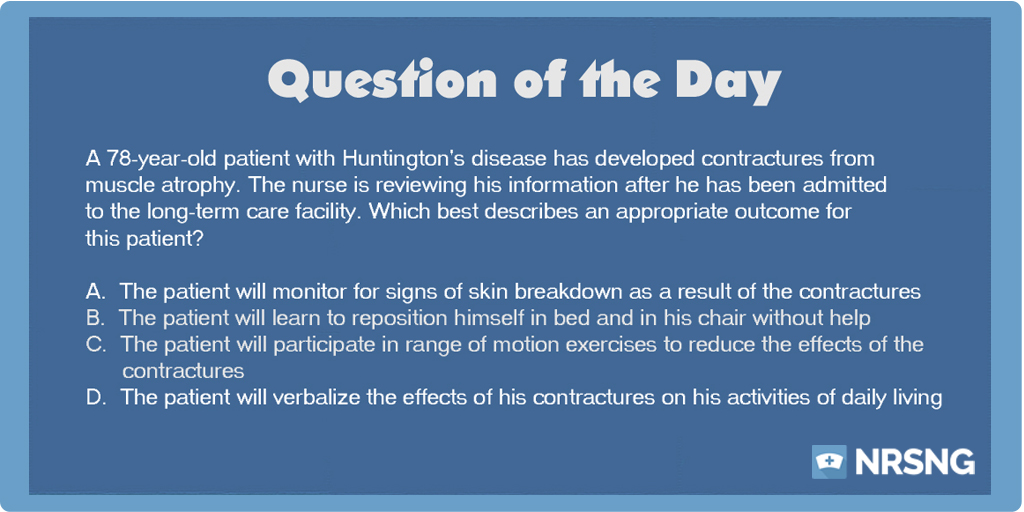
Question: A 78-year-old patient with Huntington’s disease has developed contractures from muscle atrophy. The nurse is reviewing his information after he has been admitted to the long-term care facility. Which best describes an appropriate outcome for this patient? Answer: C. The patient will participate in range of motion exercises to reduce the effects of the […]