Jon Haws, BS, BSN, RN, Alumnus CCRN
Jon Haws, RN is a nurse, educator, and founder of NURSING.com, dedicated to making nursing education easier and more effective. After facing burnout himself, he built NURSING.com to help students pass the NCLEX® with confidence and thrive in their careers.
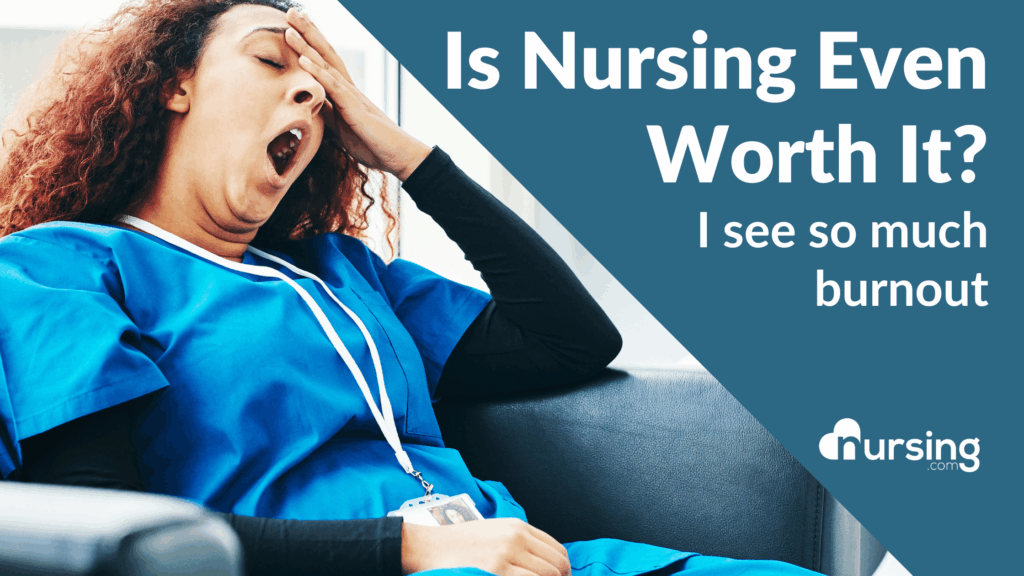
If you've spent any time in nursing—or even in nursing school—you've asked yourself that haunting question:
"Is nursing even worth it anymore?"
I know I did. And unlike most people who just think about quitting, I actually went through with it. I walked away from nursing school just 10 weeks before graduation.
Yes, you read that right.
After four semesters of sleepless nights, perfect grades, and pushing myself to the absolute limit, I quit.
I was done. Finished. Over it.
And looking back now?
It was hands-down the BEST decision I've ever made.
But before I explain why quitting nursing school was the catalyst that ultimately saved my nursing career and led me to founding NURSING.com, we need to talk about the elephant in the room: burnout in nursing isn't just common—it's an epidemic that's crushing the spirits of even the most dedicated nurses.
Key Takeaways:
I'm not going to sugarcoat this. The stats are alarming:

These aren't just numbers—they're your colleagues who call in sick because they can't face another shift. They're the nurses crying in their cars before walking into work.
They're the rising tide of talented people leaving the profession altogether.
Think about the similarities:
And get this: recovery from burnout can take up to TWO YEARS. This isn't something you "sleep off" over a weekend.
The most alarming part? Dr. Puleo found that the first people to burn out are usually the highest performers—the nurses who give 110%, who say "yes" to every request, who carry their units on their backs.
Sound familiar?
Pass Your Tests,
Improve Your Grades
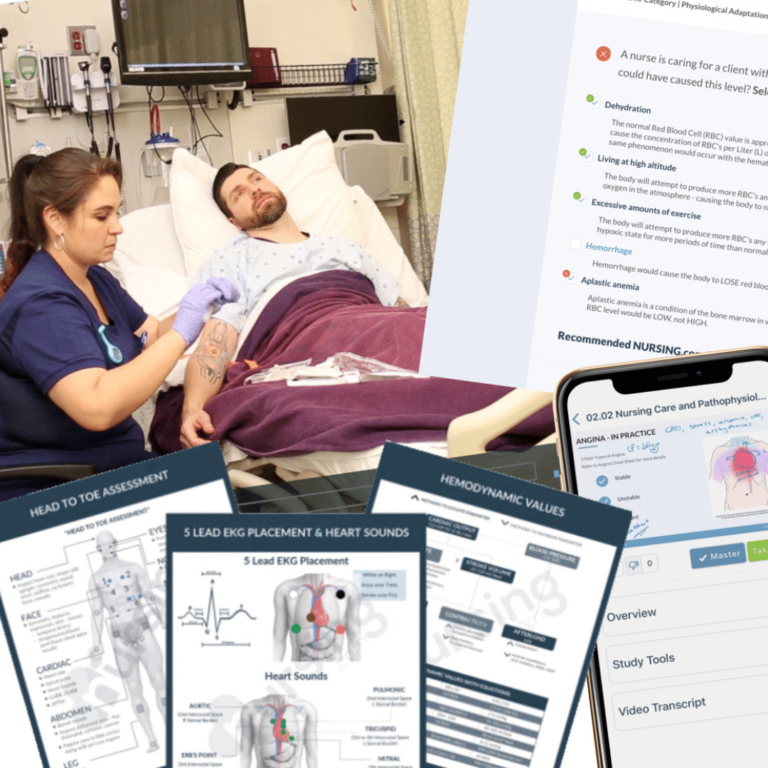
Enter a nursing topic and view videos and cheatsheet instantly
Free e-Book
77 Must-Know NCLEX Topics

About NURSING.com
The leading platform for nursing education and NCLEX® prep. Recognized as a top innovator in nursing education, where over 1,000,000+ nursing students gain confidence, improve their grades, and pass the NCLEX®.
Creators of SIMCLEX®, the world's most advanced NCLEX® simulation exam.
Our mission? To end the nursing education struggle and help students become confident, competent nurses.
Pass Your Tests,
Improve Your Grades
Enter a nursing topic and view videos and cheatsheet instantly
What topic are you struggling with?
Take a practice quiz
I never thought I'd be a quitter. But that's exactly what happened.
I started my Accelerated BSN program on fire. First semester: 4.0 GPA. Second semester: one of only two students to maintain a perfect 4.0. I was determined to learn everything, to be the best nurse possible.
Meanwhile, life was happening. My newborn son Taz was born with a condition requiring multiple surgeries. We were living on food stamps and WIC. We were buried in student debt and living in the roughest part of town. And we were, in fact, sleeping on a mattress that I had found in the dumpster.

Baby Taz in the NICU

The Mattress I found in the dumpster
I couldn't focus on anything except my anger and frustration. I started hating nursing school with every fiber of my being.
By the fourth semester, I was done. I withdrew from the program—just 10 weeks shy of graduation. In my mind, I was saying goodbye to nursing forever.
But here's the kicker: after 7 months of completely disconnecting from nursing, something shifted. I got the perspective I needed.
I returned, finished my final semester, graduated with a 3.89 GPA, landed a spot in a Trauma I ICU, and eventually founded NURSING.com.
The lesson? Sometimes the bottom is where you need to go to find your way back up.
Shortly after finishing my internship as a new nurse, I was assigned to care for a young patient—just 32 years old. By the time I took over his care, he was already unresponsive.
His entire family was there—his wife, parents, and in-laws—all gathered around him.
Earlier that day, he had become nearly unresponsive at home, and they rushed him to the hospital. Within hours, his condition had worsened significantly. That’s when I arrived.
Tests were run, specialists were called, and consults were ordered. Nothing. No one could determine the cause of his rapid deterioration. All the while, his brain continued to swell, and he kept slipping further away.
During my shift, I got to know his family. I learned that he had a child about the same age as my own two-year-old and that his birthday was just days apart from mine.
How could this young dad—someone so much like me—be in such a devastating situation?
When I clocked out that morning, I had a sinking feeling about what his fate would be. His story haunted me. I tried to sleep, tried to clear my mind—but I couldn't. I was deeply affected.
The next night, I was assigned to him again. His family was so kind and gracious, and we spent time just talking—about him, about life, about their dreams. By then, they knew what was coming. His brain continued to swell. His responsiveness faded.
When my shift ended, I drove straight to my parents' house just to tell them I loved them. Then I went home and gave my kids the longest hugs I'd ever given them. That night, I fully realized how short, unpredictable, and fragile life is.
Sleep didn’t come easily. I couldn’t stop thinking about him—his daughter, his wife, his family.
The next morning, I walked onto the unit and into a heartbreaking scene. They had just withdrawn life support. He was gone. His family saw me, embraced me, and we shed tears together.
A few days later, they were reaching out—friending me on social media, inviting me to his funeral.
This experience could have broken me. It could have led to burnout. But what saved me was the bond I built with his family. I realized that my role as a nurse wasn’t just to provide care—it was to support them, to comfort them, to be there when they needed someone most.
It wasn’t about me. It was about him. It was about them.
Baby Taz in the NICU

The Mattress I found in the dumpster
Despite everything I just shared, I firmly believe nursing remains one of the most rewarding careers on the planet. Here's why:
Recent surveys show signs of hope:
When nurses talk about what makes their work worthwhile, these themes consistently emerge:
I learned these lessons the hard way. Don't make my mistakes.
Avoid becoming uni-dimensional
You are NOT just a nurse. You're a human with varied interests and passions. When nursing becomes your entire identity, you've set yourself up for disaster. Keep doing the things that make you YOU.
Accept that knowledge comes in exponential leaps AFTER school
I was obsessed with knowing EVERYTHING before graduation. Now I realize how ridiculous that was. The real learning explosion happens once you're working. Give yourself permission to learn as you go.
Develop non-negotiable healthy habits
My game-changer was implementing a "Miracle Morning"—a short routine of journaling, meditation, and movement before anyone else wakes up. Sometimes just a 20-minute walk with my phone off resets everything.
Separate your worth from your performance
Your value as a human being has NOTHING to do with your grades or job evaluations. The book "Radical Acceptance" drastically changed my thinking. If I could force you to read one non-nursing book, it would be Radical Acceptance.
Find a trusted confidant
You need someone who lets you vent without judgment. My wife has been my rock through this journey. If you don't have that person, start journaling—buy a 79-cent composition book and let your feelings flow uncensored.
Embrace the growth mindset
You don't have to achieve perfection TODAY. You have a lifetime to work toward it. Nursing is a marathon, not a sprint. Pace yourself accordingly.

Research shows these approaches actually reduce nurse burnout - as you begin to read about burnout and PTSD you will see mindfulness repeated over and over and over. While that might seem overwhelming, there is a reason for it - it works. You don't have to become a meditation pro - just start with 1 minute, maybe play some soft music or sounds in the background, try going for a walk without your phone. Just try to be with yourself and work to slowly increase the time:
NURSING.com Courses on Burnout:
And what organizations need to do - yes, hospitals and schools have a DUTY to create programs and environments that help to prevent both burnout and PTSD - this is not an easy career and employers have a responsibility to ensure that not only are their patients taken care of, but also their staff:
After experiencing burnout myself and almost walking away from nursing forever, here's my answer:
YES—IF you find the right fit and take care of yourself.
Nursing is undeniably one of the hardest jobs on the planet. It will test you, drain you, and push you to your limits.
But it will also give you moments of purpose and connection that few other careers can match. The privilege of being with people during their most vulnerable moments. The ability to literally save lives with your knowledge and skill.
The future of nursing depends partly on hospitals improving conditions, yes. But it also depends on YOU—on nurses advocating for themselves, setting boundaries, and choosing paths that align with their strengths and passions.

If you're considering nursing: Don't be naive about the challenges, but don't be discouraged either. Go in with eyes wide open and strategies to protect yourself.
If you're already a nurse and struggling: Know that you're not alone. If I had given up permanently when I hit my wall, I would have missed out on an incredibly fulfilling career and the chance to impact millions of nursing students through NURSING.com.
Sometimes taking a step back—like I did—can provide the perspective you need. But don't give up altogether. The profession needs you, and there's a place where you can thrive as a nurse.
The world needs compassionate, skilled nurses more than ever—and for those who find their niche and learn to navigate the challenges, the reward is absolutely worth it.
What about you? Have you experienced burnout? What helped you overcome it?
Happy Nursing!
Jon Haws, RN Founder, NURSING.com
P.S. If you're struggling with burnout or want to prepare yourself better, we've got resources at NURSING.com designed specifically to help nurses thrive, not just survive. Check them out—your future self will thank you.
References: