Skip to content
nursing-com-website-logo
  • Learn
    • Courses
    • Study Plans
    • Study Tools
    • Practice Questions
    • SIMCLEX
  • Product
    • SIMCLEX
    • Certifications
    • Nursing School Survival Package
    • NCLEX Survival Package
    • Nursing Lifetime Survival Package
  • Coaching
  • New 🎉
  • Learn
    • Courses
    • Study Plans
    • Study Tools
    • Practice Questions
    • SIMCLEX
  • Product
    • SIMCLEX
    • Certifications
    • Nursing School Survival Package
    • NCLEX Survival Package
    • Nursing Lifetime Survival Package
  • Coaching
  • New 🎉
0
Your Cart
empty cart Your cart is currently empty! Return to Shop
Remove All Items
Are you sure? Yes / No
0 $0.00
View cart Checkout
Start Free Trial
Login
  • Learn
    • Courses
    • Study Plans
    • Study Tools
    • Practice Questions
    • SIMCLEX
  • Product
    • SIMCLEX
    • Certifications
    • Nursing School Survival Package
    • NCLEX Survival Package
    • Nursing Lifetime Survival Package
  • New 🎉
  • Login
  • Start Free Trial
0
Your Cart
empty cart Your cart is currently empty! Return to Shop
Remove All Items
Are you sure? Yes / No
0 $0.00
View cart Checkout

Top 200 Must-Know Drugs Card Templates for the NCLEX® (+ Free Drug Cards Download)

Mastering Medications: Simplified Tips for Memorizing Drugs and Side Effects

❌ Still memorizing meds the hard way?

Back-to-School Sale: Up to 65% Off Nursing Must-Haves

✅ Crush exams with proven study tools
✅ Affordable prep for the semester ahead
✅ Biggest sale of the year — while it lasts

Save Up to 65% Now →

Table of Contents

What are the must-know drugs for the NCLEX?

The NCLEX often focuses on high-risk medications, commonly used drugs, and those with significant nursing implications.

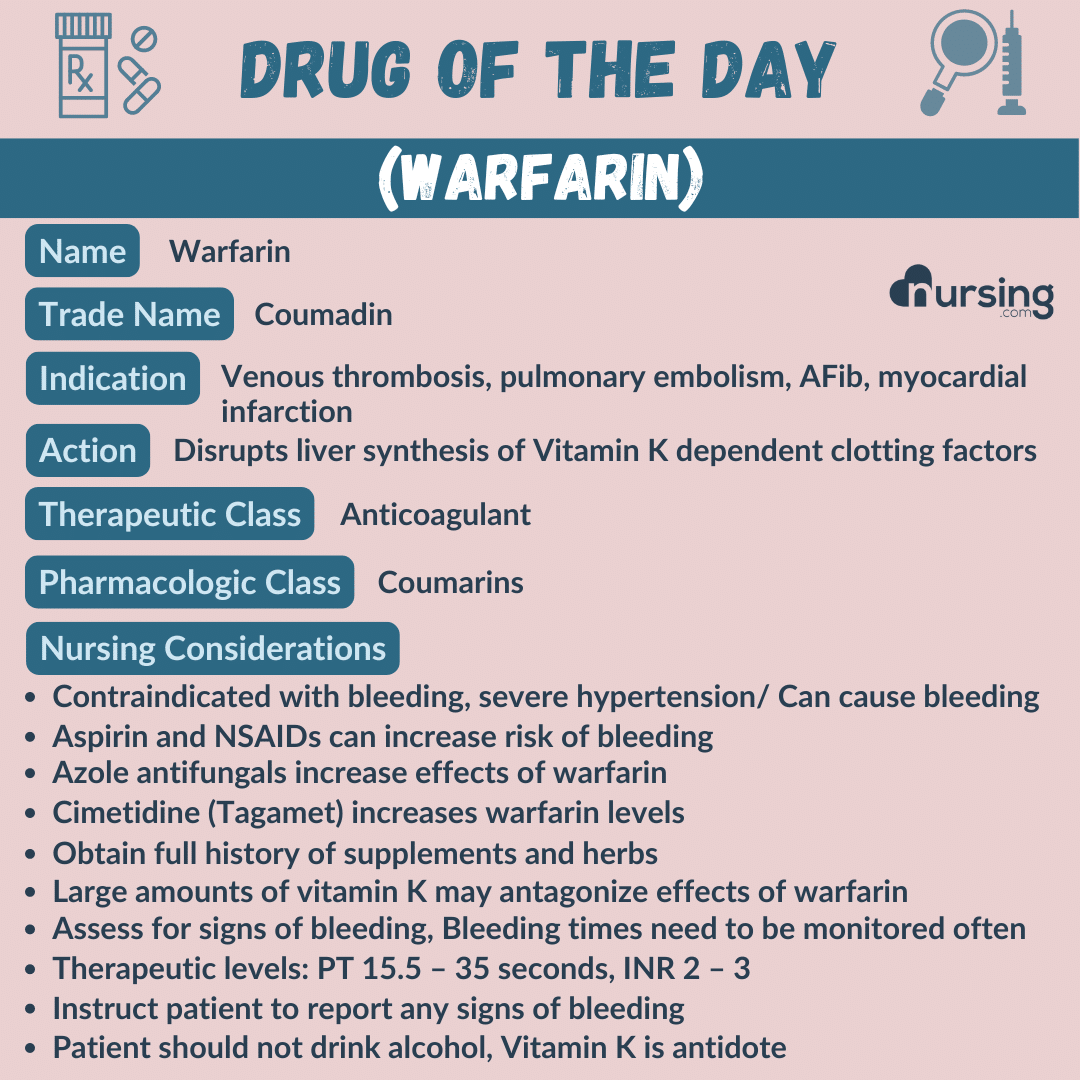
Warfarin

drug card on warfarin for nursing students studying nursing pharmacology
Learn More
What labs need to be monitored, and what are the therapeutic ranges?
  • Monitor INR (therapeutic range: 2–3 for most conditions; 2.5–3.5 for mechanical heart valves).
  •  
  • Check PT to assess clotting time.


What foods should patients avoid while taking warfarin?

Avoid or limit vitamin K-rich foods (e.g., spinach, kale, broccoli) as they reduce effectiveness. Maintain a consistent diet.
What are the signs of bleeding to watch for, and what should patients do?
  • Watch for bruising, black/tarry stools, bleeding gums, nosebleeds, or prolonged bleeding.
  •  
  • Report any signs of bleeding to a healthcare provider immediately.

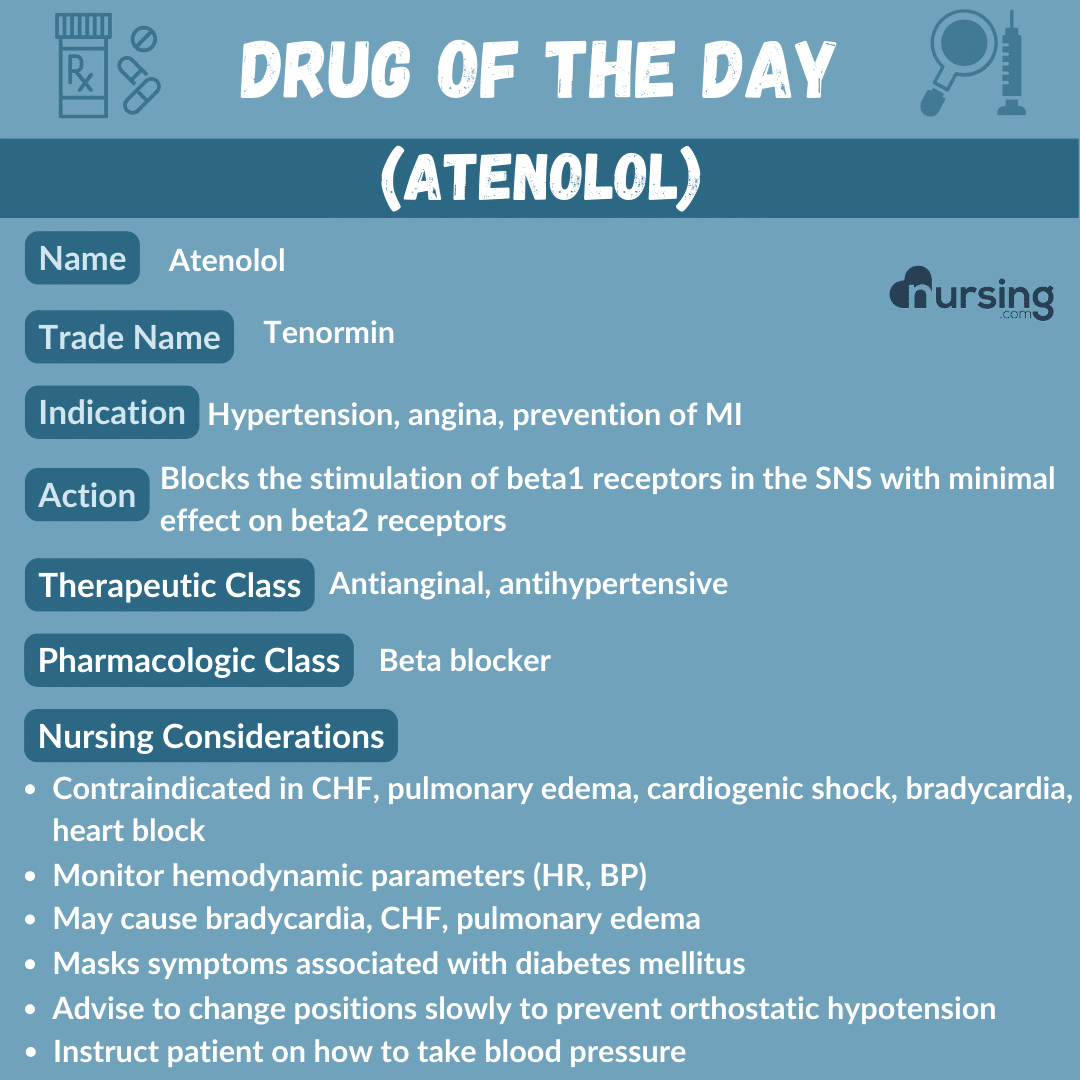
Atenolol

A detailed pharmacology drug card for Atenolol, designed for nursing students, including its uses, dosage, contraindications, side effects, and nursing considerations, presented in an organized format.
Learn More
When should I hold atenolol based on heart rate or blood pressure?

Hold if heart rate <60 bpm or systolic BP <90 mmHg, unless otherwise directed by the provider.

What are the common side effects of atenolol?
  • Fatigue
  • Dizziness
  • Bradycardia
  • Hypotension
  • Cold extremities
Can atenolol be stopped suddenly?

No, stopping suddenly can cause rebound hypertension, angina, or even myocardial infarction. Always taper off under medical supervision.
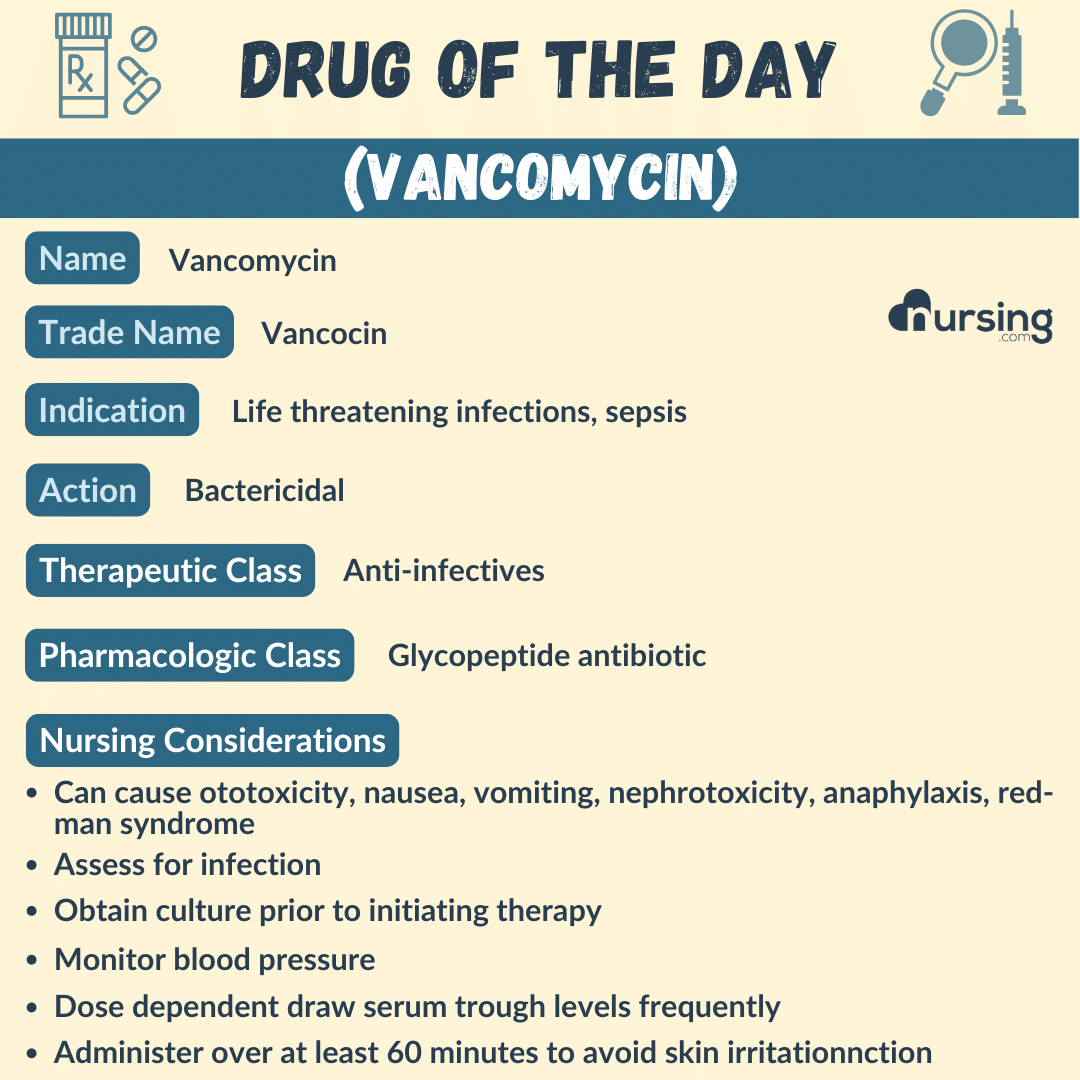
Vancomycin

A detailed pharmacology drug card for Vancomycin, designed for nursing students, including its uses, dosage, contraindications, side effects, and nursing considerations, presented in an organized format
Learn More
What labs need to be monitored with vancomycin, and why?
  • Trough levels (therapeutic range: 10–20 mcg/mL) to ensure efficacy and prevent toxicity.
  •  
  • Monitor creatinine and BUN for kidney function, as vancomycin can be nephrotoxic.
What are the signs of Red Man Syndrome, and how do I prevent it?
  • Signs: Flushing, rash, itching, or hypotension during infusion.
  •  
  • Prevention: Administer vancomycin slowly over 60–90 minutes and premedicate with antihistamines if needed.
What are the major side effects of vancomycin?

Nephrotoxicity, ototoxicity, and infusion reactions like Red Man Syndrome. Promptly report hearing changes, such as tinnitus or vertigo.
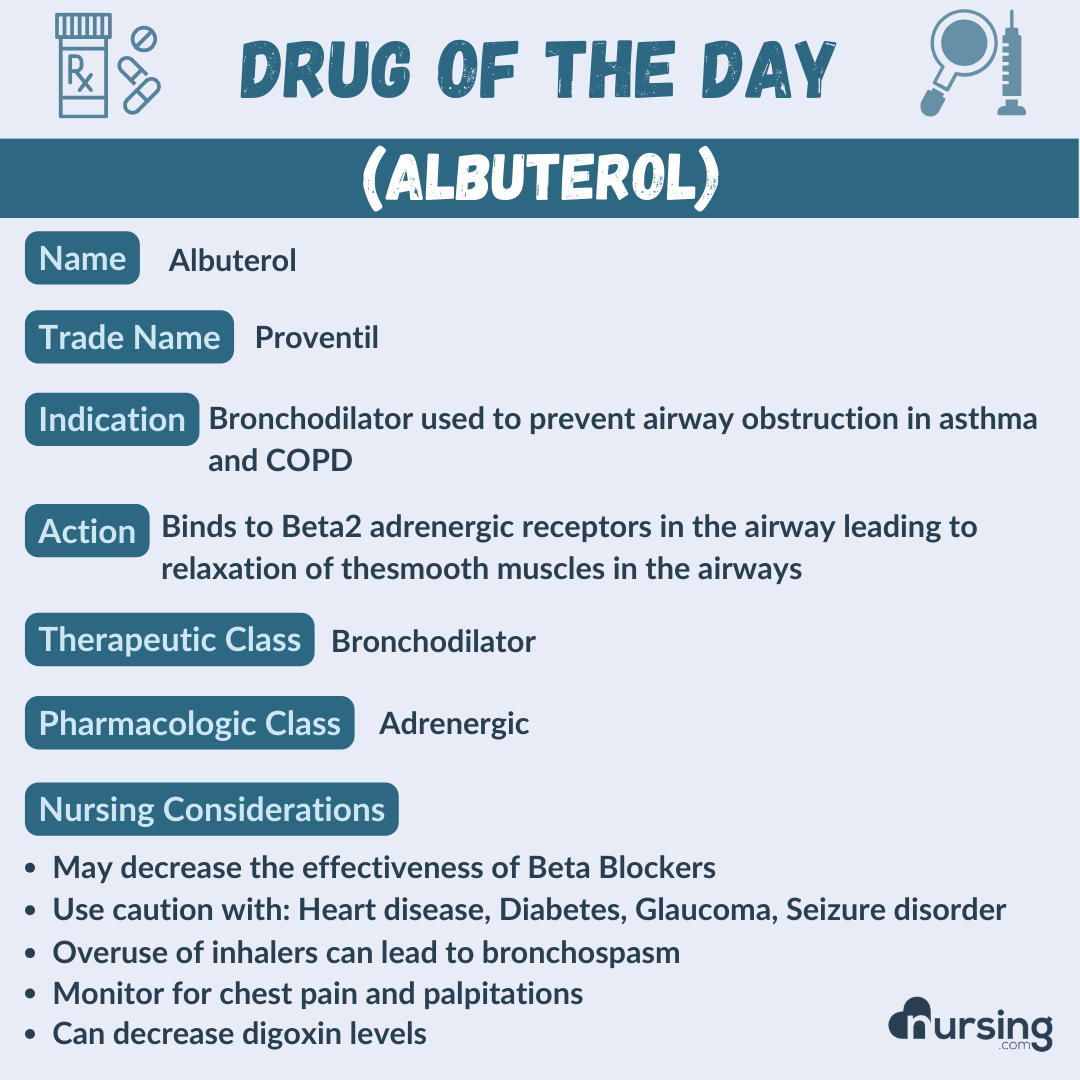
Albuterol

A detailed pharmacology drug card for Albuterol, designed for nursing students, including its uses, dosage, contraindications, side effects, and nursing considerations, presented in an organized format.
Learn More
What are the common side effects of albuterol, and how should I manage them?
  • Side effects: Tachycardia, tremors, nervousness, dizziness. bradycardia.
  •  
  • Management: Reassure patients that these are common and usually temporary. Monitor vital signs if symptoms persist.
How often can albuterol be used, and what happens if it’s overused?

Typically used every 4–6 hours as needed. Overuse can lead to paradoxical bronchospasm or reduced effectiveness.

What should I teach patients about using an inhaler?

Use a spacer for proper delivery, inhale deeply while pressing the inhaler, and hold breath for 10 seconds. Rinse mouth afterward to prevent irritation.
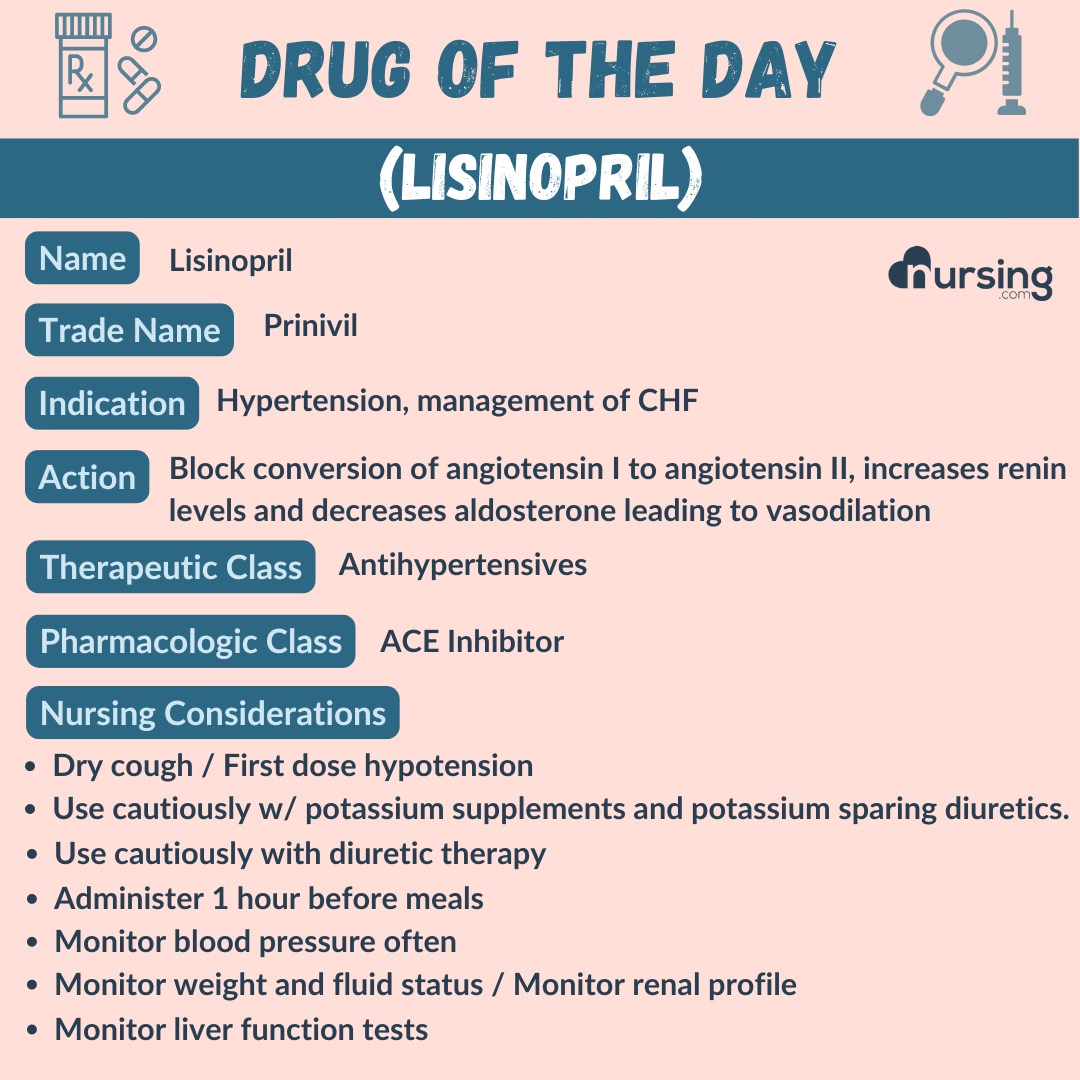
Lisinopril

A detailed pharmacology drug card for Lisinopril, designed for nursing students, including its uses, dosage, contraindications, side effects, and nursing considerations, presented in an organized format.
Learn More
What are the common side effects of lisinopril, and how should I manage them?
  • Side effects: Dry cough, hyperkalemia, dizziness.
  •  
  • Management: Monitor potassium levels, encourage hydration, and report a persistent cough to the provider.
What are the signs of angioedema, and how serious is it?
  • Signs: Swelling of the face, lips, tongue, or throat, leading to difficulty breathing.
  •  
  • This is a medical emergency; stop the medication and seek immediate help.
Why is lisinopril used for heart failure or hypertension?

It reduces blood pressure and decreases the workload on the heart by preventing the conversion of angiotensin I to angiotensin II, a potent vasoconstrictor.
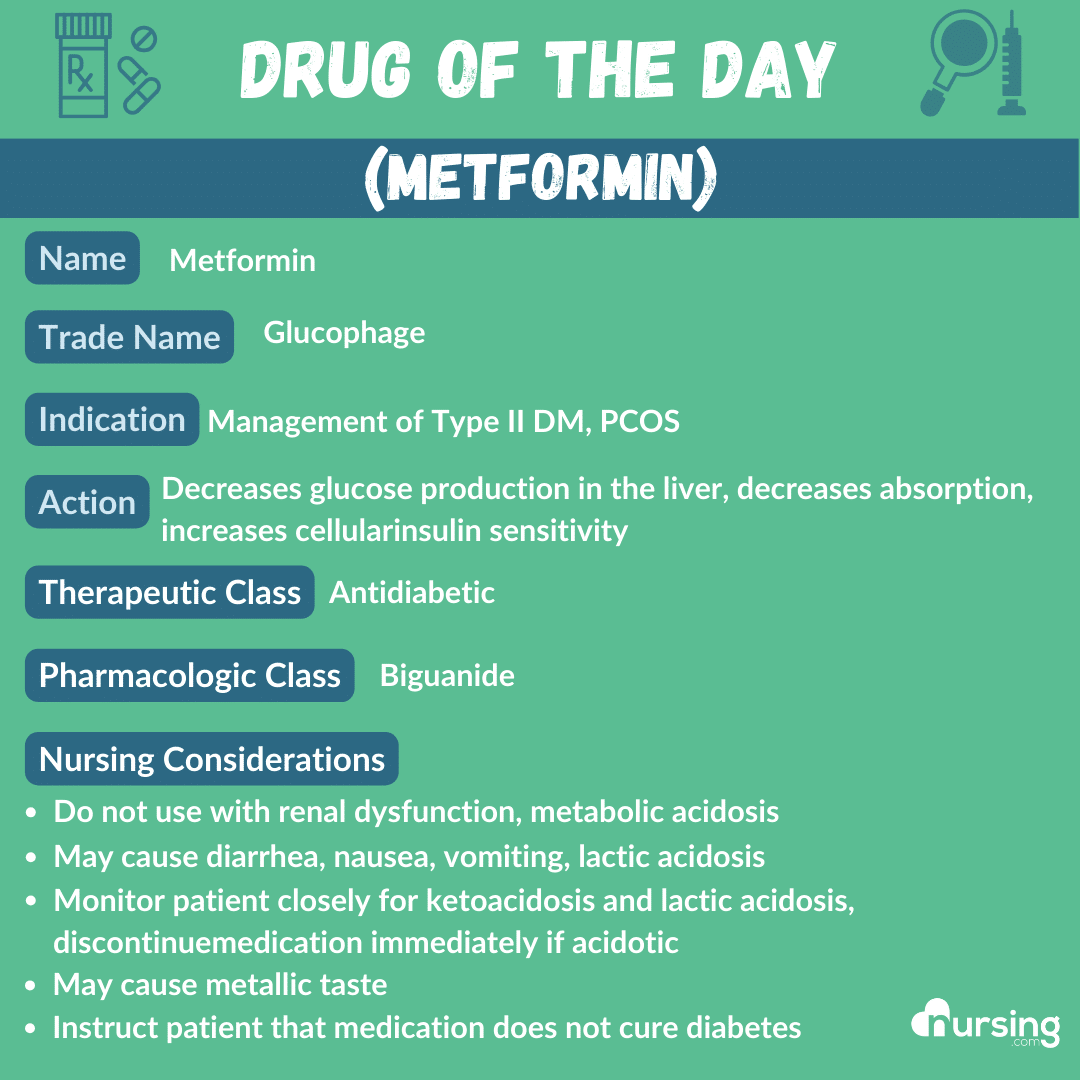
Metformin

A detailed pharmacology drug card for Metformin, designed for nursing students, including its uses, dosage, contraindications, side effects, and nursing considerations, presented in an organized format.
Learn More
What are the most common side effects of metformin?
  • Side effects: GI upset (nausea, diarrhea, abdominal pain), which usually improves over time.
  •  
  • Take with food to reduce stomach irritation.
What is lactic acidosis, and how do I recognize it?
  • A rare but serious side effect. Symptoms: Muscle pain, fatigue, difficulty breathing, confusion.
  •  
  • Monitor kidney function, as impaired kidneys increase the risk.
Why should metformin be held before procedures with contrast dye?

Contrast dye can impair kidney function, increasing the risk of lactic acidosis. Hold metformin for 24–48 hours before and after the procedure until kidney function is confirmed as normal.
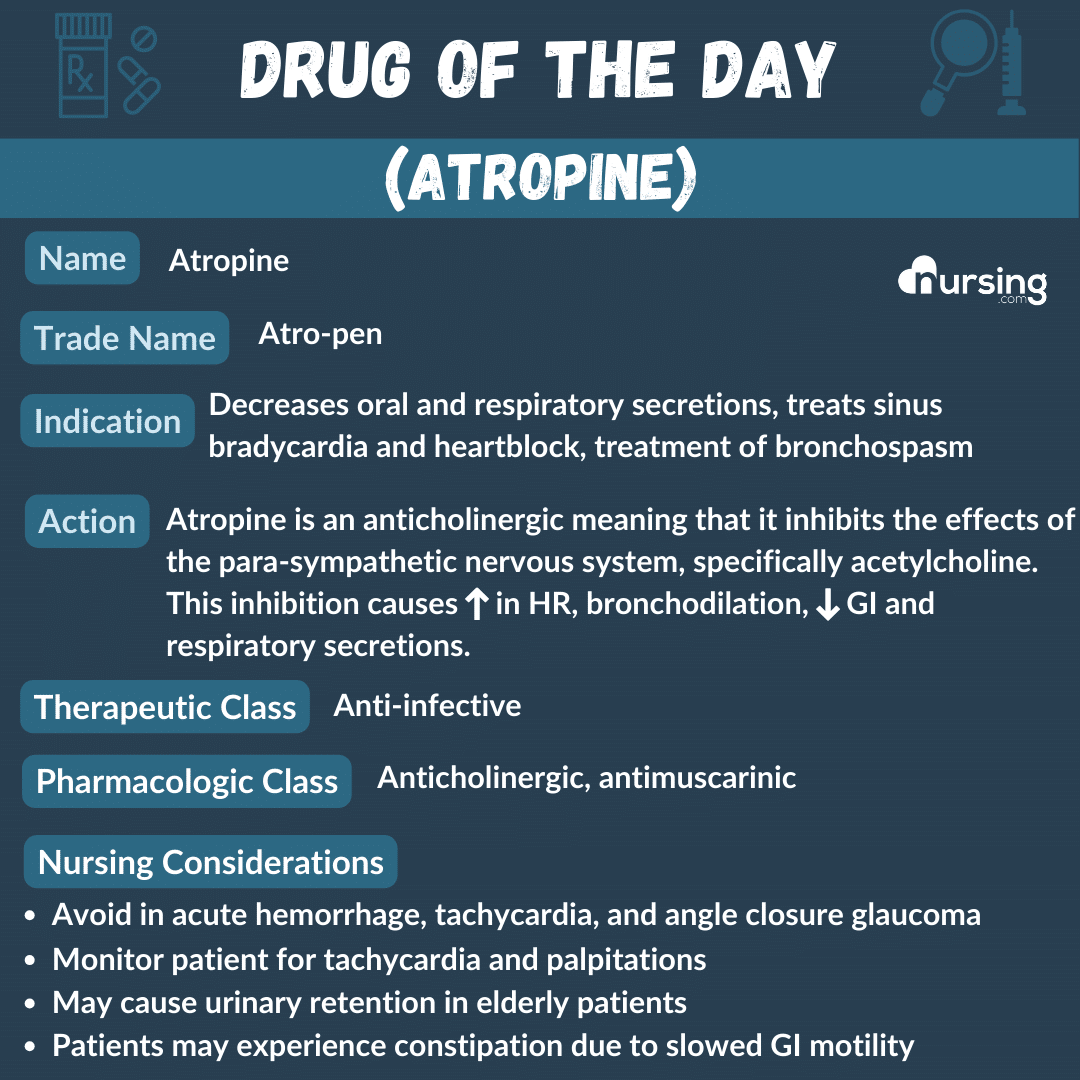
Atropine

A detailed pharmacology drug card for Atropine, designed for nursing students, including its uses, dosage, contraindications, side effects, and nursing considerations, presented in an organized format.
Learn More
What is atropine used for in clinical practice?
  • Bradycardia: Increases heart rate by blocking the parasympathetic nervous system.
  • Pre-anesthesia: Reduces secretions.
  • Organophosphate poisoning: Counteracts excessive acetylcholine.
  •  
What are the common side effects of atropine?
  • Dry mouth, blurred vision, urinary retention, constipation, tachycardia, and confusion.
  •  
  • These result from its anticholinergic effects.
When should atropine be avoided?

Avoid in patients with glaucoma, tachycardia, or urinary retention, as it can worsen these conditions.
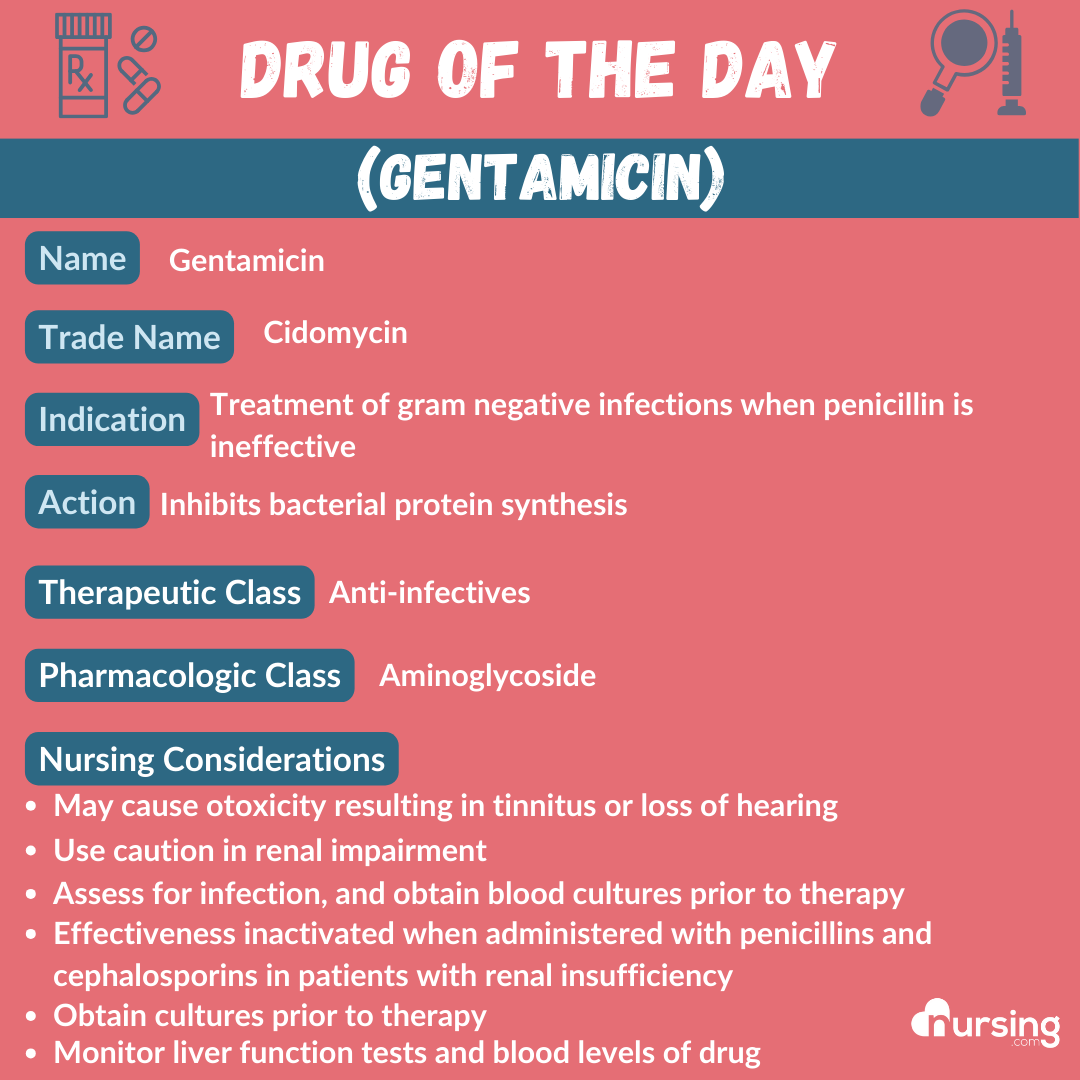
Gentamicin

A detailed pharmacology drug card for Gentamicin, designed for nursing students, including its uses, dosage, contraindications, side effects, and nursing considerations, presented in an organized format.
Learn More
What labs need to be monitored with gentamicin, and why?
  • Trough levels: Ensure therapeutic dosing and avoid toxicity (therapeutic range: <2 mcg/mL).
  •  
  • Kidney function tests (BUN, creatinine): Gentamicin is nephrotoxic.
What are the signs of ototoxicity, and how do I respond?
  • Signs: Tinnitus, hearing loss, vertigo, or dizziness.
  •  
  • Stop the medication and notify the provider immediately.
Why is gentamicin often combined with other antibiotics?

It’s commonly combined for synergistic effects, particularly in severe infections (e.g., endocarditis). This helps broaden coverage against resistant bacteria.

Ondansetron

A detailed pharmacology drug card for Ondansetron, designed for nursing students, including its uses, dosage, contraindications, side effects, and nursing considerations, presented in an organized format.
Learn More
What is ondansetron used for, and how does it work?
  • It’s used to prevent nausea and vomiting, especially after surgery, chemotherapy, or radiation.
  •  
  • It works by blocking serotonin receptors in the brain and gut.
What are the common side effects of ondansetron?

Headache, constipation, dizziness, and in rare cases, QT prolongation (monitor EKG in high-risk patients).

Can ondansetron be given to pregnant patients?

Yes, it’s often used to treat hyperemesis gravidarum (severe pregnancy-related nausea). Always confirm with the provider.
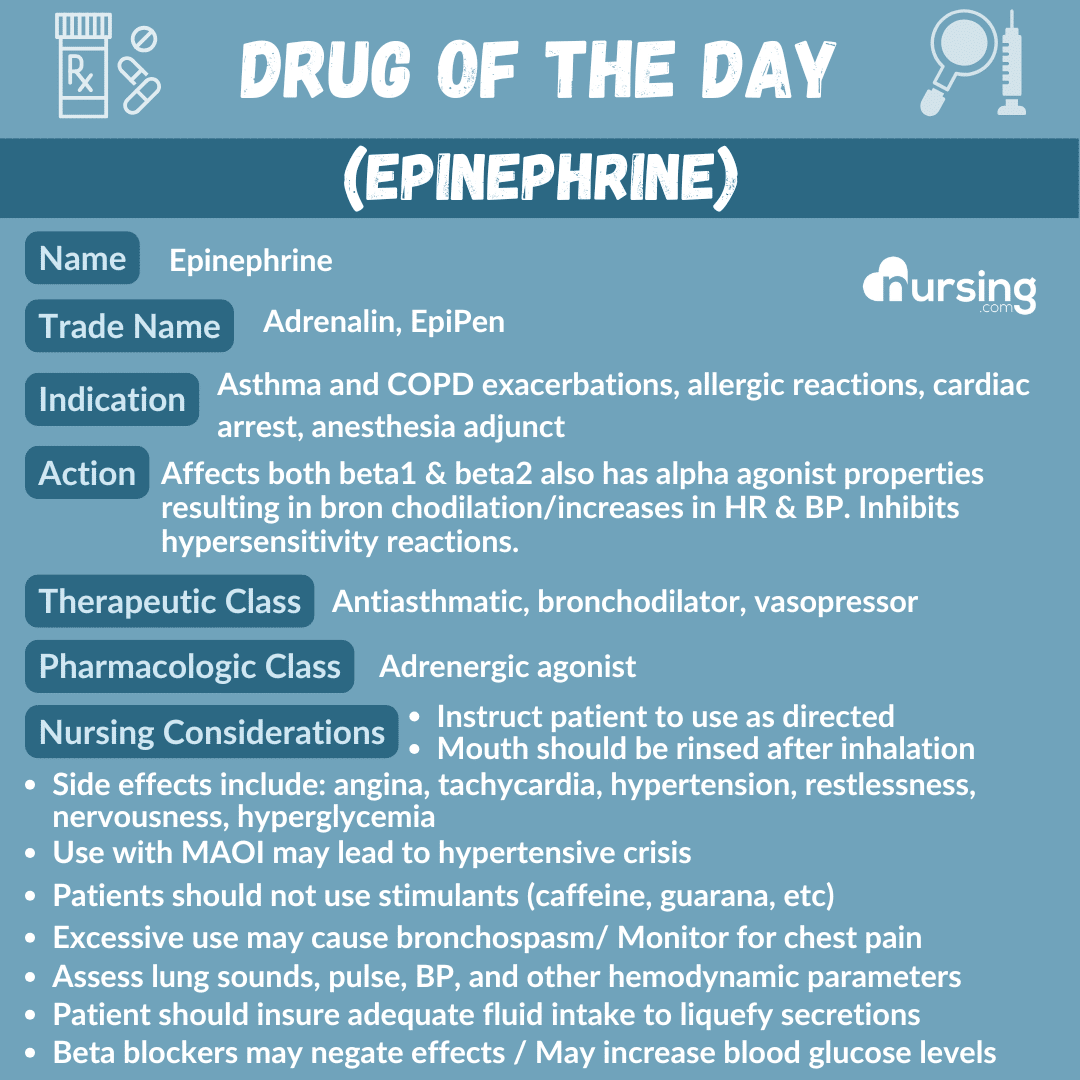
Epinephrine

A detailed pharmacology drug card for Epinephrine, designed for nursing students, including its uses, dosage, contraindications, side effects, and nursing considerations, presented in an organized format.
Learn More
What is epinephrine used for in emergencies?

Treats anaphylaxis, cardiac arrest, and severe asthma attacks by increasing heart rate, improving blood flow, and relaxing airway muscles.

How is epinephrine administered in anaphylaxis?

Administer intramuscularly (IM) into the thigh (0.3 mg for adults, 0.15 mg for children). Repeat every 5–15 minutes if symptoms persist.

What are the common side effects of epinephrine?

Tachycardia, palpitations, anxiety, tremors, and increased blood pressure. Monitor for arrhythmias in high-risk patients

If You Don’t Understand Meds, You Don’t Pass.

Back-to-School Deals: Up to 65% Off Nursing Must-Haves

✅ Make meds finally click
✅ Pass the NCLEX with confidence
✅ Study faster, retain longer, stress less

Save Up to 65% Now →

Top 10 Medications Every Nurse Should Know

Here are the Top 10 Medications Every Nurse Should Know. These medications are widely used, essential for patient care, and are likely to appear on exams like the NCLEX or in clinical practice. The NCLEX often includes high-priority medications such as beta blockers, ACE inhibitors, insulin types, and anticoagulants. Nursing students should be familiar with nursing implications, side effects, and common trade names. These free printable drug card PDFs will help you prep for NCLEX.
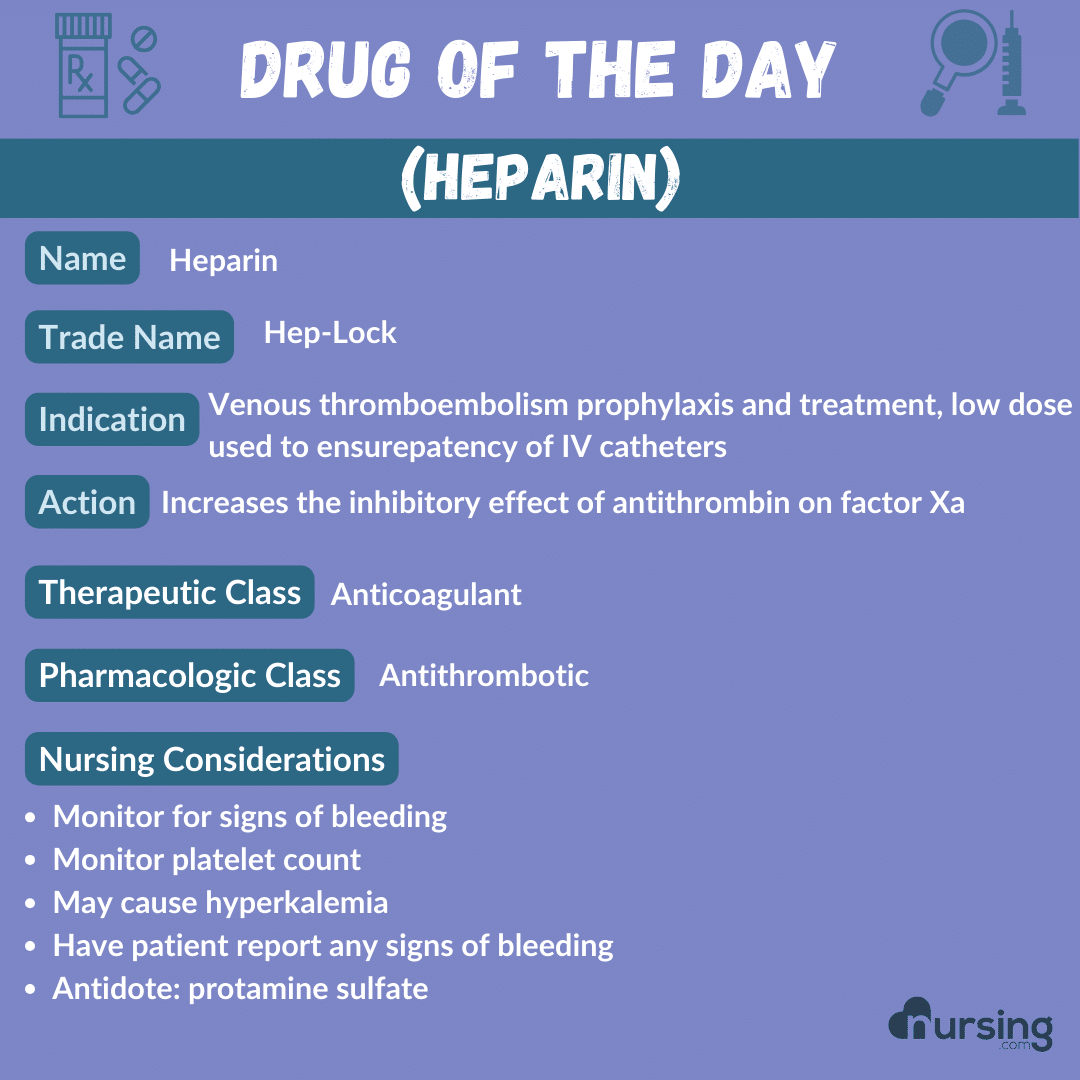
Heparin

A detailed pharmacology drug card for Heparin, designed for nursing students, including its uses, dosage, contraindications, side effects, and nursing considerations, presented in an organized format.
Learn More
How do I calculate the correct dose, and how is it adjusted?

Heparin: The dose is typically weight-based (e.g., 80 units/kg bolus, then 18 units/kg/hr infusion). Always use the protocol provided by your facility and confirm with another nurse. Adjust the dose based on aPTT values to keep them within the therapeutic range (1.5–2.5 times normal).
What are the signs of heparin-induced thrombocytopenia (HIT)?
  • Platelet drop (>50%), new clots, or red/necrotic injection sites.
  •  
  • Stop heparin, notify the provider, and switch to a non-heparin anticoagulant.
Why is it important to rotate injection sites and not massage after administration?
  • Rotate sites: Prevent irritation and scar tissue.
  •  
  • Do not massage: To avoid spreading the medication into surrounding tissues, which can cause bruising or hematoma formation. The medication needs to stay localized for proper absorption.

Acetaminophen

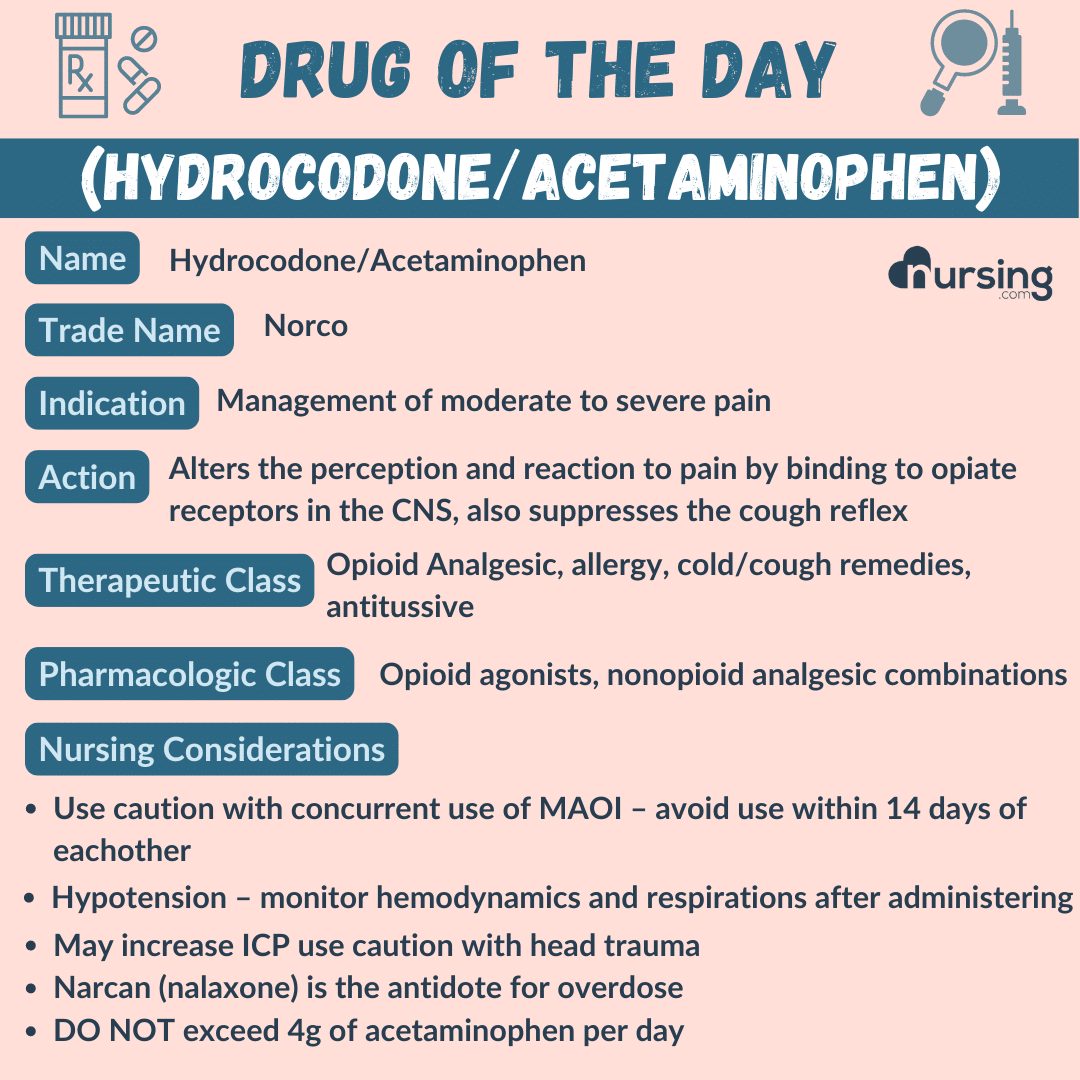
A detailed pharmacology drug card for Acetaminophen, designed for nursing students, including its uses, dosage, contraindications, side effects, and nursing considerations, presented in an organized format.
Learn More
How do I know if a patient is at risk for liver toxicity?

If the patient takes more than 4g/day, has liver disease, drinks alcohol heavily, or uses multiple medications containing acetaminophen.

What’s the difference between acetaminophen and NSAIDs like ibuprofen?
  • Acetaminophen: Relieves pain and fever, does not reduce inflammation, and is gentler on the stomach.
  •  
  • NSAIDs (e.g., ibuprofen): Also reduce inflammation but can cause stomach and kidney issues.
Can patients take acetaminophen with other medications, like cold medicines?

Yes, but check labels for hidden acetaminophen to avoid overdose. Many cold medicines already contain acetaminophen..
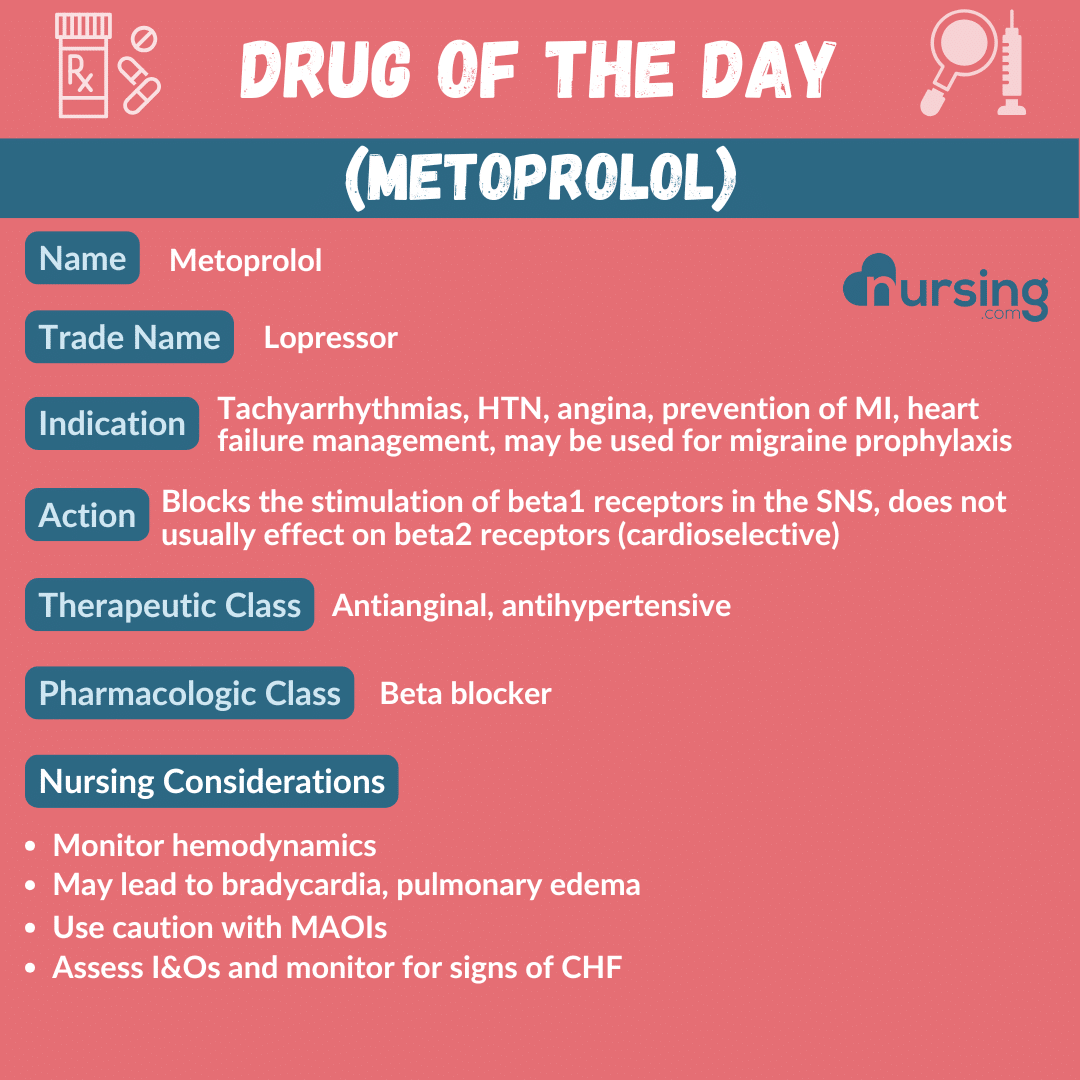
Metoprolol

A detailed pharmacology drug card for Metoprolol, designed for nursing students, including its uses, dosage, contraindications, side effects, and nursing considerations, presented in an organized format.
Learn More
When should I hold metoprolol based on a patient’s heart rate or blood pressure?

Hold if heart rate <60 bpm or systolic BP <90 mmHg, unless otherwise instructed by the provider.

What are the signs of bradycardia, and how serious is it?
  • Signs: Fatigue, dizziness, confusion, chest pain, or syncope.
  •  
  • Can be serious if it leads to inadequate blood flow; notify the provider immediately.
Can patients suddenly stop taking beta-blockers like metoprolol?

No. Stopping suddenly can cause rebound hypertension, angina, or even a heart attack. Always taper off under medical supervision.
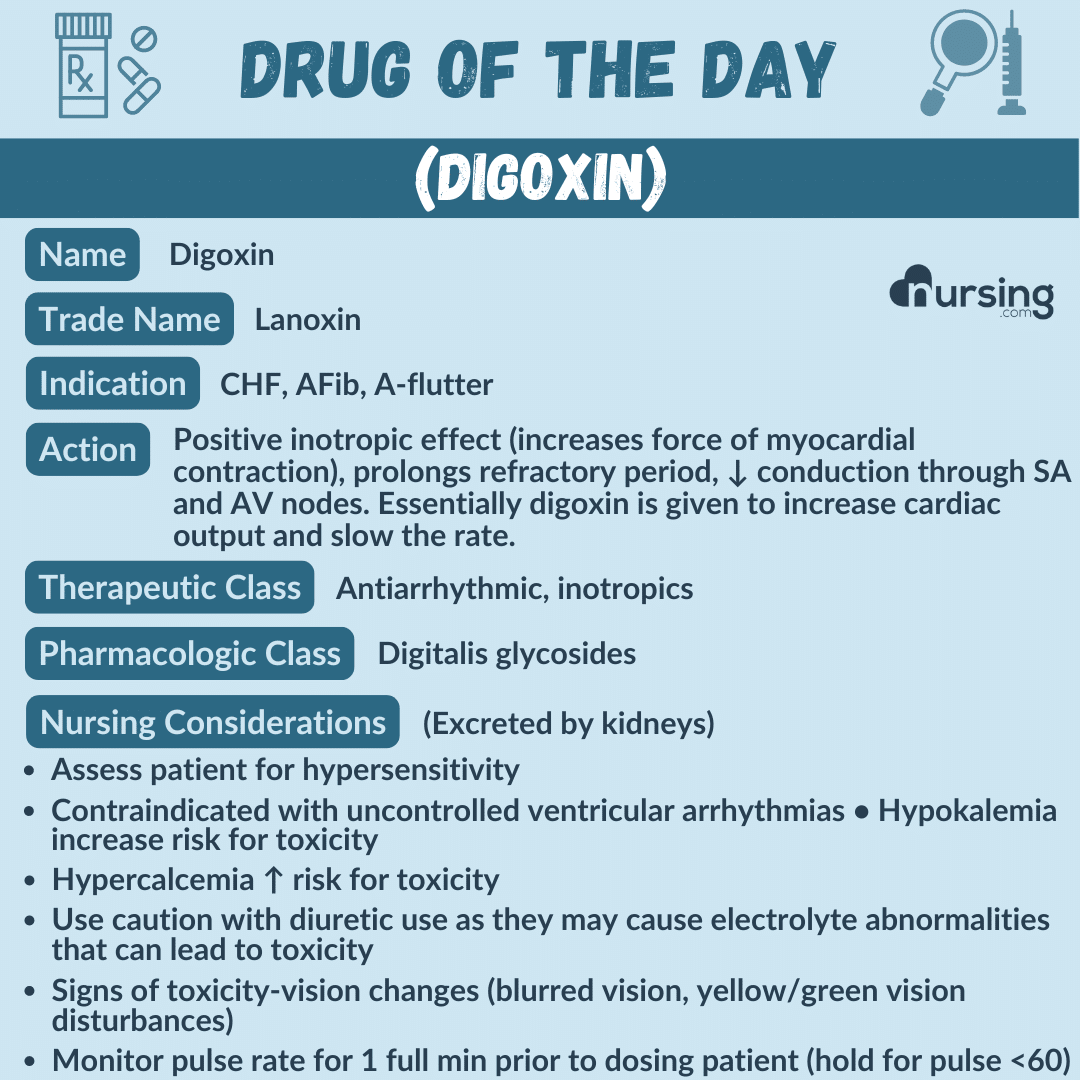
Digoxin

A detailed pharmacology drug card for Digoxin, designed for nursing students, including its uses, dosage, contraindications, side effects, and nursing considerations, presented in an organized format.
Learn More
How do I recognize digoxin toxicity, and what causes it?
  • Signs: Nausea, vomiting, vision changes (yellow/green halos), confusion, bradycardia.
  •  
  • Caused by high digoxin levels, low potassium, or kidney dysfunction.
What labs need to be monitored with digoxin?
  • Digoxin levels: Therapeutic range is 0.5–2.0 ng/mL.
  •  
  • Potassium: Low levels increase toxicity risk.
Why is digoxin used for heart failure, and how does it work?

It strengthens the heart’s contractions and slows the heart rate, improving cardiac output and reducing symptoms.
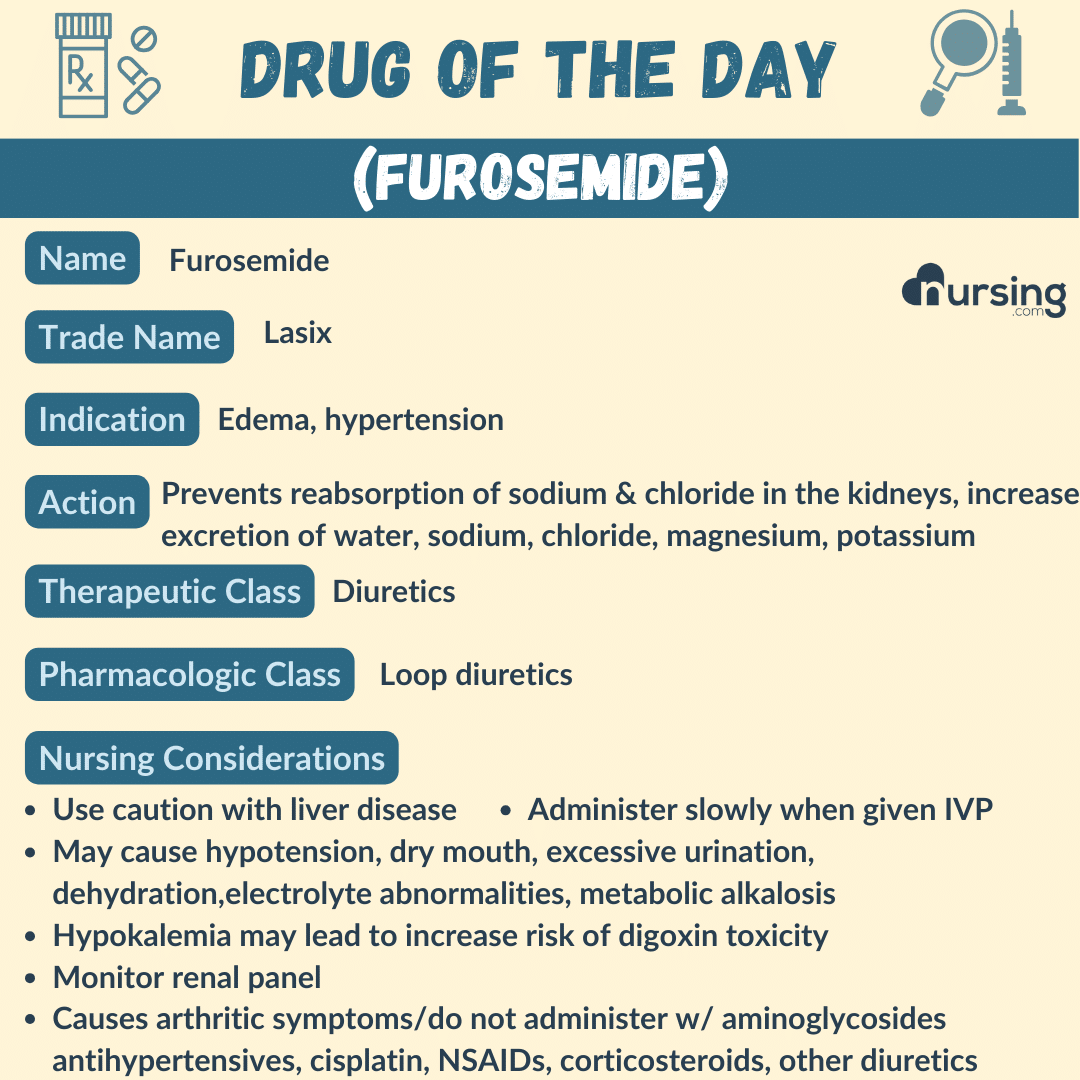
Furosemide

A detailed pharmacology drug card for Furosemide, designed for nursing students, including its uses, dosage, contraindications, side effects, and nursing considerations, presented in an organized format
Learn More
How do I monitor potassium levels, and what are the symptoms of low potassium?
  • Monitor with serum potassium blood tests; normal range is 3.5–5.0 mEq/L.
  •  
  • Symptoms of low potassium: Muscle cramps, weakness, irregular heartbeat.
Why is daily weight monitoring important with furosemide?

It helps track fluid balance and detect early signs of dehydration or fluid retention.

How do I prevent dehydration in patients taking this medication?

Encourage adequate fluid intake unless restricted, monitor for signs of dehydration (e.g., dizziness, dry mouth), and adjust dose as prescribed.

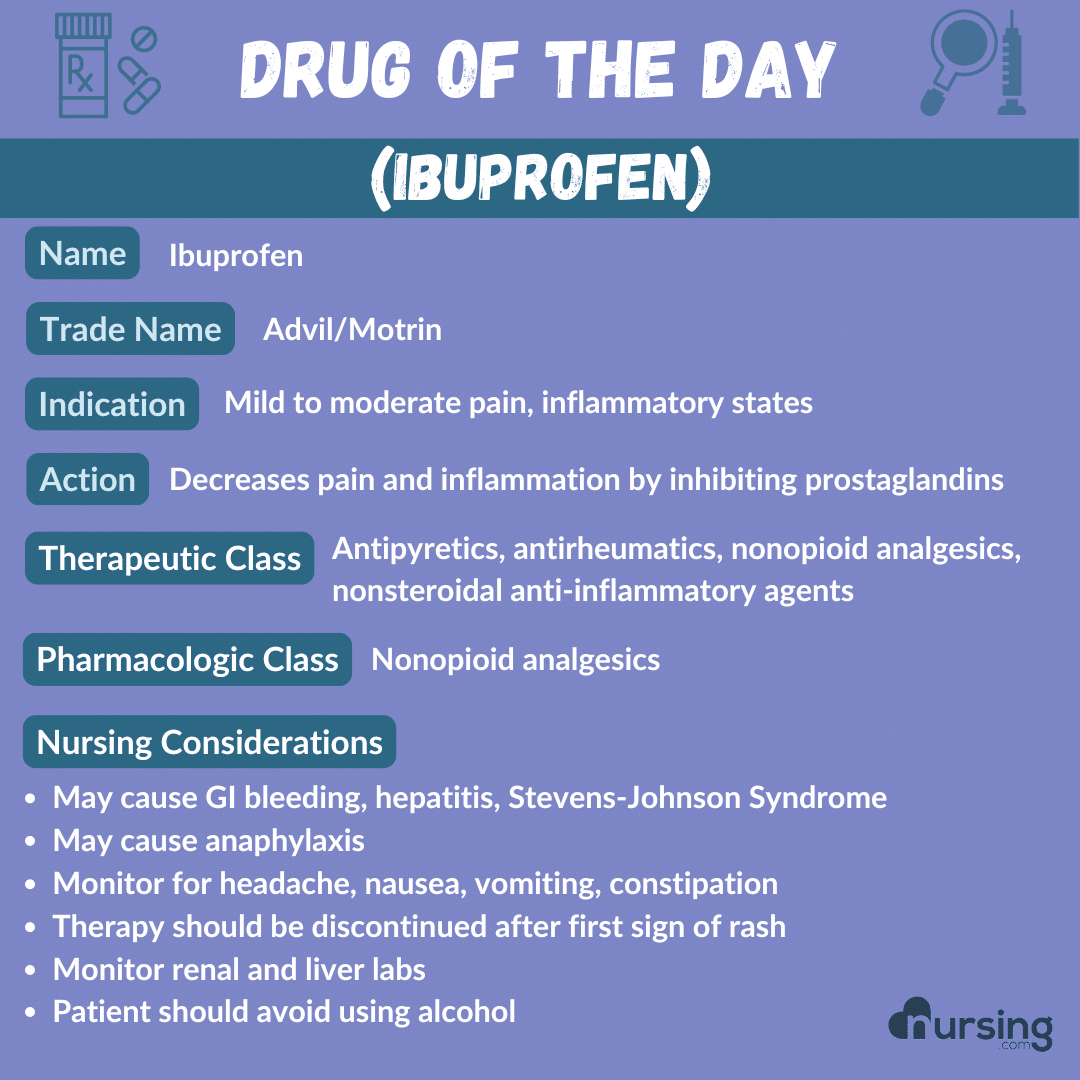
Ibuprofen

A detailed pharmacology drug card for Ibuprofen, designed for nursing students, including its uses, dosage, contraindications, side effects, and nursing considerations, presented in an organized format.
Learn More
Why should patients take ibuprofen with food?

To reduce the risk of stomach irritation, ulcers, and GI bleeding.

What are the signs of GI bleeding to watch for?

Black, tarry stools, vomiting blood, abdominal pain, or unexplained fatigue.

Can ibuprofen and acetaminophen be taken together for pain?

Yes, but they should be taken at different times to avoid overlapping doses and always under a provider’s guidance.

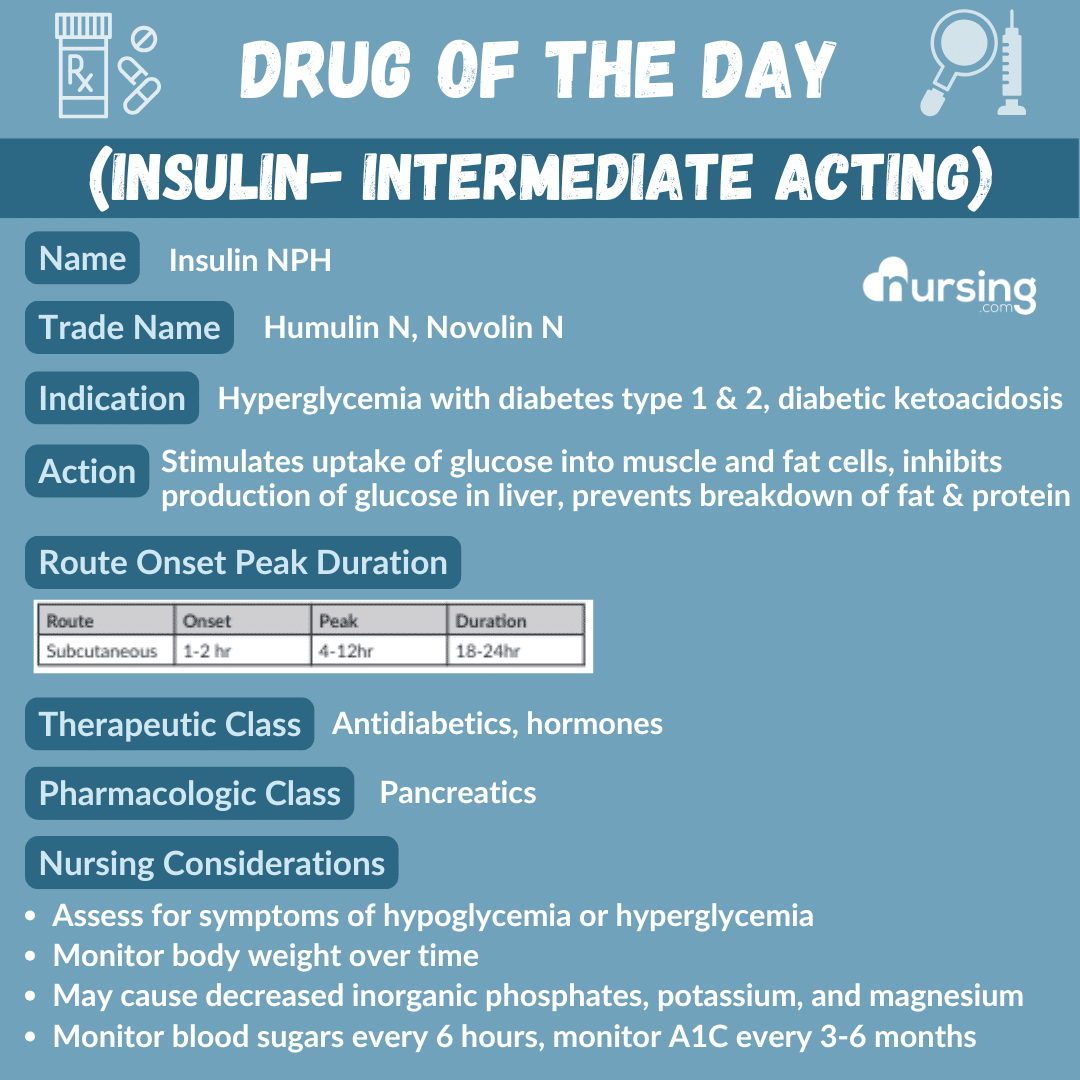
Insulin-Intermediate Acting

A detailed pharmacology drug card for Intermediate-Acting Insulin, designed for nursing students, including its uses, dosage, contraindications, side effects, and nursing considerations, presented in an organized format.
Learn More
What is the onset, peak, and duration of intermediate-acting insulin?
  • Onset: 1–2 hours
  • Peak: 4–12 hours
  • Duration: 12–18 hours
When should intermediate-acting insulin be administered, and how does it fit into a patient's regimen?

Typically given once or twice daily, often in combination with rapid- or short-acting insulin to provide basal control between meals and overnight.

What are the signs of hypoglycemia, and how do I manage it?
  • Signs: Sweating, shaking, confusion, dizziness, hunger.
  •  
  • Management: Administer 15g of a fast-acting carbohydrate (e.g., juice or glucose tablets) and recheck blood glucose in 15 minutes.
  •  

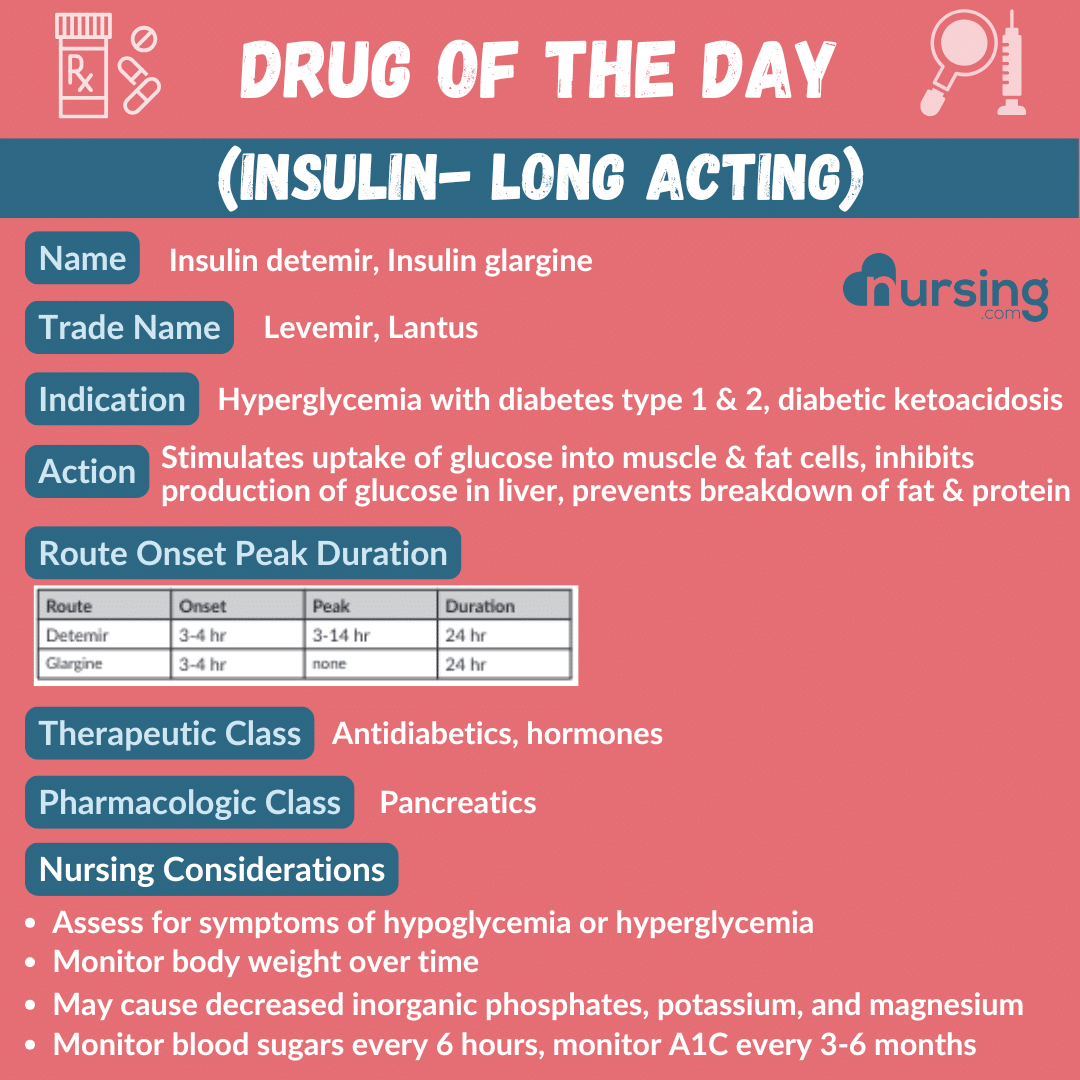
Insulin - Long Acting

A detailed pharmacology drug card for Long-Acting Insulin, designed for nursing students, including its uses, dosage, contraindications, side effects, and nursing considerations, presented in an organized format.
Learn More
What is the onset, peak, and duration of long-acting insulin?
  • Onset: 1–2 hours
  • Peak: Minimal or none (provides steady levels)
  • Duration: 24 hours or longer
When should long-acting insulin be administered, and why is it important?

Typically given once daily (sometimes twice for some formulations). It provides basal glucose control throughout the day and night, mimicking the pancreas’ natural insulin release.

Can long-acting insulin be mixed with other insulins?

No, long-acting insulin (e.g., glargine or detemir) should not be mixed in the same syringe with other insulins as it can alter its effectiveness.

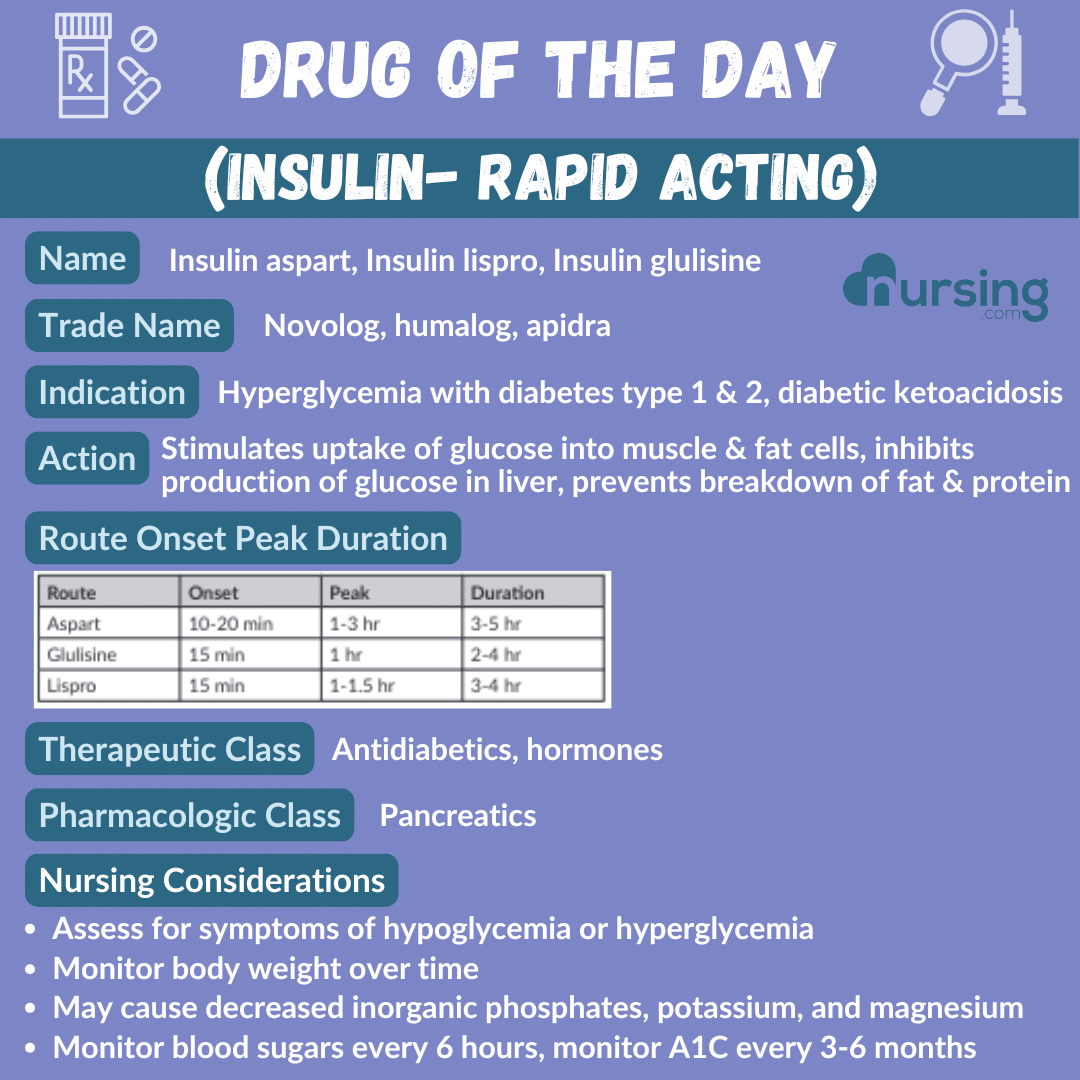
Insulin - Rapid Acting

A detailed pharmacology drug card for Rapid-Acting Insulin, designed for nursing students, including its uses, dosage, contraindications, side effects, and nursing considerations, presented in an organized format.
Learn More
What is the onset, peak, and duration of rapid-acting insulin?
  • Onset: 10–30 minutes
  • Peak: 30 minutes to 3 hours
  • Duration: 3–5 hours
When should rapid-acting insulin be administered, and why?

Administer immediately before meals to control blood glucose spikes from food intake.

Can rapid-acting insulin be mixed with other insulins?

Yes, it can be mixed with intermediate-acting insulin (e.g., NPH) in the same syringe, but administer immediately after mixing to maintain effectiveness.

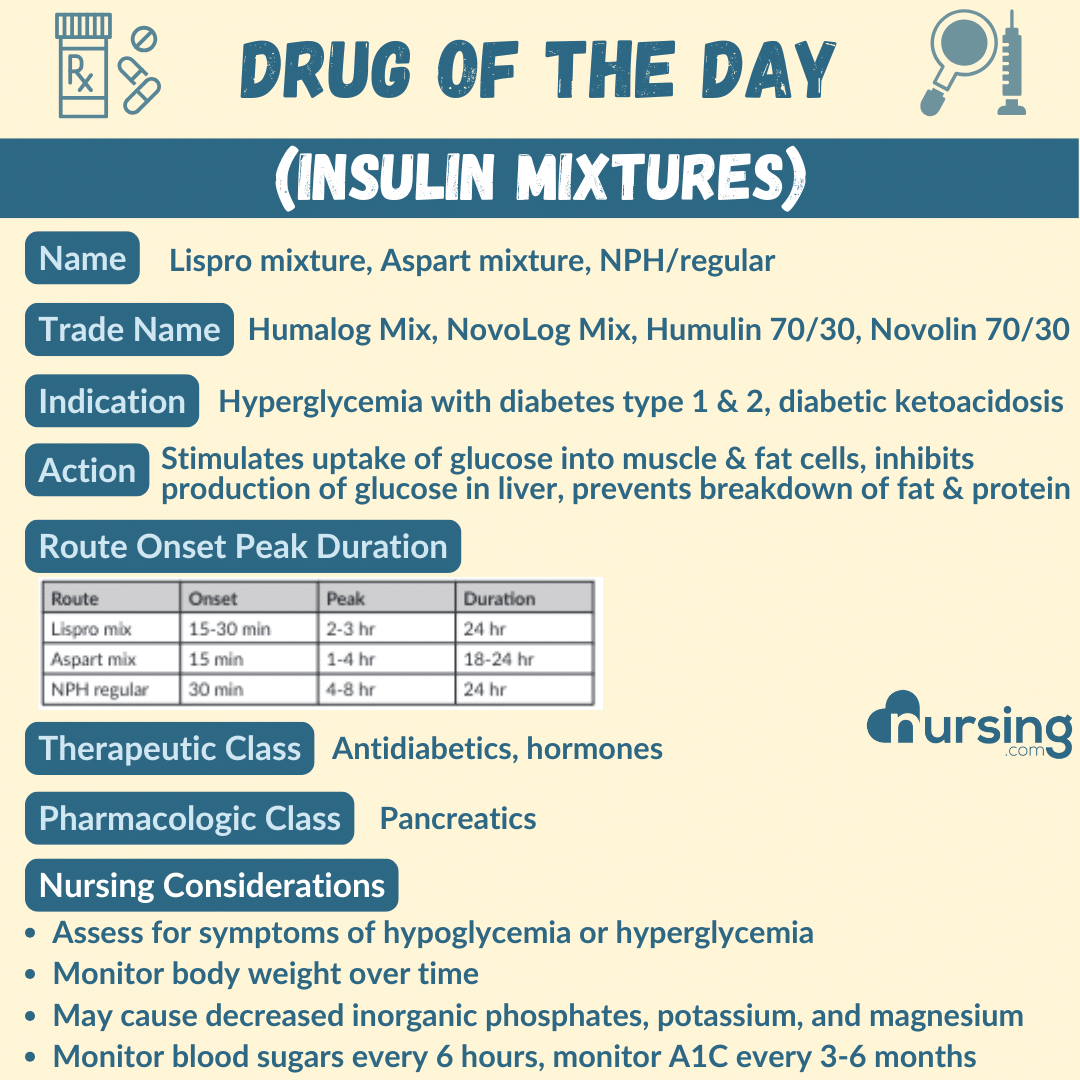
Insulin Mixtures

A detailed pharmacology drug card for Insulin Mixtures, designed for nursing students, including its uses, dosage, contraindications, side effects, and nursing considerations, presented in an organized format.
Learn More
What is an insulin mixture, and why is it used?

Insulin mixtures combine rapid- or short-acting insulin with intermediate-acting insulin in one injection to simplify dosing and provide both mealtime and basal glucose control.

When should insulin mixtures be administered?

Administer 15–30 minutes before meals, depending on the rapid- or short-acting component’s onset time.

How do I properly mix insulin in a syringe?

If mixing insulins manually (e.g., rapid/short-acting with NPH):
  • Draw up clear (rapid/short-acting) insulin first, then cloudy (intermediate-acting) insulin.
  •  
  • This prevents contamination of the clear insulin vial.

If You Don’t Understand Meds, You Don’t Pass.

Back-to-School Deals: Up to 65% Off Nursing Must-Haves

✅ Make meds finally click
✅ Pass the NCLEX with confidence
✅ Study faster, retain longer, stress less

Shop up to 65% off now →

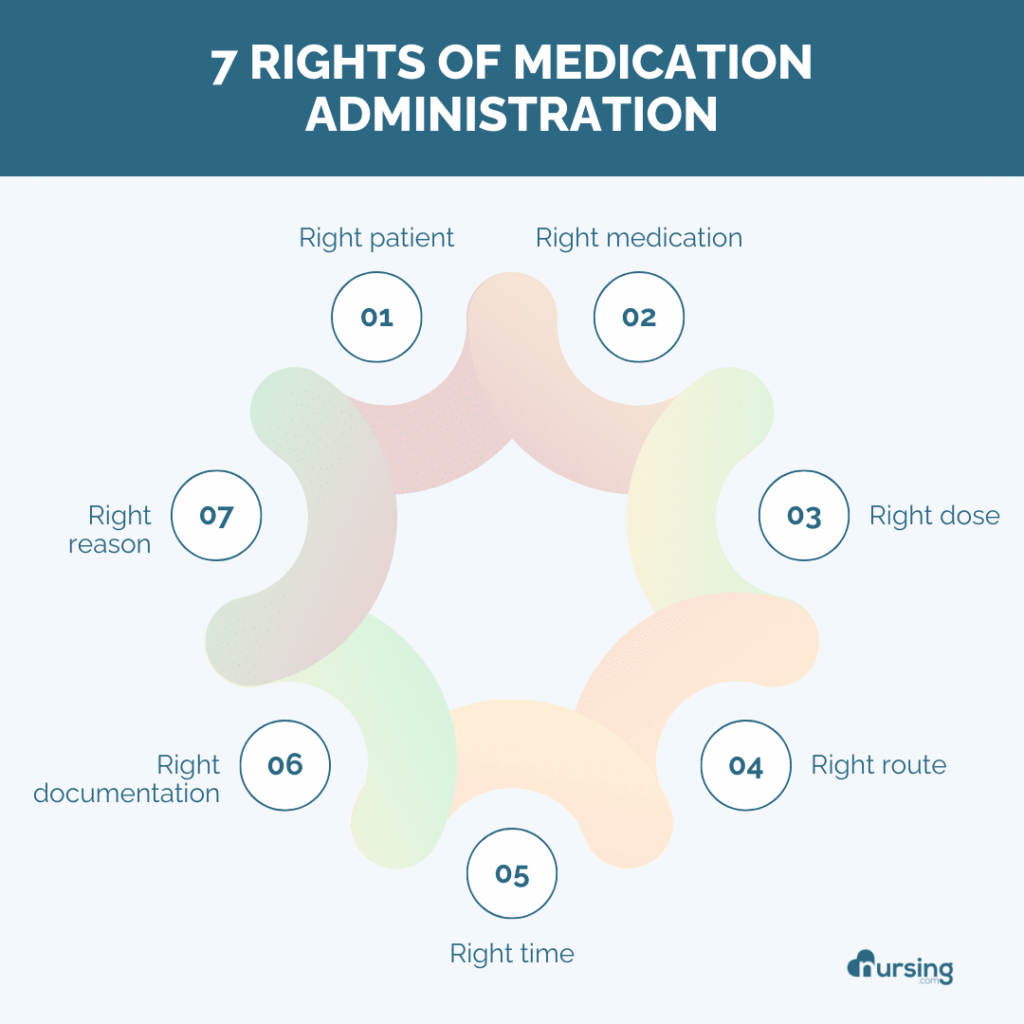
What Are The 7 Rights of Medication Administration?

An educational graphic for nursing students outlining the 7 Rights of Medication Administration, including the right patient, right medication, right dose, right route, right time, right documentation, and right reason, presented in a clear and organized format.
Take Quiz
  • Right Patient: Verify with two identifiers (e.g., name and DOB).
  • Right Medication: Double-check the drug name and order.
  • Right Dose: Ensure the dose matches the order.
  • Right Route: Administer via the correct method (oral, IV, etc.).
  • Right Time: Administer at the correct time, including considerations for food.
  • Right Documentation: Document immediately after giving the medication.
  • Right Reason: Ensure the medication is appropriate for the patient's condition.

How You Can Memorize Pharmacology Medications Effectively?

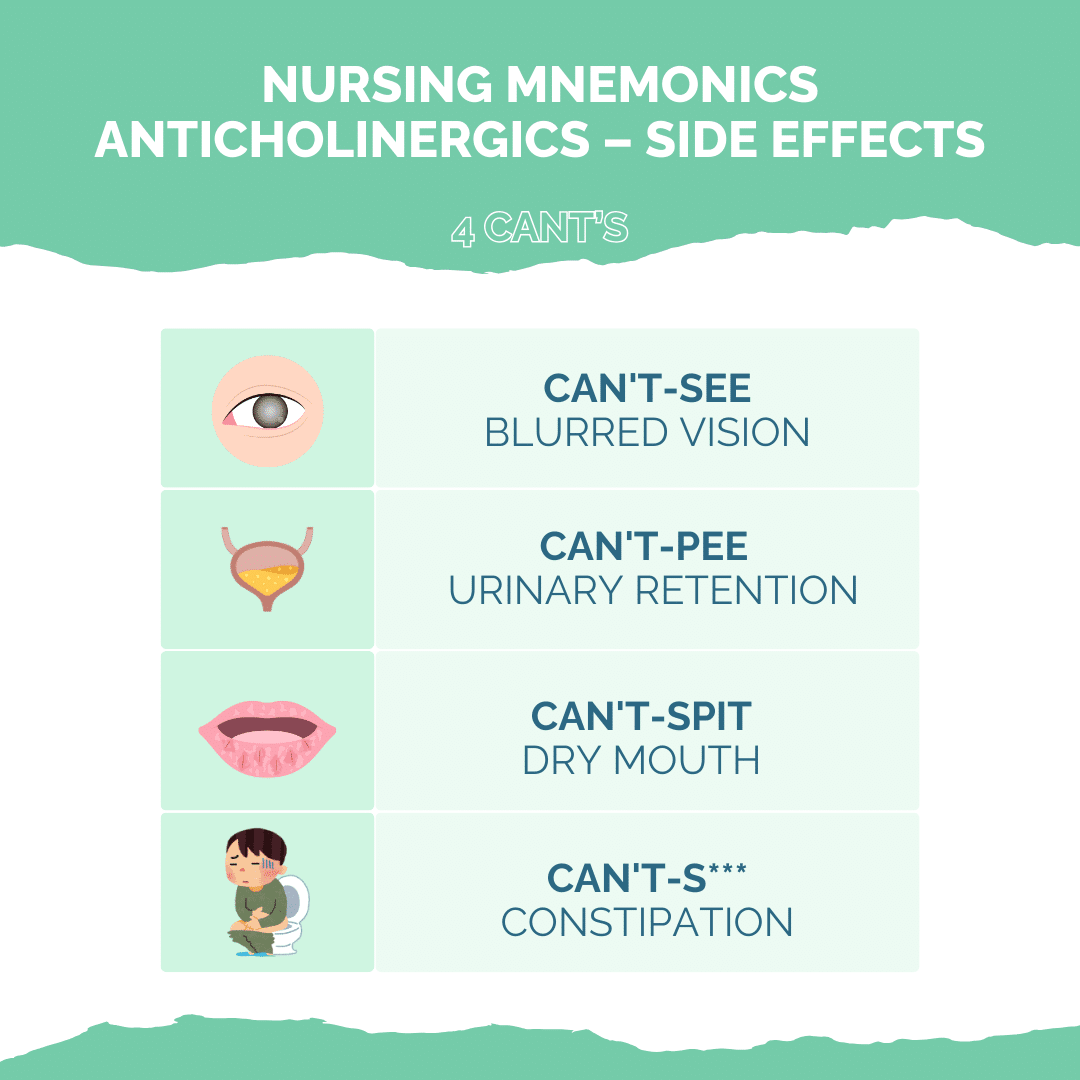
  • Use Nursing Mnemonics: For example "4 Cants" to remember side effects of Anticholinergics: CAN’T-See – blurred vision CAN’T-Pee – urinary retention CAN’T-Spit – dry mouth CAN’T-S*** – constipation
  • Group Drugs by Class: Study similar drugs together, as they often have shared mechanisms.
  • Practice with flashcards: Include drug names, mechanisms, side effects, and nursing implications.
  • Focus on key concepts: Memorize drug suffixes (e.g., -pril for ACE inhibitors, -statin for cholesterol drugs).).
  • Repetition and practice questions: These help reinforce knowledge and test understanding.
A nursing mnemonic graphic titled '4 Cants' to help nursing students remember the side effects of anticholinergics: CAN'T See – blurred vision, CAN'T Pee – urinary retention, CAN'T Spit – dry mouth, and CAN'T S* – constipation, presented in a visually engaging and easy-to-read format.
Take Medication Prefixes and Suffixes Quiz

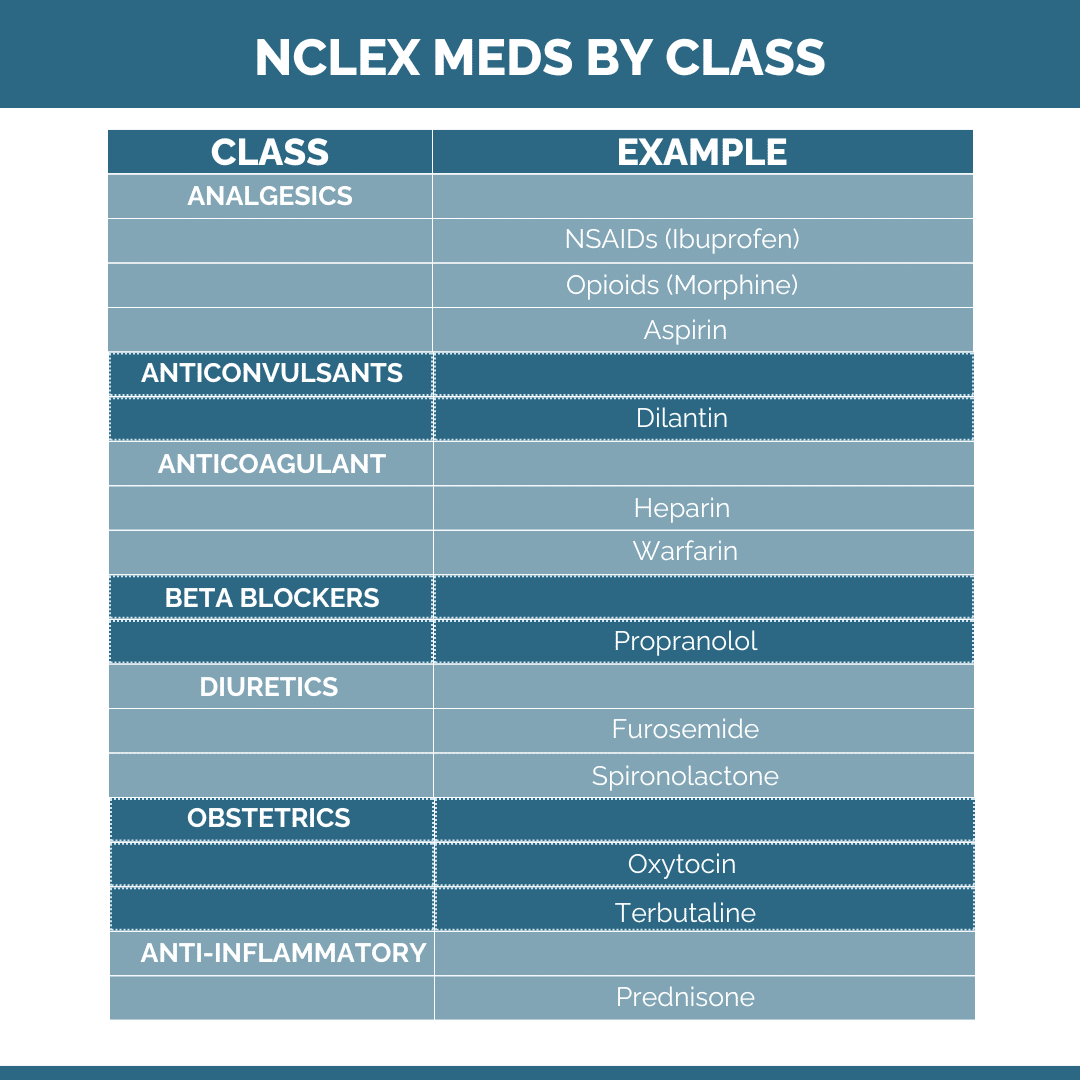
What are Common Drug Classifications Nursing Students Should Know?

As a Nursing student you should know common drug classifications, including:

An educational graphic for nursing students highlighting common drug classifications they should know, including examples and key uses for each class, presented in an organized and visually engaging format to aid in pharmacology studies.
Watch Meds by Class Lesson
  • Analgesics (e.g., Opioids, NSAIDs): Reduce pain by blocking pain impulses in the brain.
  • Anti-inflammatories (e.g., Ibuprofen): Reduce inflammation
  • Depressants (e.g., Lorazepam) : Lower excitement and activity by slowing down the signals between the brain and the body
  • Antacids (e.g., Omeprazole): Neutralize stomach acid, relieve heartburn
  • Antibiotics (e.g., Penicillins, Cephalosporins): Treats infections
  • Anticoagulants (e.g., Warfarin, Heparin): Prevent blood clots.
  • Antihypertensives (e.g., ACE inhibitors, Beta blockers): Lower blood pressure.
  • Diuretics (e.g., Furosemide, Spironolactone): Remove excess fluid.
  • Hallucinogens (e.g., Ketamine): Alter perception of reality

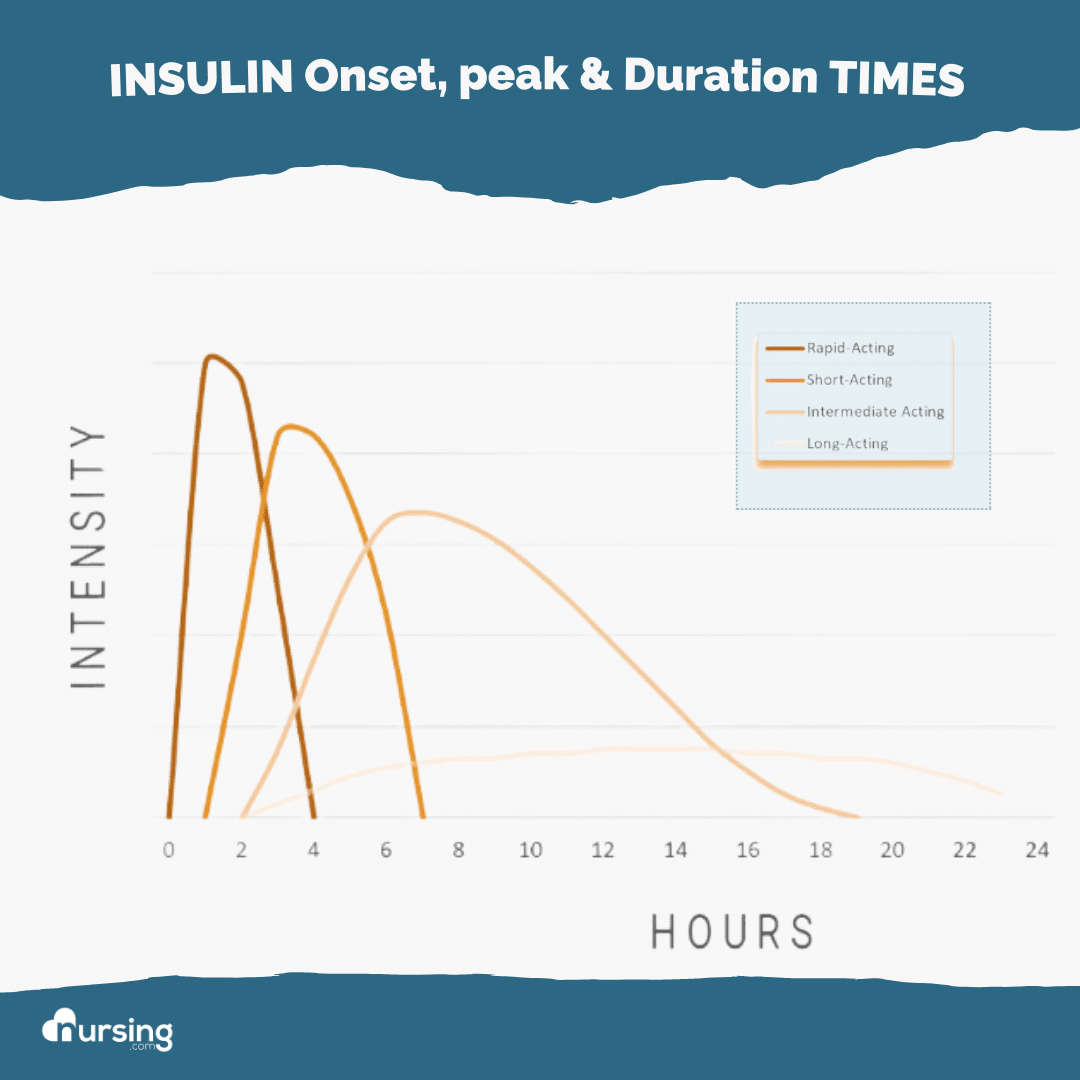
How You Can Remember Insulin Types and Their Onset, Peak, and Duration?

To Remember Insulin Types and Their Onset, Peak, and Duration Time You Can Use Nursing Mnemonics and Memory Aids.

Things to Remember

  • Onset: The time it takes for insulin to start lowering blood sugar after you inject it.
  • Peak: The time when insulin reaches its strongest effect on lowering blood sugar levels.
  • Duration:How long insulin keeps lowering blood sugar after injection.

Insulin Types

  • Rapid-acting: Onset 15 min, peak 1-2 hours, duration 3-5 hours.
  • Short-acting (Regular): Onset 30 min, peak 2-4 hours, duration 5-8 hours.
  • Intermediate-acting (NPH): Onset 1-2 hours, peak 4-12 hours, duration 14-24 hours.
  • Long-acting: Onset 1 hour, no peak, duration 24 hours.

Nursing Mnemonics/Memory Aides

  • Rapid-acting: 15 minutes feels like 1 hour during 3 rapid responses.
  • Short-acting (Regular): Short staff nurses went from 30 patients 2 8 patients short
A comprehensive chart for nursing students detailing insulin types along with their onset, peak, and duration, presented in an organized format to simplify pharmacology study and enhance understanding of diabetes management.
Take Insulin NCLEX Questions

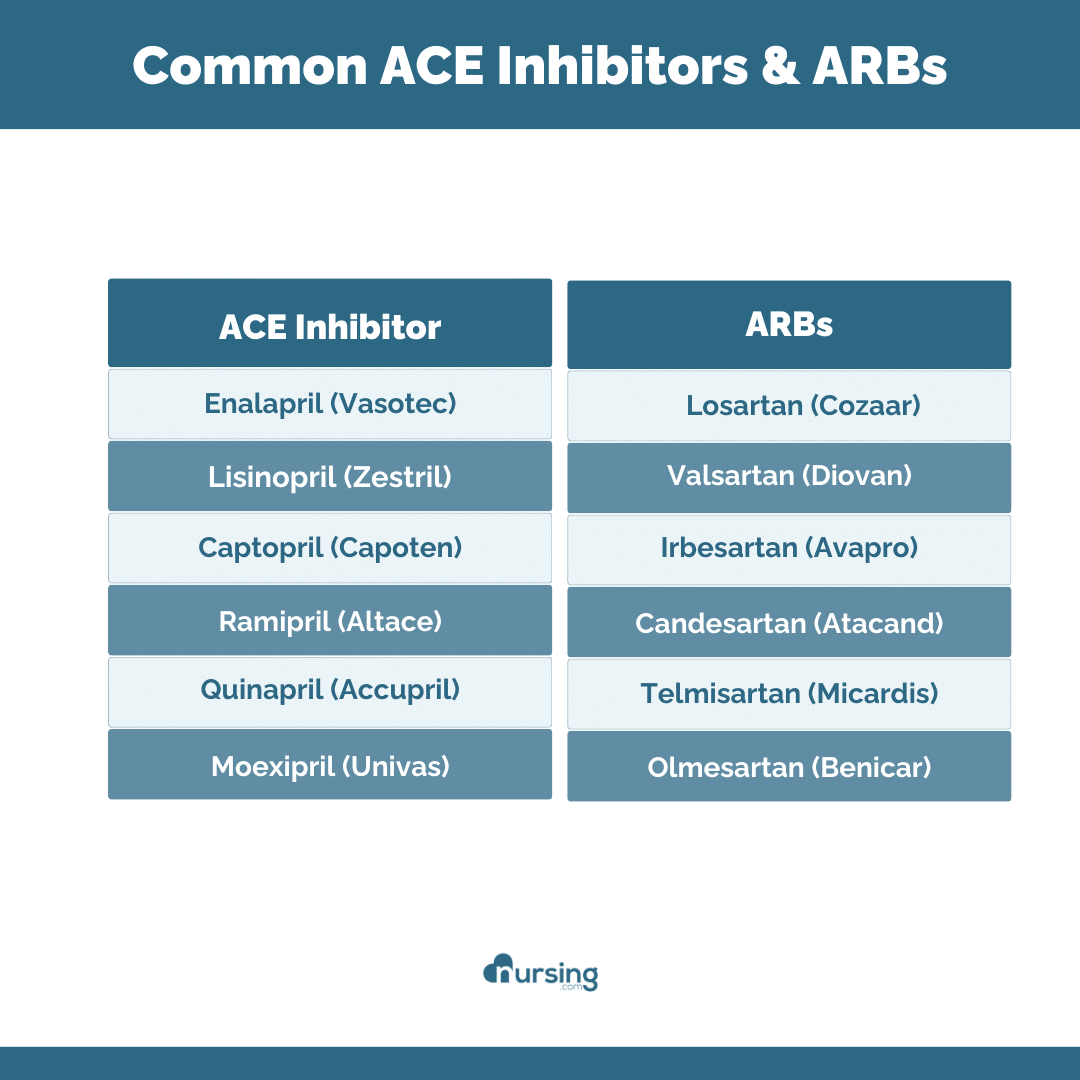
What is the Difference Between ACE Inhibitors and ARBs?

The main difference between ACE inhibitors and ARBs is how they work on angiotensin II, the hormone responsible for tightening blood vessels and raising blood pressure

A comparison chart for nursing students highlighting the key differences between ACE inhibitors and ARBs, including their mechanisms of action, uses, side effects, and common examples, presented in an easy-to-understand format to support pharmacology learning.
Watch ACE Inhibitors Lesson

ACE Inhibitors

ACE inhibitors block the conversion of angiotensin I to angiotensin II, lowering blood pressure by reducing aldosterone levels. A side effect is a buildup of bradykinin, which can cause a cough or angioedema in some patients

ARBs

ARBs block angiotensin II from binding to AT1 receptors, lowering blood pressure and aldosterone levels. They have fewer side effects than ACE inhibitors but can cause high potassium levels (hyperkalemia).
What are Common Antibiotics and Their Nursing Implications?

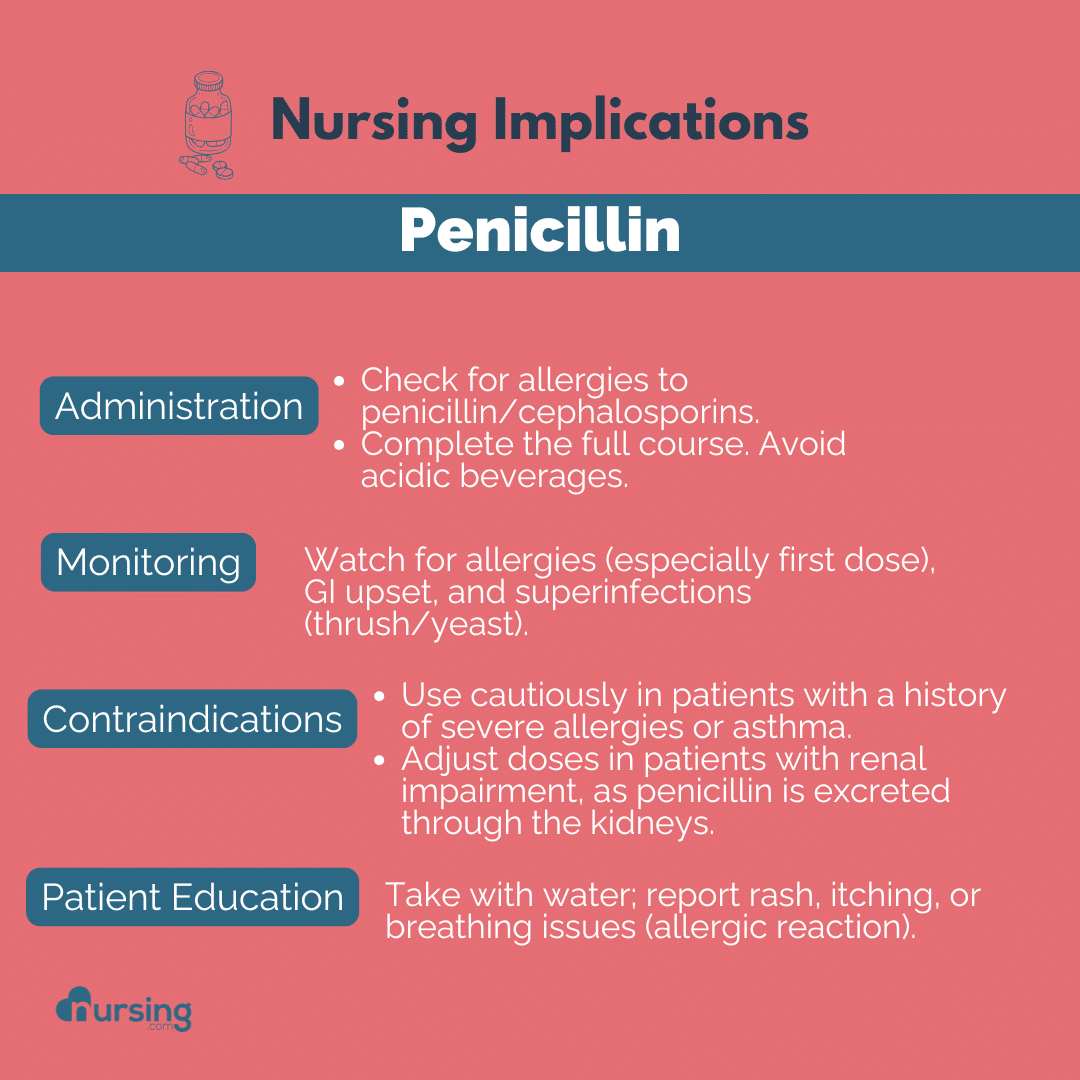
Penicillin

An educational guide for nursing students on penicillin antibiotics, covering their uses, mechanisms of action, common side effects, contraindications, and key nursing implications, presented in a clear and organized format to support pharmacology studies.
Learn More
What should I do if a patient is allergic to penicillin?

Avoid penicillin and related antibiotics (e.g., cephalosporins). Alert the provider, and monitor for cross-reactivity.

Why do some patients develop diarrhea while on penicillin?

Penicillin can disrupt normal gut flora, potentially leading to diarrhea or superinfections like C. difficile.

How do I recognize an allergic reaction to penicillin?

Look for signs like rash, itching, hives, or more severe symptoms like swelling and difficulty breathing (anaphylaxis).
Cephalosporins

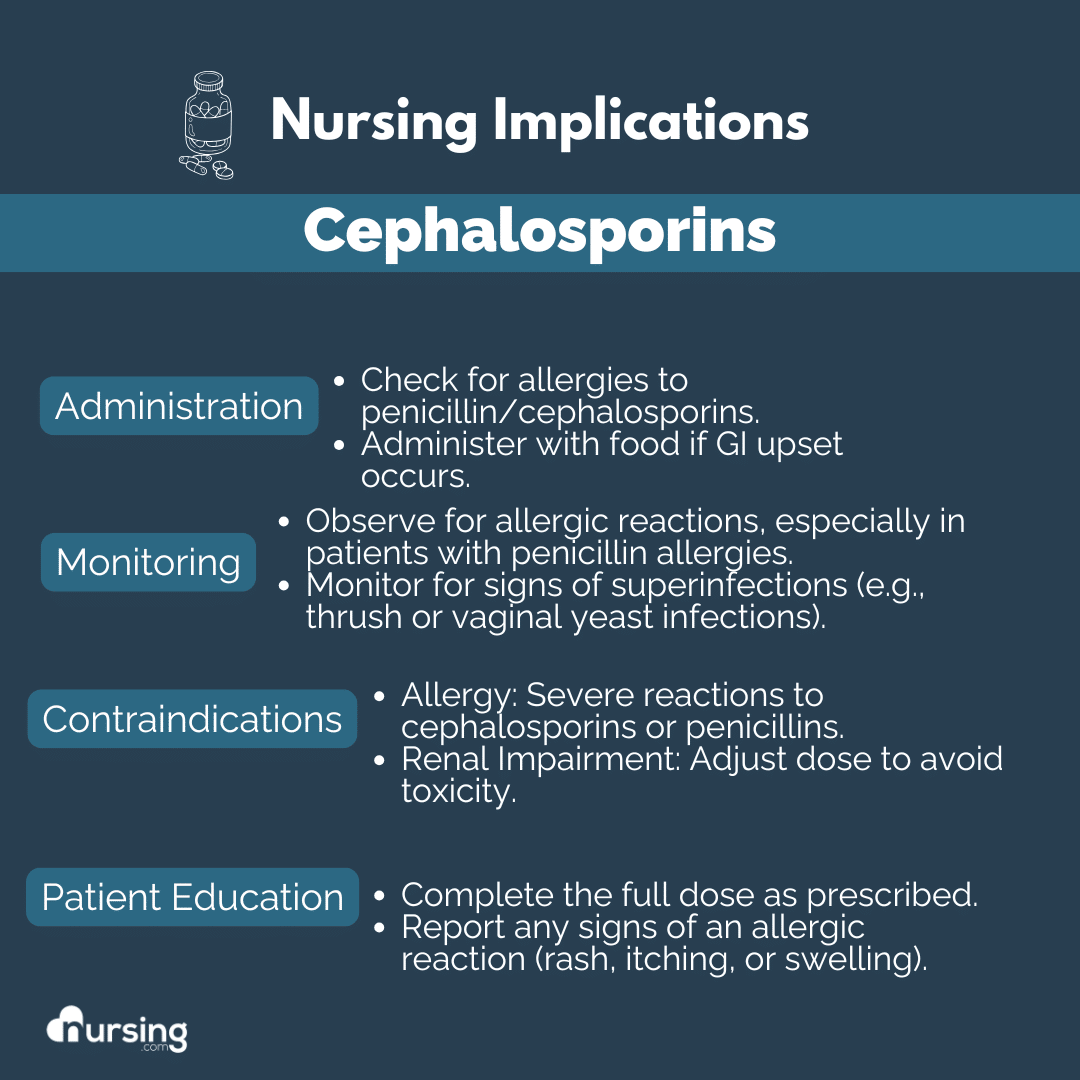
An educational guide for nursing students on cephalosporins, detailing their classification, uses, mechanisms of action, common side effects, contraindications, and key nursing implications, presented in a clear and organized format for easy understanding.
Learn More
Can patients with a penicillin allergy take cephalosporins?

Some patients can, but those with a severe penicillin allergy (e.g., anaphylaxis) should generally avoid cephalosporins due to cross-sensitivity.

Why should alcohol be avoided with certain cephalosporins?

Alcohol can cause a disulfiram-like reaction with some cephalosporins (e.g., cefotetan), leading to flushing, nausea, and vomiting.

What are the common side effects of cephalosporins?

Gastrointestinal upset (nausea, diarrhea), allergic reactions, and potential superinfections (e.g., thrush or yeast infections).
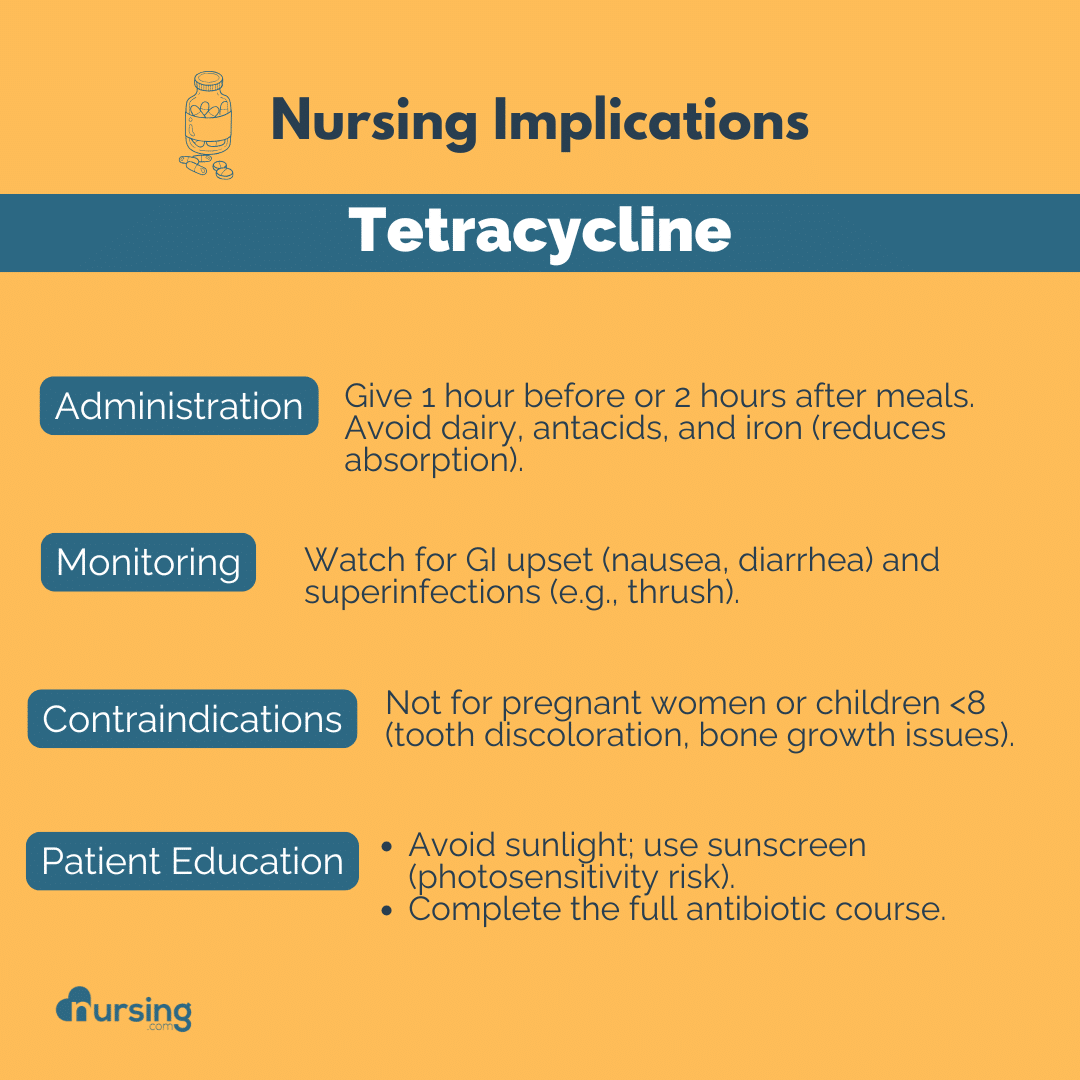
Tetracycline

An educational guide for nursing students on tetracycline antibiotics, covering their uses, mechanisms of action, common side effects, contraindications, and key nursing implications, presented in a clear and organized format to aid pharmacology studies.
Learn More
Why can’t tetracycline be taken with milk or antacids?

Dairy products and antacids contain calcium and magnesium, which bind to tetracycline and reduce its absorption, making it less effective.

Why is tetracycline not recommended for children and pregnant women?

Tetracycline can cause permanent tooth discoloration and affect bone growth in children under 8 years old and in fetuses if taken during pregnancy.

What are the main side effects of tetracycline to monitor for?

Photosensitivity (increased sunburn risk), gastrointestinal upset (nausea, diarrhea), and potential superinfections like oral thrush or yeast infections.
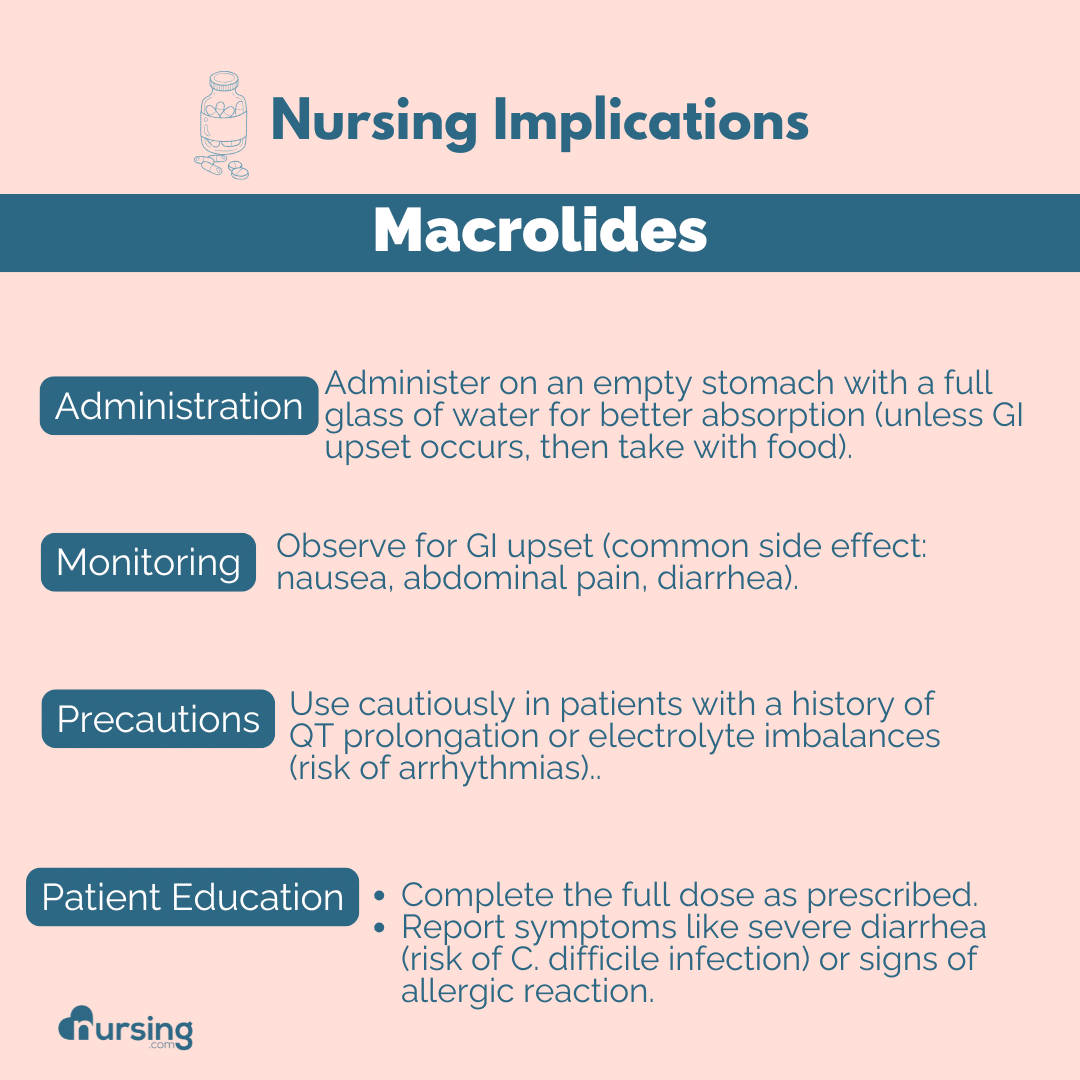
Macrolide

An educational guide for nursing students on macrolide antibiotics, detailing their uses, mechanisms of action, common side effects, contraindications, and key nursing implications, presented in a clear and organized format for effective pharmacology learning.
Learn More
Why should macrolides be taken on an empty stomach?

Absorption is better on an empty stomach, but they can be taken with food if GI upset occurs.

What are the main side effects of macrolides?

GI upset (nausea, diarrhea, abdominal pain) is common. Rarely, they may cause hepatotoxicity or QT prolongation.

Why are macrolides associated with drug interactions?

Macrolides inhibit liver enzymes (CYP450), which can increase levels of medications like warfarin or digoxin, leading to potential toxicity.
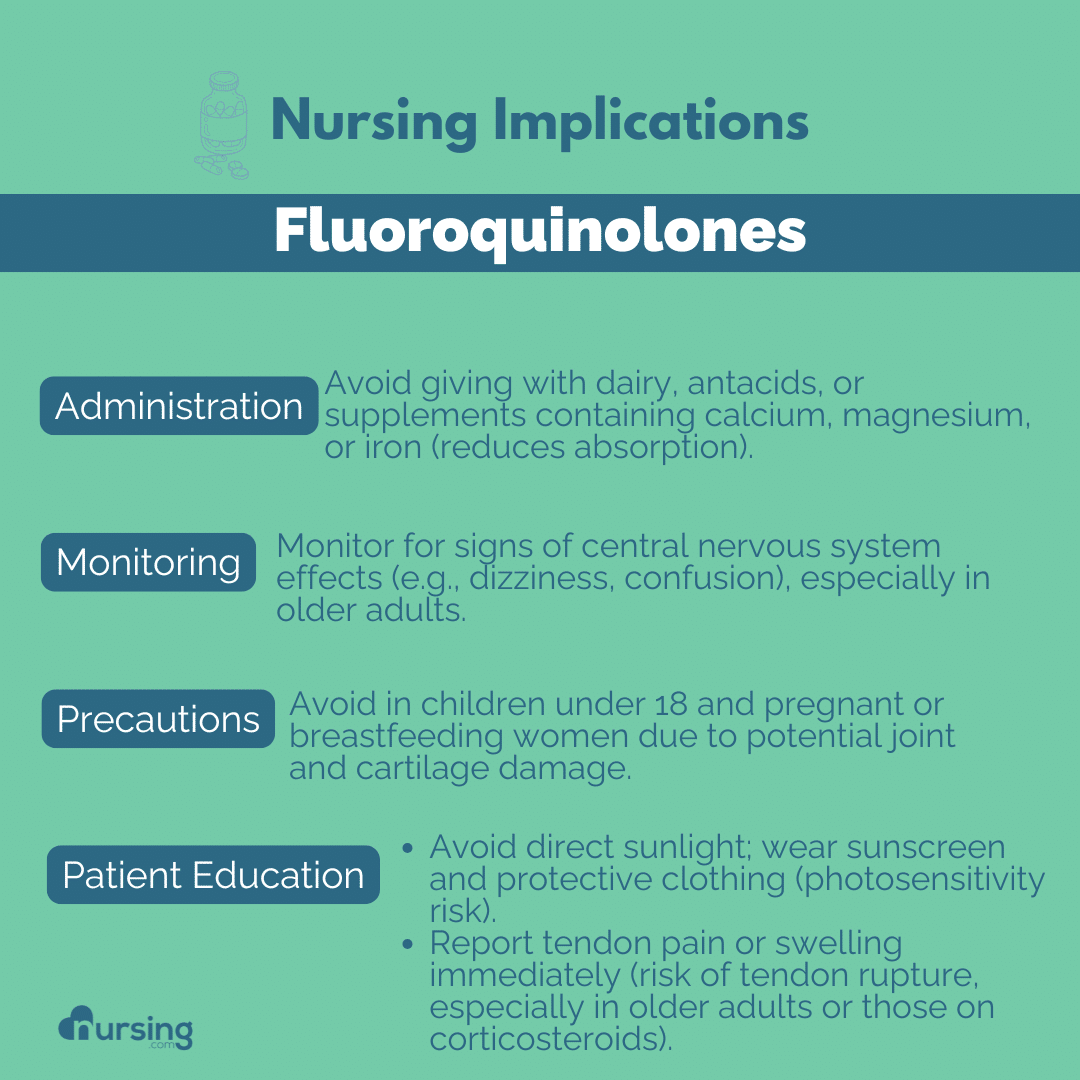
Fluroquinolone

An educational guide for nursing students on fluoroquinolone antibiotics, outlining their uses, mechanisms of action, common side effects, contraindications, and key nursing implications, presented in a clear and organized format to support pharmacology studies.
Learn More
Why can’t fluoroquinolones be taken with dairy or antacids?

Calcium and magnesium bind to the drug and reduce its absorption, making it less effective.

What are the most serious side effects of fluoroquinolones?

Tendon rupture, photosensitivity, and QT prolongation are serious risks to monitor.

Why are fluoroquinolones not recommended for children?

They can damage growing cartilage, leading to joint problems.
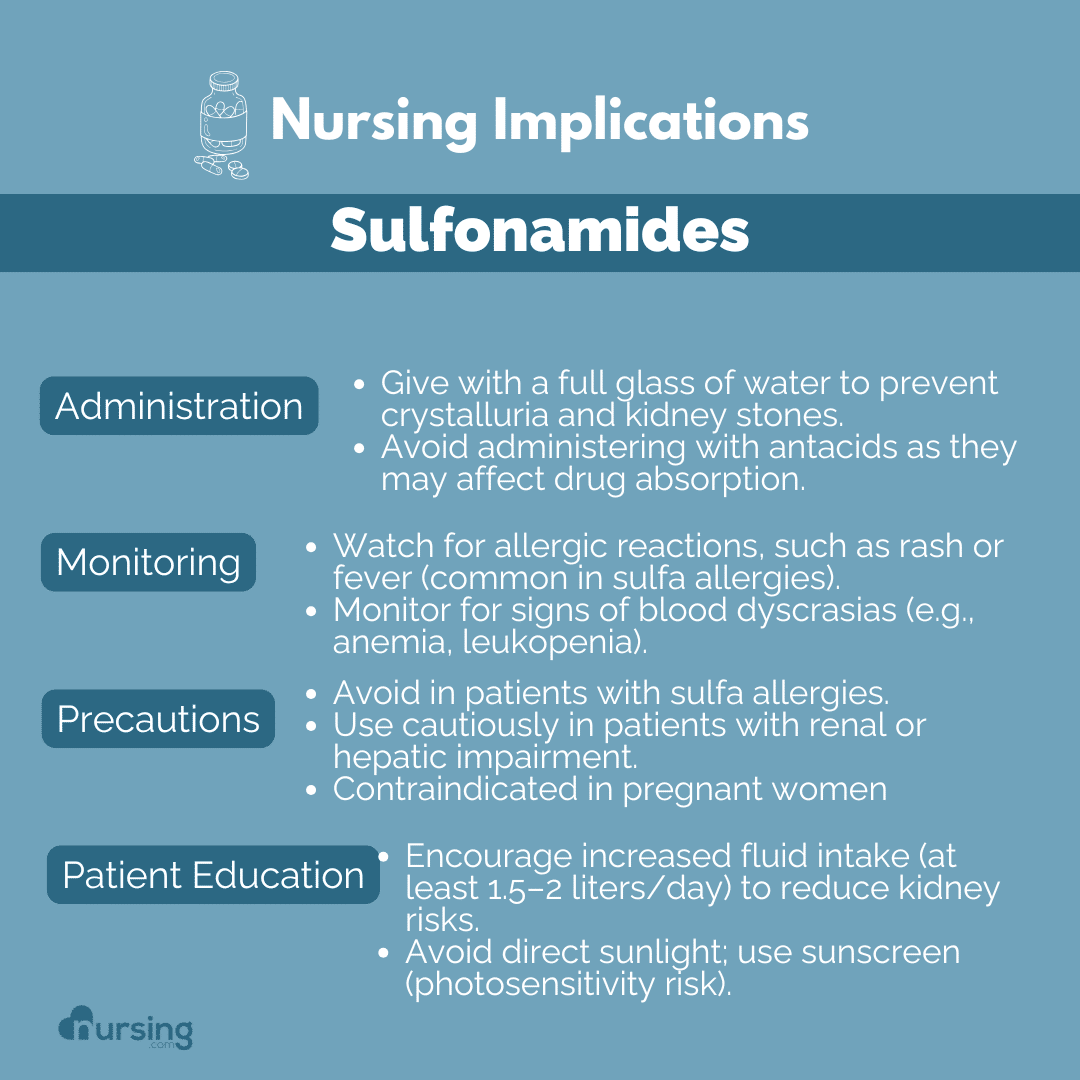
Sulfonamides

An educational guide for nursing students on sulfonamide antibiotics, covering their uses, mechanisms of action, common side effects, contraindications, and key nursing implications, presented in a clear and organized format to enhance pharmacology learning.
Learn More
Why do patients taking sulfonamides need to drink more water?

To prevent crystalluria and kidney stones caused by sulfonamide metabolites.

What are the most serious side effects of sulfonamides?

Allergic reactions, photosensitivity, blood dyscrasias, and Stevens-Johnson syndrome.

Why are sulfonamides contraindicated in pregnant women and infants?

They can cause kernicterus (bilirubin-induced brain damage) in neonates.
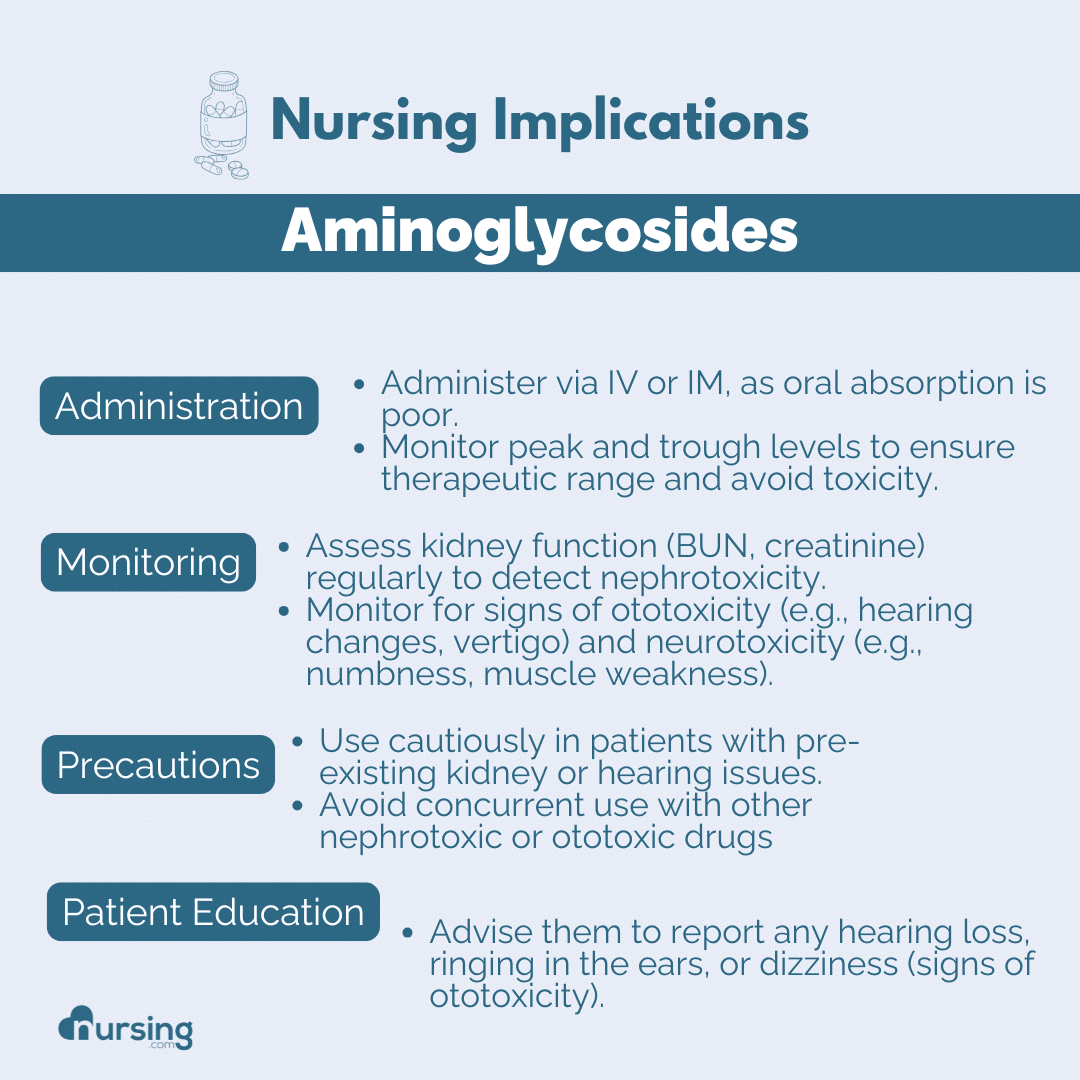
Aminoglycosides

An educational guide for nursing students on aminoglycoside antibiotics, detailing their uses, mechanisms of action, common side effects, contraindications, and key nursing implications, presented in a clear and organized format to support pharmacology studies.
Learn More
Why are peak and trough levels important for aminoglycosides?

To ensure the drug is effective without reaching toxic levels that could harm kidneys or hearing.

What are the most serious side effects of aminoglycosides?

Nephrotoxicity (kidney damage) and ototoxicity (hearing loss or balance issues).

Why are aminoglycosides usually not given orally?

They are poorly absorbed in the gastrointestinal tract and are more effective when given IV or IM.

If You Don’t Understand Meds, You Don’t Pass.

Back-to-School Deals: Up to 65% Off Nursing Must-Haves

✅ Make meds finally click
✅ Pass the NCLEX with confidence
✅ Study faster, retain longer, stress less
Shop Up To 65% Off →

NCLEX Pharmacology FAQ

What are the most important medications to know for the NCLEX?
Commonly tested meds include beta blockers, ACE inhibitors, insulin types, anticoagulants, and pain meds — due to high risk and frequent clinical use.
How can I study pharmacology effectively for the NCLEX?
Use visual tools, apply real scenarios, and study how drugs work — not just names. Our NCLEX Survival Package includes a system to make that easy.
Are there printable drug cards for nursing students?
Yes. This page includes free samples. For access to over 300 drug cards, cheat sheets, and clinical tools, check out our Survival Packages.
What’s the best way to memorize nursing medications?
Mnemonics, images, and case-based reasoning. Our system blends all of these to help you learn meds fast and remember them under pressure.
Does the NCLEX Survival Package include pharm tools?
Yes — it includes Flash Notes™, SIMCLEX®, 8,000+ questions, video lessons, and printable pharmacology resources.

NURSING.com Products

NURSING Academy

SIMCLEX

Certifications

Books

Flash Notes

Survival Packages

  • Nursing School
  • NCLEX
  • Lifetime

Drops & Discounts

Limited time discounts on the best nursing gear

View Drops

For Nurse Educators

Enterprise Solutions

Free Educator Account

Happy Nurse Educator Podcast

Lesson Plan Templates

Schedule Free Demo

Free Resources

NCLEX Flash Notes

Cheatsheets

Podcast

Blog

Top Lessons

Care Plans

Preload vs Afterload

Respiratory Acidosis

Heart Sounds

Company

About

Compare Us

Contact

Reviews

Pass Rates

Our Educators

nursing.com site logo white
Facebook Instagram Pinterest Youtube Tiktok Linkedin

At NURSING.com, we believe Black Lives Matter ✊🏿, No Human Is Illegal 🤝, Love Is Love 🏳️‍🌈, Women`s Rights Are Human Rights 👩, Science Is Real 🔬, Water Is Life 🌊, Injustice Anywhere Is A Threat To Justice Everywhere ☮️.

© 2012-2025 NURSING.com All Rights Reserved.

Careers Medical Disclaimer Terms of Use Privacy Policy

Accessibility Sitemap Drug List

✕