Jon Haws, BS, BSN, RN, Alumnus CCRN
Jon Haws, RN is a nurse, educator, and founder of NURSING.com, dedicated to making nursing education easier and more effective. After facing burnout himself, he built NURSING.com to help students pass the NCLEX® with confidence and thrive in their careers.
⚡️ Quick Summary
They told you it was supposed to be hard — but they didn't tell you it would feel impossible.
I almost walked away from nursing school.
Not because I wasn't cut out for it — but because I believed every soul-crushing lie they fed us:
"If you need help, you're weak."
"If you fail once, you're unsafe."
"If nursing school breaks you, maybe you weren't meant for this."
Now, after helping over 500,000 students through NURSING.com, I've seen behind the curtain.
It's not you. It's the system.
Let's burn these lies to the ground and replace them with truths that can help you not just survive, but thrive.
"I read the chapter twice and still failed the quiz. Maybe this just isn't for me."
Nursing school dumps thousands of pages on you and expects you to pick the right 10% — then punishes you for missing it. It's less about mastery and more about endurance.
Our survey data shows only 4.2% of learners are primarily text-based, yet nursing education is built exclusively for them.
Meanwhile:
To read a Med-Surg textbook cover-to-cover during a semester, you'd need to read 41 hours per week. That's a full-time job just for one textbook.
One student shared: "I nearly quit in my first semester because I couldn't keep up with the reading. It wasn't that I didn't want to learn — my brain just couldn't process the information that way. I felt like I was drowning in text."
Your struggle to "get it" instantly doesn't mean you're not smart enough. It means you're navigating a system that wasn't built for human brains.
"I didn't become safer by hiding my errors. I became safer by addressing them."
Let's be real: that phrase — "you're unsafe" — is wielded like a weapon, often after just one mistake.
But research by Dancot et al. shows that students with setbacks often succeed clinically when given appropriate support and mentoring. The dropout rate for first-year nursing students was 21.5%, but self-efficacy and social support were crucial factors in retention.
"Unsafe" is not a label you earn after one missed step — it's a pattern of behavior that persists despite coaching, feedback, and growth opportunities.
The problem is that nursing education has created a culture where perfectionism is expected from day one. Yet in the real world of nursing, even the most seasoned professionals make mistakes. The difference is they've developed systems to catch and correct errors before they reach patients.
What nursing school should be teaching is that safety comes from:
Instead, many programs instill a fear-based approach that whispers "Figure it out or get out."
That's not education — that's trauma.

"I feel like I'm the only one who's falling apart."
Nope. You're seeing everyone's mask.
In a crowded lecture hall or during clinical rotations, it's easy to look around and think everyone else has it together. What you don't see are the tears in the car before clinical, the anxiety attacks in bathroom stalls, or the late-night panic sessions over care plans.
The research from Soerensen et al. (2023) on nursing students found that many experience "severe mental strain and emotional collapse due to the pressure to appear competent while internally struggling." Students expressed feeling "overwhelmed by their vulnerability and called for support to develop resilience."
The truth? Everyone's struggling. Everyone's crying in their car. Everyone is doubting their worth.
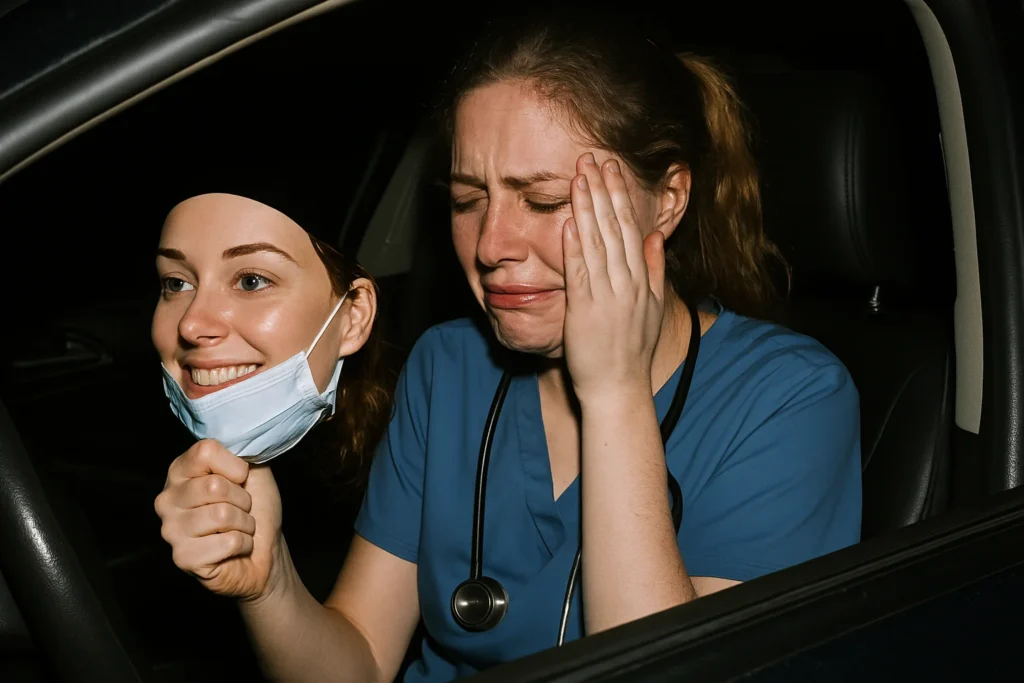
One nursing student shared: "I thought I was the only one who didn't understand half the lecture. Then I started a study group and realized none of us understood it. We were all just too afraid to say anything."
This silent suffering creates nurses who are afraid to ask questions or admit when they need help – exactly the opposite of what makes nursing care safe and effective.
You're not alone. You're just honest about what everyone else is hiding.
"I got a C. Does that mean I'm dangerous?"
The obsession with GPA in nursing education is misguided. Patients don't care about your transcript. They care that you notice their pain, that you speak up when something doesn't seem right, that you double-check their medication.
Research by Choi et al. showed that academic self-efficacy, learning agility, and mental health were stronger predictors of nursing success than grades alone. These factors explained over 30.4% of the variance in dropout intention.
Some of the best nurses I know graduated by the skin of their teeth. They weren't "A students" – they were resilient problem-solvers who refused to quit despite a system that wasn't designed for them.
As Vin Diesel would say, "It doesn't matter if you win by an inch or a mile, winning is winning." Once you pass the NCLEX and have those two letters after your name, nothing else matters.
The grades you received, the class you had to retake . . . None of it will affect the type of nurse you become.
Your GPA isn't the predictor of your nursing excellence. Your compassion, determination, and willingness to learn from mistakes are.
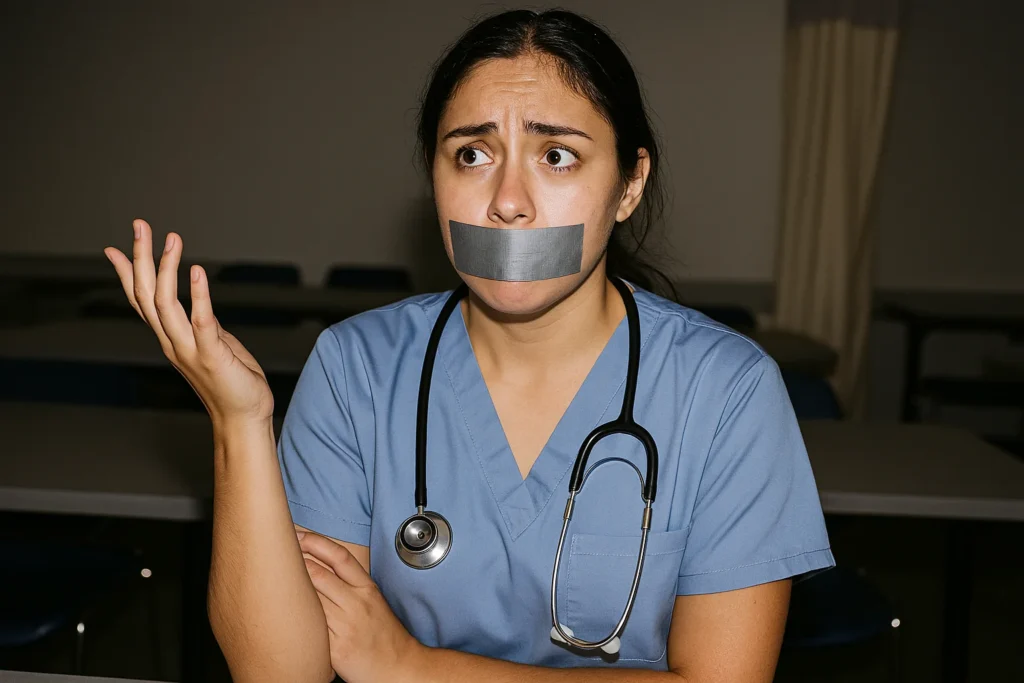
"I didn't want to speak up in clinicals. I didn't want to look stupid."
Silence in healthcare is deadly.
Research on "Eating The Young" by Sulit et al. found that "smart-shaming" leads to isolation, shame, and missed learning opportunities. It creates an environment where nurses are afraid to speak up even when patient safety is at risk.
This phenomenon results in "a negative impact on new nurses creating significant emotional and psychological strain, making novice nurses feel unprepared and overwhelmed."
The irony is that in real nursing practice, asking questions is considered a hallmark of safe care. The most dangerous phrase in healthcare isn't "I don't know" – it's "I'm not sure, but I'll figure it out."
Strong nurses:
Your questions don't reveal your ignorance. They reveal your intelligence.
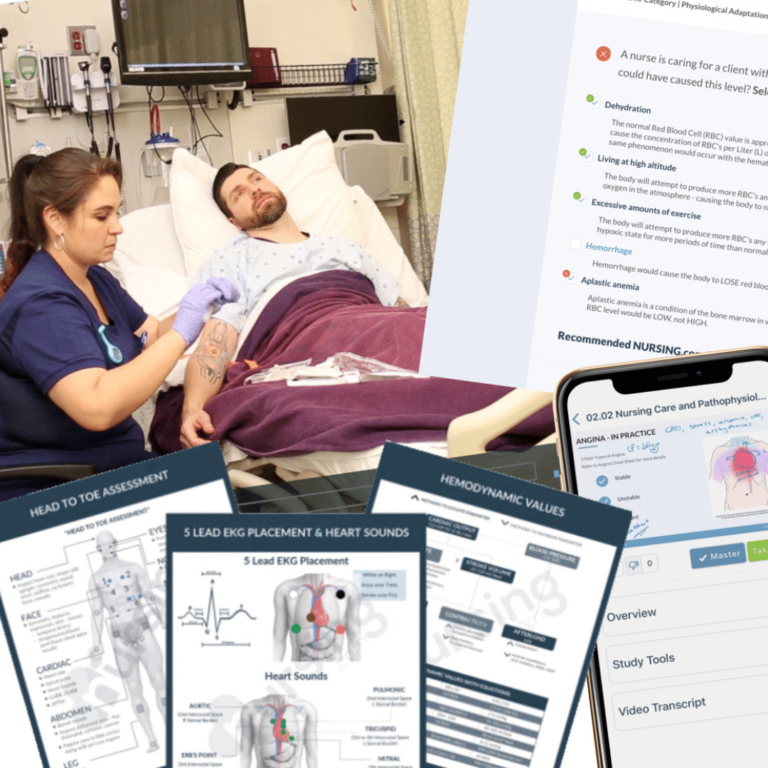
Pass Your Tests,
Improve Your Grades
Enter a nursing topic and view videos and cheatsheet instantly
"I feel guilty anytime I rest. I always feel behind."
Burnout isn't a badge of honor. Yet nursing school glorifies it.
As described by Susan DuPont, students endure "an 8 hour clinical every Thursday, a major exam every Friday morning, and discussing the next section immediately after the exam — which meant we had to read it beforehand. We had to study for the exam (which was over 200-400 pages of material) and then read the next section (another 200-400 pages)... on a normal week."
The constant pressure creates a cycle of anxiety that impairs learning. Cognitive science shows that stress and sleep deprivation reduce information retention, worsen problem-solving abilities, and impair clinical judgment – exactly the skills nursing students need most.
Rest isn't optional. It's critical for:
The sustainable approach recognizes that learning happens in cycles of focus and rest – not through endless grinding. The most successful nurses aren't those who sacrificed everything for their education, but those who learned sustainable practices.
Your rest isn't laziness. It's strategic excellence.
"I'm having a hard time keeping up. Maybe I'm not cut out for this."
This is the most dangerous lie of all.
Because it convinces the most dedicated, passionate, caring minds that they're fundamentally flawed.
I'm going to get personal here because I've lived this. During nursing school, my anxiety became so crippling that I withdrew before my final semester. Yes, completely walked away. I spent an entire year finding the courage to return and finish my degree.
During those darkest days, I would wake up with my heart already racing, a crushing weight on my chest before I even got out of bed. Sometimes I'd be physically ill before clinicals. The shame I felt only made it worse – "real nurses don't get scared," I told myself.
What I didn't realize then was that my struggles with anxiety weren't a weakness – they were developing unique strengths I would later use to save lives. After graduation, something remarkable happened. In crisis situations, when other new nurses would freeze, I found a strange sense of calm. All that preparation, all that anticipating of worst-case scenarios – it became my professional superpower.
One cardiac nurse who manages anxiety told me: "My colleagues joke that I have a sixth sense for when patients are about to crash. What they don't realize is that my anxiety has trained me to notice subtle changes others miss. The same hypervigilance that exhausts me in my personal life has saved countless lives on my unit."
The world of healthcare doesn't just need one type of nurse. It needs a diverse range of thinkers, feelers, and problem-solvers. Your unique perspective isn't a liability – it's an asset that makes you uniquely suited to connect with and provide exceptional care to particular patients.
Free e-Book
77 Must-Know NCLEX Topics
Note: In this post I reference some foundational books that have transformed the way I think about education and learning differences. I highly recommend checking one or two of them out. Click below to view them on Amazon.

About NURSING.com
The leading platform for nursing education and NCLEX® prep. Recognized as a top innovator in nursing education, where over 1,000,000+ nursing students gain confidence, improve their grades, and pass the NCLEX®.
Creators of SIMCLEX®, the world's most advanced NCLEX® simulation exam.
Our mission? To end the nursing education struggle and help students become confident, competent nurses.
Pass Your Tests,
Improve Your Grades
Enter a nursing topic and view videos and cheatsheet instantly
What topic are you struggling with?
Take a practice quiz
Now that you understand the lies nursing school has drilled into you, here are practical strategies to rise above them and thrive:
1. Match Your Learning Style to Your Study Method
The data is clear: only 4.2% of nursing students are text-based learners, yet textbooks remain the primary teaching tool. Stop forcing yourself to study in ways that don't work for your brain.
Action Step: Identify your learning style and adapt accordingly:
Research by Wray et al. found that nearly 29% of nursing students meet the threshold for dyslexia—you're not alone if text-based learning feels impossible.
2. Build a "Safety System," Not Just "Safety Knowledge"
Instead of fearing mistakes, develop systems to prevent and catch them—just like experienced nurses do.
Action Step: Create personal checklists for high-risk activities (medication administration, sterile procedures) and use them religiously during clinicals. When you make a mistake, document what happened and how you'll prevent it next time—this builds your safety intelligence far more than fear ever could.
A study by Dancot et al. showed that students with occasional setbacks often succeed clinically when given appropriate support. Your mistakes don't define you—how you respond to them does.
3. Form an "Honesty Circle" with Trusted Peers
Combat the isolation by creating a space where vulnerability is valued, not hidden.
Action Step: Find 2-3 classmates and schedule weekly "reality check" sessions where you can honestly discuss struggles without judgment. Start each session by sharing one thing you found difficult that week.
Choi et al.'s research revealed that social support is a key factor in preventing dropout, explaining part of the 30.4% variance in student retention. Peer connection isn't just nice—it's necessary.
4. Separate "Need to Know" from "Nice to Know"
Stop trying to learn everything. It's not possible, and it's not necessary.
Action Step: For each topic, ask your instructors: "If you had to reduce this to the three most critical concepts for safe patient care, what would they be?" Then master those fundamentals first before worrying about details.
When you consider that reading a Med-Surg textbook cover-to-cover requires 41 hours weekly, being strategic isn't lazy—it's essential.
5. Create a "Question Bank" for Clinical Rotations
Turn asking questions from a weakness into a planned strategy.
Action Step: Keep a small notebook where you write down questions that arise during clinical rotations. Review them with your preceptor during designated times rather than feeling pressure to know everything immediately.
Research on "smart-shaming" shows that fear of asking questions creates "significant emotional and psychological strain" in new nurses. Breaking this cycle starts in school.
6. Design a Sustainable Success Rhythm
Excellence isn't about endurance—it's about sustainability.
Action Step: Map your energy patterns over a week. Schedule intensive studying during your peak cognitive hours and deliberately plan recovery periods. Protect at least one day weekly where you do zero nursing-related work.
Studies show that stress and sleep deprivation impair clinical judgment—exactly what patients need from you most. Your rest isn't selfish; it's a patient safety strategy.
You've been lied to long enough.
You're not lazy. You're not broken. You're not falling behind. You're just trying to survive in a system that wasn't built with you in mind.
But now that you see the lies, you can start choosing truth:
Ask for help – it shows intelligence, not weakness. Rest without guilt – it makes you sharper, not lazier. Study smarter, not longer – focus on understanding, not memorizing. Stop comparing – everyone's struggling, even if they don't show it. Start believing – your unique perspective is exactly what nursing needs.
So when you doubt yourself, remember this: The qualities that make nursing school challenging for you today may be the very same qualities that will make you an exceptional nurse tomorrow.
You aren't just capable of becoming a nurse. You're capable of transforming what nursing can be.
Jon Haws, RN, BS, BSN, alumnus CCRN, is the founder of NURSING.com, an online learning platform that has helped over 400,000 nursing students pass the NCLEX and become safe, confident nurses. He developed the SOCK Method based on his own struggles with pharmacology during nursing school.
Have you tried the SOCK method?
References and additional reading:
🔎 Take this 60-second quiz to uncover which toxic lie nursing school taught you — and how to finally break free.
Note: In this post I reference some foundational books that have transformed the way I think about education and learning differences. I highly recommend checking one or two of them out. Click below to view them on Amazon.