60 unfolding nursing case studies with answers developed by practicing ED/ICU nurses that improve critical thinking.
The perfect solution for "low fidelity" clinical replacement.
NURSING.com offers 60 unfolding nursing case studies with answers and rationales, written by practicing ED/ICU nurses. Each case study includes 6+ critical thinking checks in Next Gen NCLEX (NGN) style. Case studies are free with a free NURSING.com account.
Last updated: November 2026
Click on a case study below to view in our Nursing Case Study Examples course which holds all of our 60 nursing case studies with answers.
Ms. Barkley is a thin, frail 64-year-old female presenting from a nursing home for acute abdominal pain, nausea, and vomiting x 2 days. She receives a CT scan with IV contrast. Findings show no acute bleeding, but a possible small bowel obstruction. She is admitted for bowel rest, with the following written orders from the provider:
Continuous Telemetry; Strict I&O measurement and monitoring; Keep SpO2 > 92%; Keep NPO (strict) – no oral intake until further notice; Hydrocodone/Acetaminophen 5/325 mg by mouth every 4 hours PRN for pain; Ondansetron 4 mg every 4 hours PRN nausea/vomiting.
She is admitted to the unit at the beginning of shift, and the UAP reports the following vital signs: HR 103; RR 16; BP 118/68; SpO2 96%; Pain 6/10.
At the end of 12-hour shift, the nurse recognizes that the patient has not voided all day and assists the patient to the bathroom. The patient does void approximately 75 mL of dark amber-colored, cloudy urine.
Provider orders a 500 mL bolus of Normal Saline (0.9%) IV over 1 hour and a renal function panel, which is drawn promptly by the nurse. After 6 hours, Ms. Barkley still has had no further urine output. A bladder scan shows approximately 60 mL of urine in the bladder. A head-to-toe assessment now reveals crackles in Ms. Barkley's lungs and her SpO2 is 89%.
Renal function panel results: BUN 60; Cr 2.5; GFR 30; K+ 6.0; Hgb 9.0; Hct 30.0.
The provider orders to give 1L bolus of Normal Saline (0.9%) over 1 hour, then 125 mL/hr of Normal Saline continuously. The provider also orders a one-time dose of 40 mg Furosemide IV push and to re-check the Renal Function Panel in 6 hours. Ms. Barkley diuresis approximately 600 mL in 2 hours and her lungs now sound clear to auscultation.
Over the next two days, Ms. Barkley's BUN, Creatinine, and GFR return to normal, the small bowel obstruction resolves, and she is cleared to eat food and drink fluids by mouth.
Which order would you question and why?
The Ondansetron order is incomplete. There is no route or frequency ordered
What additional nursing assessments need to be performed?
The Ondansetron order is incomplete. There is no route or frequency ordered. Assess skin – the patient has had nausea/vomiting for 2 days, there may be some dehydration – check for tenting.
At the end of 12-hour shift, Ms. Barkley has not voided all day. What should you do?
Document the output, notify the provider of the decreased urine output. This information needs to be passed onto the oncoming nurse so that he or she can closely monitor the patient's urine output.
At the end of 12-hour shift, Ms. Barkley has not voided all day. What should you do?
Document the output, notify the provider of the decreased urine output. This information needs to be passed onto the oncoming nurse so that he or she can closely monitor the patient's urine output. It seems like her kidneys aren't making urine as they should, or she may be severely dehydrated. A complete metabolic panel can help us determine the level of kidney function as well as electrolyte imbalances. Expect an order for a 500 mL bolus of Normal Saline (0.9%) IV over 1 hour and a renal function panel
At the 6-hour recheck, Ms. Barkley still has had no further urine output and now has crackles in her lungs and an SpO2 of 89%. What should you do?
Administer O2 2 lpm via nasal cannula (to keep sats > 92%). Notify provider of lab results, especially BUN/Cr, GFR, and Potassium – as these indicate there is kidney involvement.
What orders would you expect from the provider, and why?
The patient may need more fluids, she's been vomiting for 2 days and NPO for another 12 hours with no IV fluids. The patient may require diuretics to remove the excess fluid from her lungs and to determine the level of function of her kidneys
What is going on with Ms. Barkley?
Ms. Barkley seems to have developed an acute kidney injury or acute kidney failure. The likely contributors are the severe dehydration coupled with the IV contrast and 12+ hours of being NPO and having no IV fluids. This caused a low-flow state to the kidneys (pre-renal) as well as possible damage to the kidneys themselves because of the contrast (intra-renal).
Was Ms. Barkley's acute kidney injury preventable?
The best option would have been to give Ms. Barkley IV fluids before and after her contrast scan, and to make sure she had maintenance IV fluids infusing while she was NPO. Depending on the patient's kidney function, it isn't always preventable, but in this case, it seems there was more that could have been done.

Create engaging, evidence-based case studies in seconds – tailored for nurse educators to inspire critical thinking and clinical excellence . . . with ONE CLICK.


The nursing case studies account for over 37 hours of virtual clinical time. Each case study outlines anticipated completion time.
All case studies are created by practicing ED/ICU nurses with Masters Degrees (like all NURSING.com content).
Each case study includes 6+ "Critical Thinking Checks" that require high level analysis by the student.
Included with Critical Thinking Checks are Bloom's Taxonomy levels so educators and students know where to focus thinking.
The case studies are intended to be used as a “low fidelity” replacement for clinical activities or as an exercise to improve nursing students ability to “think like a nurse”.
During this meeting, the clinical instructor can review the case study and answers with the groups. Utilizing the “Critical Thinking Check” and Bloom’s Taxonomy Levels, the students and the instructor will quickly spot areas for improvement in thought and actions.
Every plan includes everything from pre-nursing through your first year as a nurse. You pick the timeline.
Monthly
3-day FREE trial, then $59/month until cancelled. Cancel anytime.
Start Your 3-Day Free TrialEverything included
🔒 Secure checkout · 3-day free trial · Cancel anytime · 200% money-back guarantee · Trusted by 700,000+ nursing students
Gather the entire class together and view the intro video. This video lays out the scenario for the given case study and helps them begin to consider the disease process.
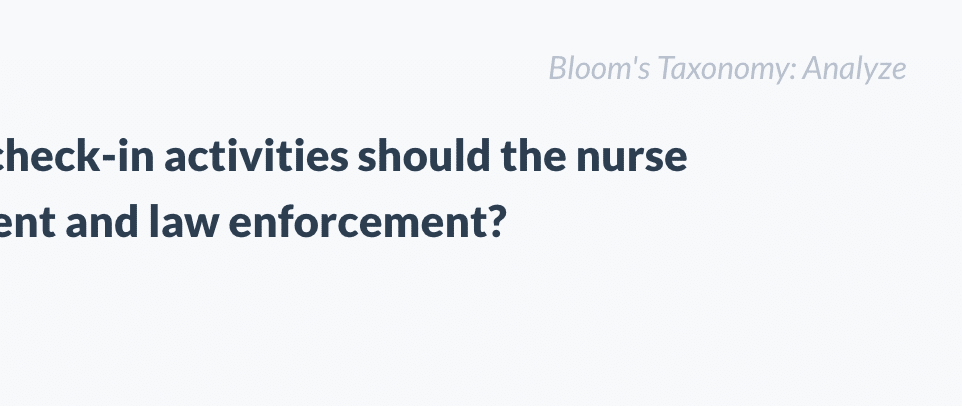
After watching a scenario, the class will see a “Critical Thinking Check” these are questions with assigned Bloom’s Taxonomy levels and are meant to be challenging – all are written by practicing ED/ICU nurses and introduce the student to “real-life” nursing scenarios.
Each “Critical Thinking Check” provides a detailed rationale to help the student truly UNDERSTAND what they are learning. This helps the information stick.
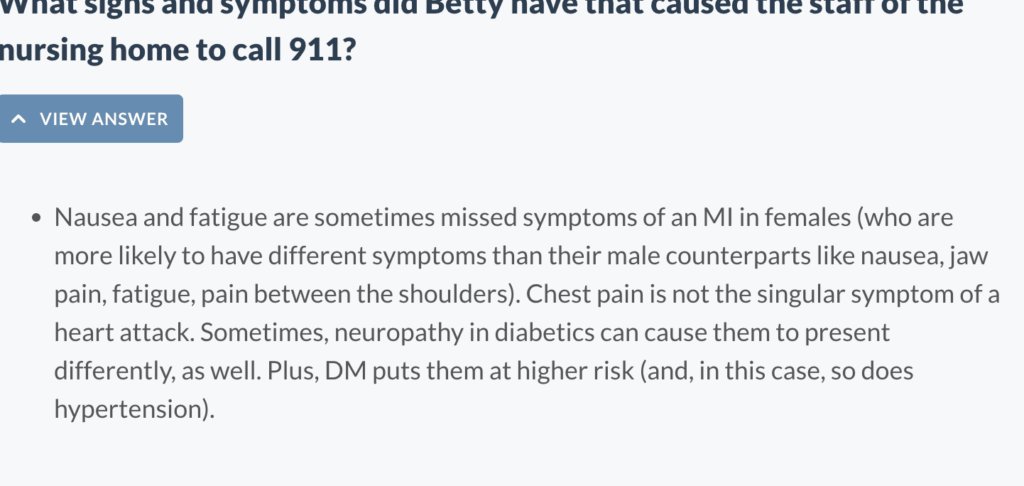
The case study will now unfold and the situation will progress just as it would in “real-life”.
After completing the full case study (this should take about 30-60 min) the student should take the post lesson quiz. These quizzes are designed to cover the disease process – not the case study – this is designed to evaluate overall understanding of the given disease.
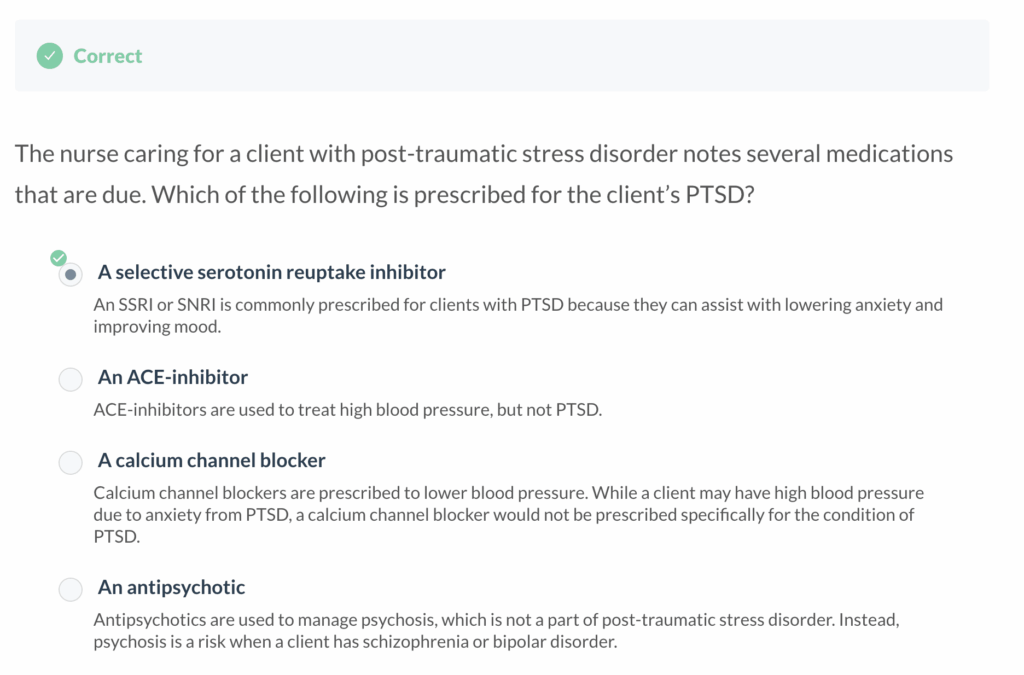
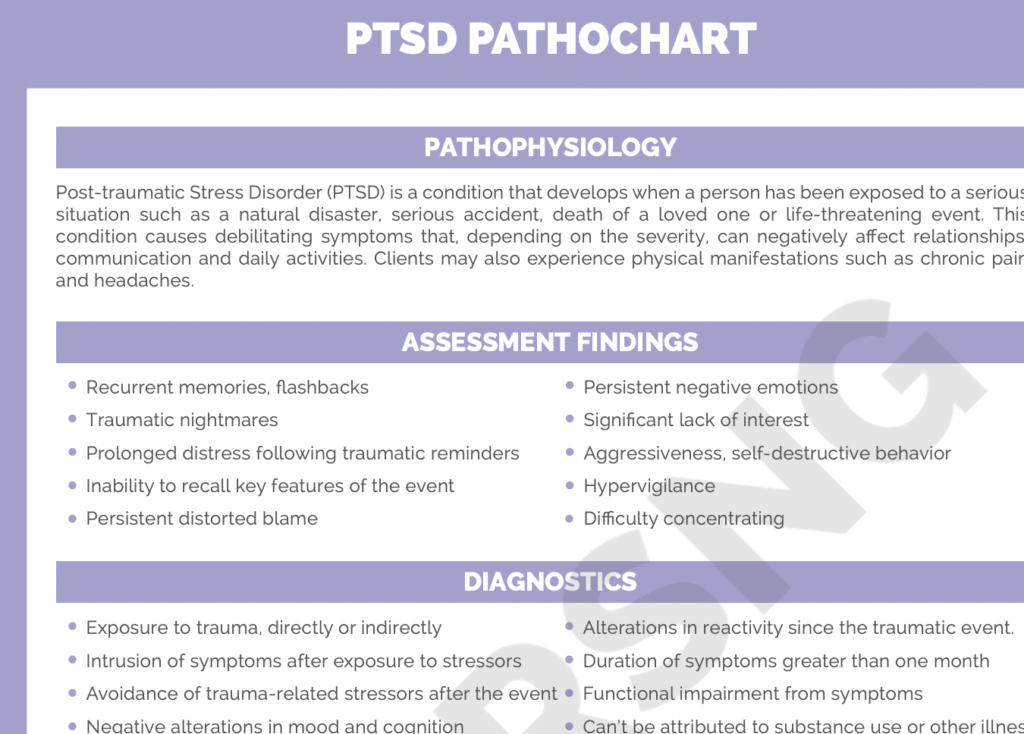
Each nursing case study lesson includes various study tools. These act as visual learning elements for the visual leaner. Nursing is REAL-LIFE – it’s not just textbooks. Study tools help to connect what is read and viewed to something tangible and real.
Nursing case studies are unfolding clinical scenarios that help nursing students develop critical thinking. NURSING.com case studies provide “real-world” examples for nursing students to practice their nursing judgement in a safe environment.
Nursing case studies are pretty complicated to write. At NURSING.com, our case studies are written by practicing nurses with advanced degrees who have direct patient care experience taking care of those with the specific disease process. This gives the nursing student assurance that they are highly realistic.
Unfolding means that the case study progresses via a developing scenario. The nursing student is given assessment data and asked to developing a nursing care plan – the case study then progresses (or unfolds) with new information and the student must adapt their plan . . . sound like the nursing processes?!