
Skip to content
nursing-com-website-logo
  • Academy
    • Courses
    • Features
    • Reviews
    • Compare Us
  • Products
    • Academy
    • Certifications
    • Private Tutoring
    • Nursing Gear
  • How It Works
  • Academy
    • Courses
    • Features
    • Reviews
    • Compare Us
  • Products
    • Academy
    • Certifications
    • Private Tutoring
    • Nursing Gear
  • How It Works
Start Free Trial
Login
  • Learn
    • Courses
    • Features
    • Reviews
    • Compare Us
  • Products
    • Academy
    • Certifications
    • Private Tutoring
    • Nursing Gear
  • Pass Rate
  • Login
  • Start Free Trial

Lab Panels [Nursing Lab Values]

  • February 26, 2026
Lab panels can feel like alphabet soup until you understand what each panel is actually telling you about the patient. Lets breaks down BMP, CMP, and CBC in plain language, shows what each panel includes, and explains how nurses use them in real patient care and on NCLEX-style questions.

Lab Panels Are a Shortcut to the Patient Story

When you’re new to nursing, individual labs can feel like random numbers thrown at you. Sodium, potassium, BUN, creatinine, AST, ALT, WBC. It’s a lot.

Lab panels are designed to help with that.

Panels give you a big picture snapshot. They bundle multiple tests together so you can quickly assess a patient’s status across more than one body system. Instead of ordering separate tests for electrolytes, kidney function, and glucose, a provider can order one panel and get a useful overview fast.

And here’s the part nursing students need to hear.

Panels are not just “doctor stuff.” Nurses use these values constantly to detect risk, anticipate provider orders, and catch deterioration early.

Why Panels Are So Useful

Lab panels are helpful for three big reasons.

They provide information quickly.
They often combine multiple systems in one order.
They’re frequently run onsite in the hospital lab, so you get results fast.

But there’s one tradeoff you need to remember.

The more complex the panel, the longer it can take to come back.

This matters in clinical decision making. If your patient is unstable and you need quick information, you may not have time to wait for an extensive panel.

So let’s break down the panels you will see most often as a nursing student, especially the ones that show up on exams and NCLEX-style questions.

(Download a Free Lab Panels Cheatsheet)

BMP: Basic Metabolic Panel

Think of the BMP as your quick snapshot panel.

It gives you a look at:

Kidney function
Electrolyte status
Glucose

The key kidney values you’ll see here are BUN and creatinine. These help you assess how well the kidneys are filtering waste products.

You’ll also see electrolytes like sodium and potassium, which impact fluid balance, cardiac rhythm, and neurologic function.

And you’ll see glucose, which matters for diabetic management, stress response, steroid use, and overall metabolic status.

What nursing students should remember about the BMP is this.

If you need fast insight into kidney function, electrolytes, and glucose, BMP is the go-to because it tends to be faster than broader panels.

CMP: Comprehensive Metabolic Panel

The CMP includes everything in the BMP plus additional liver and protein values.

So if BMP is kidney, electrolytes, glucose, CMP is that plus more depth.

The CMP adds:

Liver function markers like AST, ALT, and alkaline phosphatase
Total bilirubin
Protein markers like total protein and albumin

This panel is often ordered when there is concern for dehydration, malnutrition, liver disease, medication effects, or a more complete picture of metabolic status.

But remember the big concept.

Because the CMP includes more tests, it can take longer to result.

So the choice between BMP and CMP is not just about what you want to know. It is also about how quickly you need the answer.

(Learn more about the Lab Draw Order)

How to Decide Between BMP and CMP on Exams

Here is the exam-style thinking.

If the question is focused on kidneys, electrolytes, and glucose and they need the information quickly, BMP is the clean answer.

If the question suggests liver involvement, nutrition issues, protein status, jaundice, or you need a broader metabolic assessment, CMP becomes the better choice.

On the floor, you do not choose what gets ordered, but you absolutely should understand what each panel is telling you once it comes back.

female nursing student in blue scrubs reviews a patient chart on a clipboard in a hospital room, focused and thoughtful, with medical equipment softly blurred in the background.

CBC: Complete Blood Count

The CBC is one of the most common lab panels in the hospital, and it tells you what is happening with the patient’s blood cells.

A CBC helps assess for:

Anemia
Infection or inflammation
Bone marrow issues like leukemia
Bleeding risk and clotting potential

The major components you’ll see in a CBC include:

Red blood cell count
White blood cell count, often with a differential
Hemoglobin and hematocrit, often called H and H
Platelets

Nursing school doesn't have to be so hard!

Go from discouraged and stressed to motivated and passionate

Start Your Free Trial

A differential breaks down the types of white blood cells, which can give clues about bacterial infection, viral illness, allergic response, or immune suppression.

CBC also includes red blood cell indices like MCH and MCHC, which relate to the size and hemoglobin content of red blood cells. For nursing students, these are less commonly tested in-depth, but you should know they help categorize types of anemia.

The big takeaways for the CBC are simple.

Low hemoglobin and hematocrit suggests anemia or blood loss.
High or low WBC can signal infection, inflammation, or immune issues.
Platelets guide bleeding risk and clotting concerns.

Other Lab Panels You’ll See
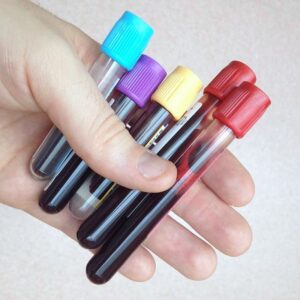
Beyond BMP, CMP, and CBC, you will run into panels targeted to specific organs or clinical situations.

Liver function tests focus on liver-specific markers like AST, ALT, alkaline phosphatase, and bilirubin.

Renal panels look more specifically at kidney function and may include values like BUN, creatinine, albumin, and sometimes associated tests like a urinalysis.

Other common panels include:

Lipid panels for cholesterol and cardiovascular risk
Cardiac markers such as troponin
Electrolyte panels for focused electrolyte evaluation

Each panel has a purpose. Your job as a nurse is to understand how that purpose fits the patient in front of you.

(Learn more with the Lab Values Course)

Patient-Centered Care and Lab Panels

Here is the mindset shift that makes labs click.

Labs are not just numbers. They are clues about the patient’s story.

A CMP that shows low albumin is not just a lab abnormality. It might connect to malnutrition, liver dysfunction, chronic illness, or fluid shifts.

A BMP with rising creatinine is not just kidney values. It may mean dehydration, acute kidney injury, medication toxicity, or poor perfusion.

A CBC with elevated WBC and a fever is not just infection. It is a patient who may be deteriorating and needs early intervention.

Lab panels support patient-centered care by helping you see patterns, anticipate needs, and catch changes early.

Final Recap for Nursing Students

Remember these core points.

Lab panels provide a big picture look at patient systems.
More complex panels usually take longer to result.
BMP is kidney function, electrolytes, and glucose.
CMP is BMP plus liver function and protein markers.
CBC tells you what is happening with blood cells, including infection and anemia clues.
There are many other panels, so use the lab as a resource when you are unsure.

If you can keep those concepts straight, labs will start to feel less like chaos and more like a roadmap.


Best Nursing Gear

Nurse Loading Shirt — Motivational Tee for Future Nurses
  • Quick View
  • Wishlist
  • Select options This product has multiple variants. The options may be chosen on the product page
Apparel/Clothing

Nurse Loading Shirt — Motivational Tee for Future Nurses

$19.99
Happy Nursing Tee for Nursing Students & Nurses
  • Quick View
  • Wishlist
  • Select options This product has multiple variants. The options may be chosen on the product page
Apparel/Clothing

Happy Nursing Tee for Nursing Students & Nurses

$19.99
ICU Nurse Sweatshirt — Cozy Unisex Nurse Crewneck
  • Quick View
  • Wishlist
  • Select options This product has multiple variants. The options may be chosen on the product page
Apparel/Clothing

ICU Nurse Sweatshirt — Cozy Unisex Nurse Crewneck

$33.00 – $37.00Price range: $33.00 through $37.00
Visit Nursing Shop

Frequently Asked Questions

What is the main difference between a BMP and CMP?
A BMP focuses on kidney function, electrolytes, and glucose. A CMP includes everything in a BMP plus liver function markers and protein-related values like albumin and total protein. For exams, choose BMP for quick renal and electrolyte assessment and CMP when liver or nutrition status is relevant. The key takeaway is that CMP is broader but often slower because it includes more tests.
Why do more complex lab panels take longer?
More tests require more processing, equipment steps, or verification. Some labs run certain parts immediately and others in batches. In practice, timing can also depend on the hospital lab workload. For nursing students, remember the concept that complexity generally increases turnaround time, which matters when assessing unstable patients.
What does a CBC tell you that a metabolic panel does not?
A CBC focuses on blood cells, not electrolytes or organ function chemistry. It helps identify anemia through hemoglobin and hematocrit, infection or inflammation through WBC and differential, and bleeding or clotting risk through platelets. The takeaway is that CBC answers “what is happening in the blood,” while BMP and CMP answer “what is happening metabolically and in organ systems.”
What is included in a typical CBC?
A typical CBC includes red blood cell count, white blood cell count often with differential, hemoglobin, hematocrit, and platelet count. It may also include red cell indices like MCH and MCHC. Nursing students should focus first on WBC, H and H, and platelets because those are most clinically relevant and commonly tested.
When would a provider order a CMP instead of a BMP?
A CMP is often ordered when a broader metabolic picture is needed, such as suspected liver issues, malnutrition, dehydration concerns, medication effects, or systemic illness. It adds liver enzymes and protein markers. The exam tip is that if the question hints at jaundice, liver disease, or low protein states, CMP is the better answer.
What are liver function tests and how are they different from a CMP?
Liver function tests focus specifically on liver-related values like AST, ALT, alkaline phosphatase, and bilirubin. A CMP includes some of these but also includes kidney, electrolytes, glucose, and protein markers. The takeaway is that LFTs zoom in on liver health, while CMP provides a broader system overview.
What is a renal panel and why might it be ordered?
A renal panel looks more specifically at kidney function and related chemistry. It commonly includes BUN and creatinine and may include albumin and other markers that help assess kidney status. It is often ordered when kidney disease, dehydration, or acute kidney injury is suspected. The takeaway is that it provides a more focused renal picture than a general metabolic panel.
How should nurses use lab panels at the bedside?
Nurses should look for patterns, correlate labs with assessment findings, and watch trends over time. A single abnormal value matters, but trends matter more. The practical takeaway is that labs support clinical judgment and early recognition of deterioration, which improves patient safety.

Need More . . .

NCLEX Flash Notes:
77
MUST-KNOW Topics for NCLEX Success

Get Your Copy For FREE

Keep Learning

Is It Okay to Use AI in Nursing School? Here’s What You Need to Know

April 2, 2026

Is it okay to use AI in nursing school? Yes, if you use the right source. Learn how AI can support your studies and why tools built specifically for nursing, like Nurse Jon AI, make all the difference.

Read More

4 Simple Changes That Can Create The Perfect Nursing Study Environment

March 31, 2026

Struggling to stay focused while studying for nursing school? Your environment might be the problem. Learn four simple, high-impact ways to optimize your study setting so you can retain more information, reduce distractions, and make every study session actually count.

Read More
drawing included with notes

How Drawing Helps Nursing Students Understand and Remember Hard Concepts

March 24, 2026

Drawing is one of the most underrated study strategies in nursing school. When you turn complex topics into simple visuals, you stop memorizing random facts and start seeing how concepts connect. Here is how nursing students can use drawing, color, and mind maps to study smarter for exams, clinicals, and NCLEX prep.

Read More

NURSING.com Products

NURSING Academy

SIMCLEX

Certifications

Books

Flash Notes

Survival Packages

Nursing Gear

For Nurse Educators

Enterprise Solutions

Free Educator Account

Happy Nurse Educator Podcast

Lesson Plan Templates

Schedule Free Demo

Free Resources

NCLEX Flash Notes

Cheatsheets

Podcast

Blog

Top Lessons

Care Plans

Preload vs Afterload

Respiratory Acidosis

Heart Sounds

Company

About

Compare Us

Contact

Reviews

Pass Rates

nursing.com site logo white
Facebook Instagram Pinterest Youtube Tiktok Linkedin

At NURSING.com, we believe Black Lives Matter ✊🏿, No Human Is Illegal 🤝, Love Is Love 🏳️‍🌈, Women`s Rights Are Human Rights 👩, Science Is Real 🔬, Water Is Life 🌊, Injustice Anywhere Is A Threat To Justice Everywhere ☮️.

© 2012-2025 NURSING.com All Rights Reserved.

Medical Disclaimer |  Terms of Use | Privacy Policy
✕