
Ep004: Cardiac Labs and Meds for Nurses

In addition to the three main classes of anti-hypertensives we already discussed, ACE Inhibitors like Lisinopril and Captopril, Beta Blockers like Metoprolol and Propranolol, and Calcium Channel Blockers like Nicardipine and Diltiazem, there are a number of other classes of medications we can anticipate when caring for a cardiac patient. These include Anticoagulants like Heparin, […]
Ep56 Myocardial Infarction (MONATAS)

MONATAS Morphine Oxygen Nitrates (Nitroglycerin) Aspirin (ASA) Thrombolytics Anticoagulants Stool Softeners
Ep19: ECG Lead Placement (BEEP)
White – right Clouds over grass (white over green) Smoke over fire (black over red) Chocolate on the stomach (brown) BEEP Bleeding gums Epistaxis (nose bleeds) Ecchymosis (bruising) Petechiae
QOD 85: Cardiac Changes Related to Aging (Cardiac/Health Promotion and Maintenance)
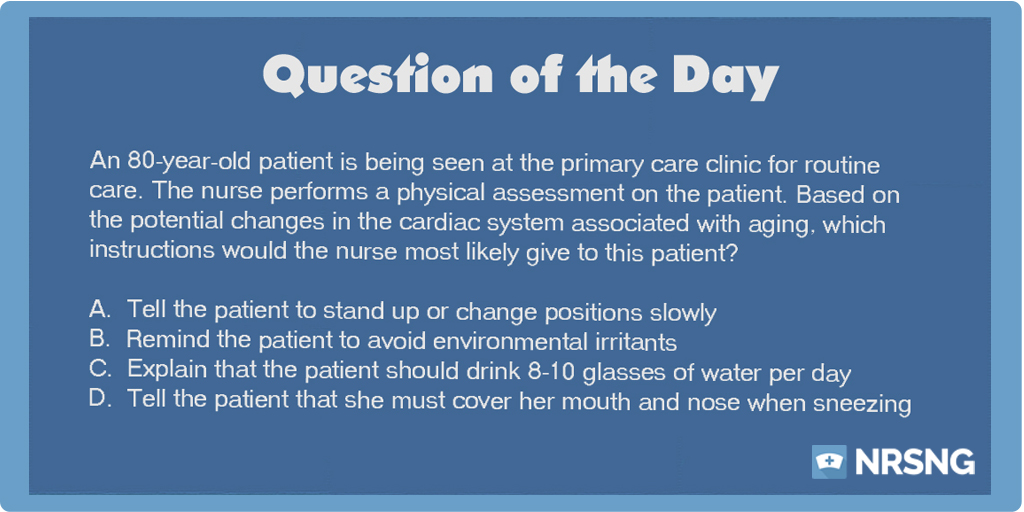
Question: An 80-year-old patient is being seen at the primary care clinic for routine care. The nurse performs a physical assessment on the patient. Based on the potential changes in the cardiac system associated with aging, which instructions would the nurse most likely give to this patient? Answer: A. Tell the patient to stand up […]
QOD 77: Preventing Coronary Artery Disease (Cardiac/Health Promotion and Maintenance)

Question: A 40-year-old patient is being seen for a health check-up and the nurse is providing information to him about prevention of coronary artery disease. Which best describes an appropriate goal for this patient that would be applied after teaching? Answer: A. The patient will engage in healthy behaviors Rationale: A patient who is at […]
QOD 69: Mobility and Blood Clots (Cardiac/Basic Care and Comfort)
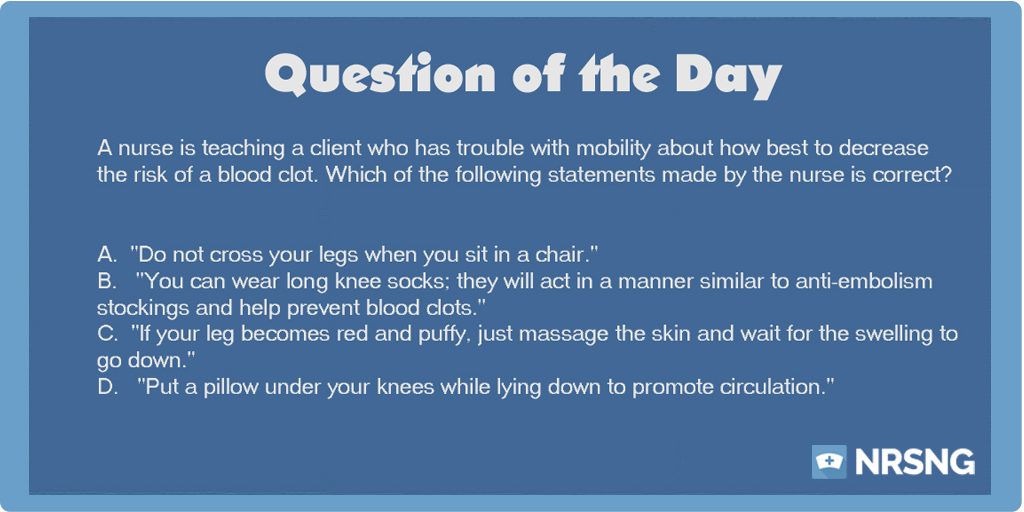
Question: A nurse is teaching a client who has trouble with mobility about how best to decrease the risk of a blood clot. Which of the following statements made by the nurse is correct? Answer: A. “Do not cross your legs when you sit in a chair.” Rationale: A patient with mobility issues is at […]
QOD 54: Heart Failure and Sodium Intake (Cardiac/Basic Care and Comfort)
Question: A patient with heart failure has been ordered to reduce her sodium intake in order to better control her condition. Which best explains why reduction in sodium intake will affect symptoms of heart failure? Answer: D. Too much sodium intake is associated with fluid retention Rationale: Fluid retention is a risk for patients with […]
QOD 47: DVT Prevention (Cardiac/Basic Care and Comfort)
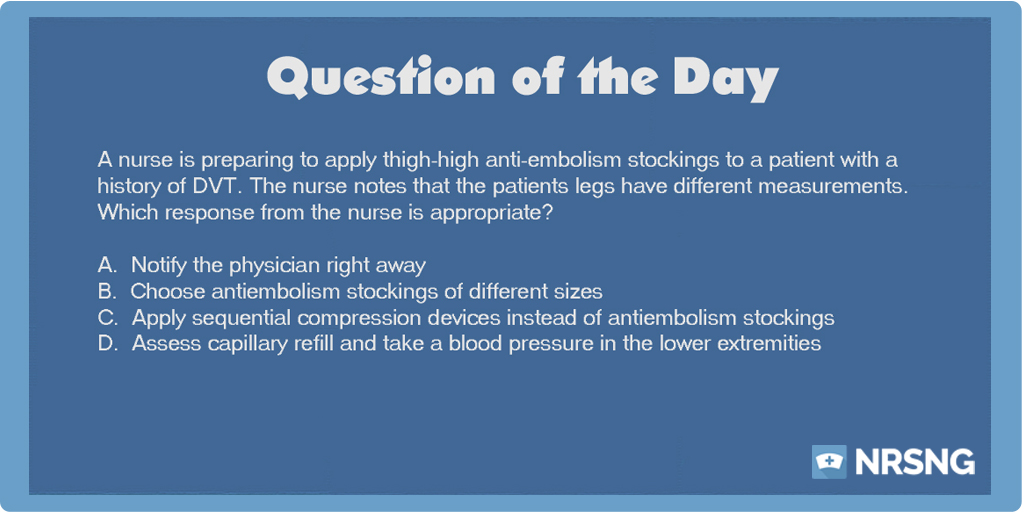
Question: A nurse is preparing to apply thigh-high anti-embolism stockings to a patient with a history of DVT. The nurse notes that the patients legs have different measurements. Which response from the nurse is appropriate? Answer: B. Choose antiembolism stockings of different sizes Rationale: Before applying antiembolism stockings, the nurse must measure the size of […]
Ep181: A&P: 9 Common Cardiac Medication Classes

Today I want to talk about nine common classes of cardiac meds, that you’re going to need to understand, and you’re going to need to know at a very high level. We’re going to talk about these meds at a very upper level, what’s going on, why we give these meds, and really what you […]
QOD-24 Heart Sounds(Cardiac/Health Promotion and Maintenance)
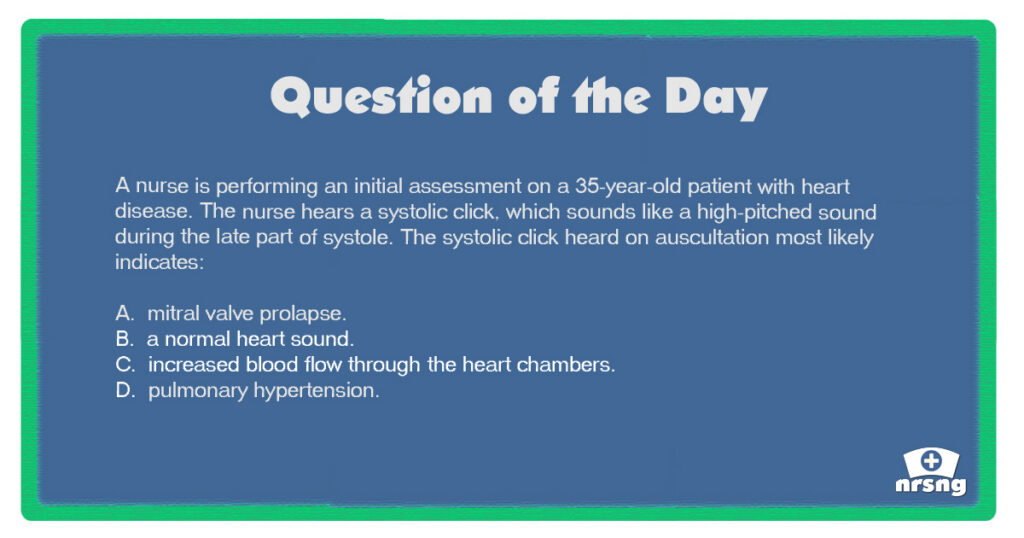
Answer: A. mitral valve prolapse. Rationale: When auscultating heart sounds, the nurse may hear a variety of different sounds; some are normal parts of the heart’s anatomy, while others indicate an abnormality. A systolic click is a high-pitched sound that is heard at the late part of systole. When this sound is heard, it can indicate […]